
Are you ready to indulge in the sweetness of homegrown goodness? Growing sweet potatoes indoors might seem like an impossible feat, but with the right guidance, you can enjoy a bountiful harvest right in your own home. Not only is it possible, but it’s also incredibly rewarding – imagine the satisfaction of savoring a fresh, homegrown sweet potato, minus the wait for warmer seasons. In this article, we’ll walk you through everything you need to know about growing delicious sweet potatoes indoors. From selecting the perfect varieties and providing optimal lighting conditions to mastering pest management, we’ve got you covered. Whether you’re a seasoned gardener or just starting out, our comprehensive guide will help you successfully grow your own sweet potatoes indoors, no matter where you live.
Choosing the Right Variety
When growing sweet potatoes indoors, selecting the right variety is crucial for success. With so many options available, let’s explore some popular varieties that thrive in indoor conditions.
Section 1.1: Popular Varieties for Indoor Growth
When it comes to growing sweet potatoes indoors, selecting a suitable variety is crucial for success. Some popular varieties are better suited for indoor cultivation due to their shorter maturity days and disease resistance.
One of the top choices for indoor growth is ‘Jewel’ – a compact, bush-type variety that matures in as little as 70-80 days. Its smaller size makes it an ideal choice for containers or small indoor spaces. Another popular option is ‘O’Henry’, which has excellent disease resistance and requires only 90-100 days to mature.
For those who want to grow sweet potatoes year-round, consider the varieties ‘Georgia Jet’ or ‘Covington’. Both have a faster maturation period (around 60-70 days) and are relatively disease-resistant. ‘Beauregard’ is another variety worth mentioning, with its high yield potential and moderate resistance to diseases like powdery scald.
When choosing a sweet potato variety for indoor growth, make sure to check the seed packet or online description for specific growing requirements and estimated maturity days. This will help ensure you select a variety that thrives in your indoor environment.
Section 1.2: Factors to Consider When Selecting a Variety
When selecting a sweet potato variety for indoor growth, it’s essential to consider its climate adaptability and space requirements. Not all varieties are suitable for indoor cultivation, so you’ll want to choose one that thrives in the conditions you can provide.
Look for varieties that are tolerant of cooler temperatures, as most sweet potatoes prefer daytime temperatures between 65-75°F (18-24°C). Some popular varieties for indoor growth include ‘Jewel’, ‘Beauregard’, and ‘Covington’. These varieties have been bred to be more compact and can produce smaller tubers, making them ideal for indoor containers.
Consider the space requirements of your chosen variety as well. Some sweet potatoes can spread quite a bit, so ensure you have enough room in your container or grow bag for the vines to sprawl. A good rule of thumb is to provide at least 2-3 feet (60-90 cm) of horizontal space per plant.
Ultimately, choose a variety that suits your indoor growing conditions and personal preferences. With the right variety, you’ll be well on your way to growing delicious sweet potatoes indoors all year round.
Preparing the Growing Environment
To successfully grow sweet potatoes indoors, it’s essential to create a suitable environment that mimics their natural growing conditions and meets their specific needs. Let’s dive into setting up the perfect indoor space for your sweet potato plants.
Section 2.1: Lighting Requirements for Sweet Potatoes Indoors
When growing sweet potatoes indoors, providing the right lighting is crucial for their development and yield. Sweet potatoes require more light than most leafy greens, but less intense light than flowering plants. They thrive under conditions that mimic natural sunlight, which typically consists of a balanced spectrum of blue, red, and green wavelengths.
For indoor cultivation, you’ll need to replicate this spectrum using LED grow lights or fluorescent lamps. Aim for a minimum of 16-18 hours of light exposure per day. While it’s tempting to provide longer periods of light, keep in mind that sweet potatoes require some darkness to form tubers efficiently.
To optimize lighting for your sweet potato plants, use grow lights with a balanced spectrum (around 400-700 nm) and an intensity of at least 20-40 watts per square foot. Position the lights 6-8 inches above the soil surface to avoid burning the leaves. Monitor your plants’ response to light levels, adjusting as needed to prevent overexposure. Keep in mind that even with optimal lighting, sweet potatoes grown indoors may not produce tubers as large as those grown outdoors under natural sunlight conditions.
Section 2.2: Temperature Control for Optimal Growth
When growing sweet potatoes indoors, maintaining an optimal temperature is crucial for their growth and development. Sweet potatoes thrive in temperatures between 65°F (18°C) and 75°F (24°C), with the ideal range being around 70°F (21°C). Temperatures above or below this range can slow down or even halt growth.
To maintain a consistent temperature, you’ll want to create a climate-controlled environment. This can be achieved by placing your sweet potato plants near an east- or west-facing window, which receives gentle and indirect sunlight throughout the day. Avoid placing them near south-facing windows, as they can become too hot during the summer months.
You can also use fans and air conditioning units to regulate temperatures. For example, if you notice that your plant is dropping leaves due to high temperatures, bring in the AC or turn on a fan to lower the temperature by a few degrees. Conversely, if it’s too cool, you can move the plant closer to the window or use a space heater to warm it up.
Monitor your sweet potato plants closely and adjust their environment accordingly. With proper temperature control, you’ll be rewarded with healthy and thriving plants that will produce delicious sweet potatoes in no time!
Sowing Seeds or Slips
When growing sweet potatoes indoors, you’ll need to decide between sowing seeds or slips, each method offering unique advantages and challenges that we’ll explore in more detail. Let’s break down the pros of each approach.
Section 3.1: Starting from Seeds vs. Using Sweet Potato Slips
When it comes to growing sweet potatoes indoors, you have two primary options: starting from seeds or using sweet potato slips. While both methods can be effective, they come with their own set of advantages and disadvantages.
Starting from seeds is a more traditional approach that allows for greater control over the initial growth stage. However, sweet potato seeds have a notoriously low germination rate – often ranging between 20-50%. This can lead to disappointment if you’re relying on this method to get your harvest started. On the other hand, sweet potato slips, which are cuttings from mature sweet potatoes, have a much higher success rate, typically above 90%.
Another crucial consideration is disease risk. Seeds, being open-pollinated, carry a greater risk of transmitting diseases and pests compared to slips, which are taken from healthy parent plants. If you’re planning to grow multiple sweet potato varieties indoors, using slips can help minimize the spread of diseases between them.
In general, using sweet potato slips is often considered the more reliable method for indoor growth. They provide a faster germination rate, reduced disease risk, and a higher success rate – making them an ideal choice for home growers looking to harvest a bountiful crop of sweet potatoes.
Section 3.2: Propagating Sweet Potatoes through Slips
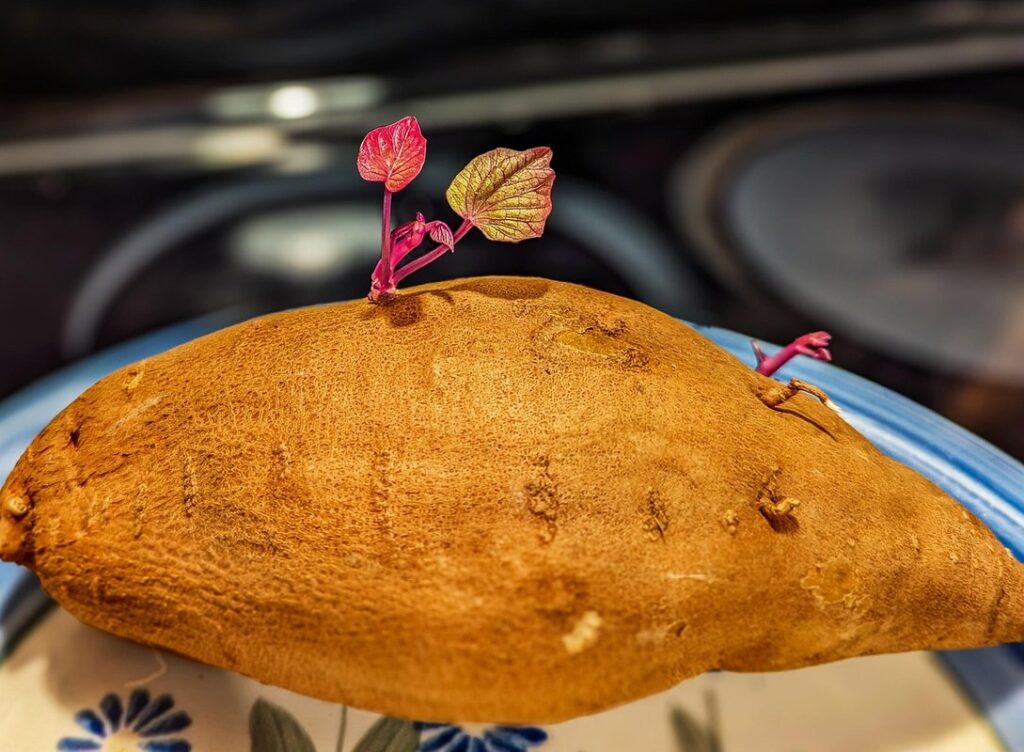
Propagating sweet potatoes through slips is an excellent method for indoor cultivation. To start, you’ll need to produce slips from your existing sweet potato tubers. This process typically begins 2-4 weeks after the initial sprouting of your sweet potatoes. Select healthy, disease-free tubers with at least one “eye” each. Place them in a container filled with about an inch of water and sit it in a warm location with indirect sunlight.
Over time, you should notice small white roots emerging from the nodes of the eyes. These are signs that your tuber is producing slips. Once they’ve grown to around 4-6 inches long, carefully cut them off just above a node using a sharp knife or pruning shears. Remove any lower leaves, leaving only two sets at the top.
Transplant your slips into individual pots filled with well-draining potting mix, making sure not to bury the nodes. Keep the soil consistently moist but not waterlogged during this period. Within 1-2 weeks, you’ll see new growth and roots developing from the nodes.
Providing Essential Nutrients
To grow sweet potatoes indoors successfully, you’ll need to provide them with a balanced diet of essential nutrients that are specifically tailored for indoor conditions. This section will walk you through the key nutrients your sweet potato plants require.
Section 4.1: Soil Requirements for Sweet Potatoes Indoors
When growing sweet potatoes indoors, it’s essential to provide them with the right soil environment. Sweet potatoes require well-draining, fertile soil that is rich in organic matter. The ideal pH range for sweet potatoes is between 5.5 and 6.5, which is slightly acidic to neutral.
To achieve this pH level, you can mix peat moss or coconut coir into your potting soil, as these materials have a naturally acidic pH. Additionally, adding compost or well-rotted manure will not only improve drainage but also provide essential nutrients like nitrogen, phosphorus, and potassium.
For macronutrient requirements, sweet potatoes need a balanced fertilizer with an N-P-K ratio of 10-10-10. However, for micronutrients, they require smaller amounts of boron, copper, iron, manganese, molybdenum, and zinc. You can supplement these micronutrients using fertilizers specifically designed for sweet potatoes or by adding small amounts of crushed eggshells, which are rich in calcium.
To ensure your indoor sweet potato plants receive the right nutrients, start with a high-quality potting mix specifically designed for root vegetables. Then, apply a balanced fertilizer according to the manufacturer’s instructions and monitor the pH levels regularly.
Section 4.2: Fertilization Strategies for Indoor Sweet Potatoes
When it comes to fertilizing your indoor sweet potatoes, you have several options to consider. One approach is to use organic fertilizers, which are derived from natural sources such as bone meal, fish emulsion, and compost. These options are a great choice for indoor gardens because they release nutrients slowly over time, promoting healthy root development.
Some popular synthetic fertilizers for sweet potatoes include 10-20-10 NPK (nitrogen-phosphorus-potassium) blends. However, be cautious when using these products as excessive nitrogen can lead to weak vines and poor fruiting.
To create a balanced fertilizer regimen, consider combining organic and synthetic options. For example, you could start with an organic fertilizer during the early stages of growth and switch to a synthetic blend once your plants are established. This approach will provide your sweet potatoes with a nutrient-rich environment that promotes optimal growth.
Keep in mind that indoor sweet potato plants require less fertilizer than their outdoor counterparts due to the controlled growing conditions. Start with small amounts (about 1/4 teaspoon per gallon of water) and adjust as needed based on plant response.
Managing Pests and Diseases
When growing sweet potatoes indoors, it’s essential to be aware of potential pests and diseases that can affect your crop. This section will cover effective strategies for managing these issues and keeping your plants healthy.
Section 5.1: Common Pests Affecting Indoor Sweet Potatoes
When growing sweet potatoes indoors, one of the biggest challenges you may face is pests. These tiny critters can cause significant damage to your plants and even lead to the loss of your crop if left unchecked.
One common pest affecting indoor sweet potatoes is the aphid. These tiny, soft-bodied insects feed on plant sap, causing curled or distorted leaves. To control aphids, use neem oil or insecticidal soap, which can be applied directly to the affected areas. You can also introduce natural predators like ladybugs or lacewings to your indoor garden.
Another pest that may target your sweet potatoes is the whitefly. These small, flying insects are known for their sticky honeydew secretions, which can attract other pests and diseases. To control whiteflies, use yellow traps or sticky tapes near your plants. You can also apply insecticidal soap or neem oil to infested areas.
Spider mites are another common pest that may affect your indoor sweet potatoes. These tiny arachnids feed on plant sap, causing yellowing leaves and fine webbing. To control spider mites, increase the humidity around your plants by misting with water daily. You can also apply insecticidal soap or neem oil to infested areas.
In addition to these pests, keep an eye out for mealybugs, which feed on plant sap and secrete a sticky substance called honeydew. To control mealybugs, use insecticidal soap or neem oil, and remove infested leaves or stems.
Section 5.2: Preventing and Treating Root Rot in Sweet Potatoes
Root rot is one of the most common problems you’ll face when growing sweet potatoes indoors. This condition occurs when the roots become infected with a fungal disease that thrives in moist environments, which is perfect for indoor conditions. Overwatering is often the culprit behind root rot, but it can also be caused by poor air circulation and high humidity.
To prevent root rot, make sure to provide adequate drainage for your sweet potatoes. Use pots with good drainage holes, and avoid letting the soil get waterlogged. Keep an eye on the moisture levels in the pot and adjust your watering schedule accordingly. A general rule of thumb is to let the top inch of soil dry out between waterings.
If you do notice signs of root rot, such as soft or mushy roots, take action quickly. Remove the affected plant from its pot, gently wash away any remaining infected tissue, and repot it in fresh, sterilized soil. Cut back on watering for a while to give the roots time to recover. To promote healthy roots, provide your sweet potatoes with bright, indirect light and maintain temperatures between 65-75°F (18-24°C). With proper care, you can prevent root rot and enjoy a bountiful harvest of delicious sweet potatoes indoors.
Harvesting and Storage
Now that you’ve successfully grown your sweet potatoes indoors, it’s time to focus on harvesting and storing them to enjoy their delicious flavor for months to come. Proper handling is crucial at this stage to preserve their quality.
Section 6.1: Determining Maturity and Harvest Timing
As you approach harvest time for your indoor sweet potatoes, it’s essential to determine their maturity and readiness. This can be a bit tricky, but don’t worry, we’ve got you covered. To start, look for visual cues such as the color of the leaves and stems. As the sweet potatoes mature, the foliage will begin to yellow and die back, indicating that the tubers are ready.
Another way to check is through a taste test. Gently dig around one of the plants with your hands or a fork, being careful not to damage the roots. If the sweet potato feels heavy for its size and has a smooth, unblemished skin, it’s likely mature. Use a gentle twisting motion to release the tuber from the soil.
It’s also crucial to check the size of the sweet potatoes. They should be at least 1-2 pounds each and have a diameter of about 3-4 inches. If you’re still unsure, gently dig around another plant or two to get a sense of their maturity level. Remember, it’s always better to err on the side of caution and wait a few more days if needed, rather than harvesting too soon and potentially missing out on optimal flavor and texture.
Section 6.2: Proper Handling and Storage Techniques
After harvesting your sweet potatoes indoors, it’s essential to handle and store them properly to maintain their quality and shelf life. When handling harvested sweet potatoes, be gentle to avoid bruising the tubers, which can lead to decay. Cleanliness is also crucial; wash the tubers with mild soap and water to remove any dirt or debris.
For storage, choose a dark, well-ventilated area with temperatures between 50°F and 60°F (10°C and 15°C). Avoid storing sweet potatoes near heat sources or in humid environments, as this can cause them to sprout or rot. Store the tubers in paper bags or breathable containers to maintain airflow and prevent moisture buildup.
Regularly inspect your stored sweet potatoes for signs of decay or rot, such as soft spots, mold, or a sour smell. Remove any affected tubers immediately to prevent the spread of disease. By following these proper handling and storage techniques, you can enjoy your homegrown sweet potatoes throughout their entire shelf life.
Frequently Asked Questions
Can I grow sweet potatoes indoors without a lot of natural light?
While it’s true that sweet potatoes need adequate lighting to thrive, there are options for growing them indoors even with limited natural light. You can consider using LED grow lights specifically designed for indoor gardening. These lights provide the necessary spectrum and intensity for sweet potato growth.
How often should I fertilize my sweet potato plants indoors?
Sweet potatoes have high nutrient requirements, especially when grown in controlled environments like indoors. Aim to fertilize your plants every 1-2 weeks with a balanced fertilizer (10-10-10 NPK). You can also use a liquid fertilizer for easier application.
What’s the best way to prevent pests from infesting my indoor sweet potato crop?
Common pests like aphids, whiteflies, and spider mites can easily invade your indoor garden. Use fine mesh or screen covers to prevent these pests from reaching your plants. Regularly inspect your plants, and promptly treat any infestations with neem oil or insecticidal soap.
Can I grow sweet potatoes indoors year-round without any seasonal variation?
While it’s possible to grow sweet potatoes indoors throughout the year, some varieties may have a natural dormancy period or require adjustments for optimal growth. Be prepared to adjust your growing schedule and provide necessary conditions (light, temperature, fertilization) to accommodate these variations.
How do I know when my indoor sweet potato crop is mature and ready for harvest?
Keep an eye on the color change of the tubers – they should turn a deep orange or yellow. Check the size too; mature tubers should be around 6-8 inches in diameter. Use a fork to gently dig up the tuber, taking care not to damage it during harvesting.
Will using soilless mixes affect the flavor and quality of my indoor sweet potatoes?
Using high-quality soilless mixes specifically designed for root vegetables can actually improve the growth and health of your sweet potatoes. These mixes typically contain essential nutrients and water-holding agents that promote optimal root development without affecting flavor or texture.