
Are you ready to add a pop of color to your garden or landscape design? Look no further than the stunning purple leaf maple tree. This unique specimen is not only a feast for the eyes, but it also offers numerous health benefits and is relatively low-maintenance to grow. If you’re looking for a beautiful and functional addition to your outdoor space, learning about the characteristics and cultivation methods of the purple leaf maple tree is a great place to start.
In this article, we’ll dive into the world of this gorgeous tree, exploring its key features, benefits, and care requirements. We’ll cover everything from pruning and watering techniques to its potential uses in landscape design. Whether you’re a seasoned gardener or just starting out, you’ll discover how to grow and care for your own purple leaf maple tree, making it a beautiful and thriving part of your outdoor space.
Introduction to the Purple Leaf Maple Tree
The purple leaf maple tree is a stunning addition to any landscape, but before we dive into its unique characteristics and care requirements. Let’s start by covering the basics of this beautiful tree species.
Brief History and Origin
The purple leaf maple tree has its roots in Asia, specifically in China and Japan. This stunning tree is native to mountainous regions with mild winters, where it grows up to 20 meters tall. Its introduction to cultivation dates back to the early 19th century, when European gardeners first brought it to their gardens. They were captivated by the tree’s striking purple leaves, which provided a unique contrast to the typical green foliage of other maple trees.
Over time, horticulturists developed several notable cultivars that have become popular worldwide. One such example is ‘Bloodgood’, known for its deep crimson-purple leaves and compact growth habit. Another notable variety is ‘Royal Purple’, which boasts large, lobed leaves with a vibrant purple color. These cultivars are perfect for adding a pop of color to gardens in cooler climates.
When selecting a purple leaf maple tree, look for varieties that suit your local climate. Some popular cultivars, such as ‘Seiryu’ and ‘Aconitifolium’, are bred to thrive in warmer temperatures and more humid environments. With proper care and maintenance, these trees can add beauty and interest to any landscape throughout the changing seasons.
Key Characteristics and Identifying Features
One of the most striking aspects of the purple leaf maple tree is its distinct features that set it apart from other maple species. The bark of this tree is a key identifying characteristic, with horizontal lenticels and deep grooves giving it a rugged appearance. In mature trees, the bark can become silvery-gray, adding to the tree’s unique charm.
The leaves of the purple leaf maple are another defining feature, featuring a distinctive reddish-purple color on top and a paler underside. These heart-shaped leaves have 3-5 lobes, with the edges being smooth or having a few small teeth. As the seasons change, the leaves shift to shades of orange, red, and yellow before falling.
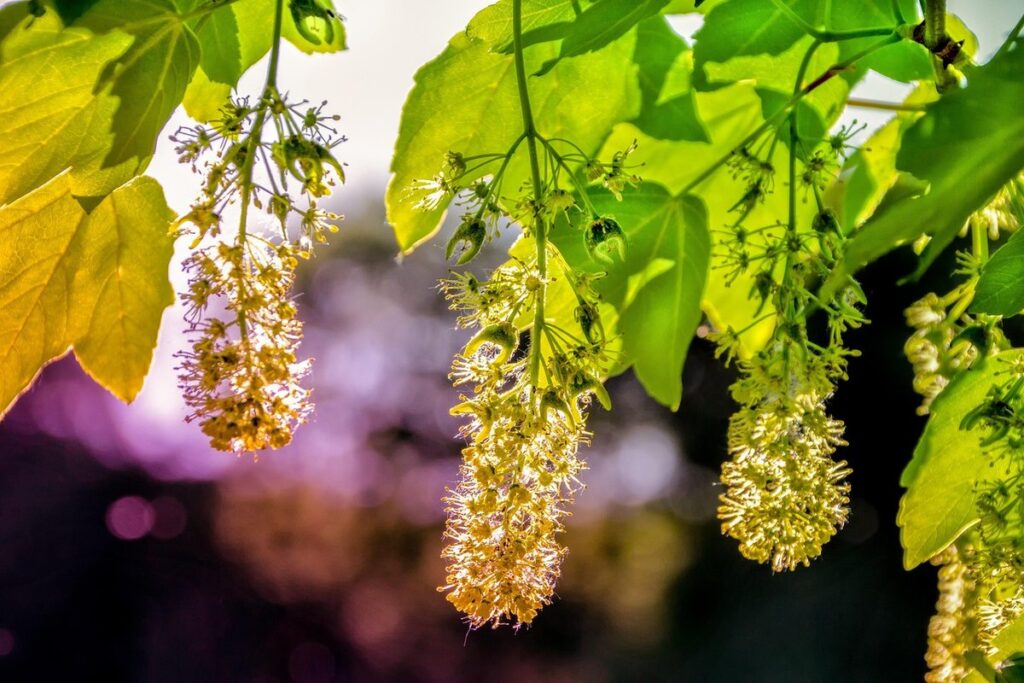
In the spring, the purple leaf maple produces small, greenish-yellow flowers in clusters at the end of short stalks. These flowers are followed by samaras, also known as “helicopter seeds,” which twirl to the ground as they disperse. The growth habit of this tree is typically vase-shaped, with a broad crown and slender branches.
Growing Conditions and Care
To ensure your purple leaf maple tree thrives, it’s essential to understand its specific growing conditions and care requirements. This includes ideal soil types, sunlight needs, and regular maintenance tasks.
Climate and Soil Preferences
To ensure your purple leaf maple tree thrives, it’s essential to provide it with optimal climate and soil conditions. This majestic tree prefers a temperate climate with cool summers and cold winters, making it ideal for USDA zones 5-8. If you live outside these zones, be prepared to provide extra care, such as protection from extreme temperatures or regular pruning.
In terms of soil preferences, purple leaf maples favor well-draining acidic soils rich in organic matter. They can tolerate a wide pH range but perform best in slightly acidic conditions between 5.5 and 6.5. To create the perfect environment for your tree, choose a location with full sun to partial shade and ensure good air circulation.
When selecting a suitable location for planting, consider factors such as wind direction, nearby water sources, and underground utilities. Avoid low-lying areas where water may collect and cause root rot. Also, be mindful of nearby trees or structures that could compete with your purple leaf maple for resources or create maintenance challenges. By carefully evaluating these factors, you can provide your tree with the ideal conditions to flourish and display its stunning deep purple foliage year-round.
Watering and Maintenance Requirements
Watering and maintenance are crucial for the health and aesthetic appeal of your purple leaf maple tree. When it comes to watering, this tree prefers well-draining soil that’s consistently moist but not waterlogged. As a general rule, you’ll want to water your tree every 7-10 days during the spring and summer months when it’s actively growing. During periods of drought or extreme heat, you may need to increase the frequency of watering.
As for pruning, aim to do this in late winter or early spring before new growth begins. Remove any dead, diseased, or damaged branches to maintain the tree’s shape and promote healthy growth. It’s also essential to prune any crossing or rubbing branches to prevent damage to the surrounding foliage.
Fertilization is another key aspect of maintenance for your purple leaf maple tree. Feed it with a balanced, slow-release fertilizer in early spring, following the manufacturer’s instructions for application rates. This will provide the necessary nutrients for optimal growth and color retention. By following these watering and maintenance guidelines, you’ll be able to enjoy your vibrant purple leaf maple tree’s stunning foliage year-round.
Health Benefits and Toxicity Concerns
When considering the purple leaf maple tree for your garden, it’s essential to weigh its benefits against potential health risks, including sap and seed toxicity concerns. Here’s what you need to know about the pros and cons of this beautiful tree.
Nutritional Value and Medicinal Properties
The purple leaf maple tree is not only a stunning addition to any landscape, but it also offers numerous health benefits when consumed as food or supplement. Research has shown that the leaves and bark of this tree contain high levels of antioxidants, vitamins, and minerals, making them a valuable source for overall well-being.
Studies have isolated specific compounds in purple leaf maple trees, such as polyphenols and flavonoids, which exhibit anti-inflammatory properties and may help protect against chronic diseases like heart disease and cancer. For example, a study published in the Journal of Ethnopharmacology found that an extract from the leaves of Acer platanoides (the scientific name for purple leaf maple) showed significant antioxidant activity and potential in treating cardiovascular disorders.
While more research is needed to confirm these findings, incorporating foods or supplements derived from the purple leaf maple tree into your diet may offer several health benefits. However, it’s essential to note that excessive consumption can lead to toxicity concerns. Always consult with a healthcare professional before adding any new supplement to your regimen.
Toxicity Risks and Precautions
While the Purple Leaf Maple tree is a stunning addition to any landscape, it’s essential to be aware of its toxicity risks. The leaves and seeds of this tree contain urushiol, an oil similar to that found in poison ivy, oak, and sumac. This means that handling or coming into contact with the tree’s parts can cause skin irritation, allergic reactions, and even respiratory issues.
If you’re planning to prune or harvest the tree, make sure to wear protective clothing, including gloves, long sleeves, and a mask. Washing your hands thoroughly after handling the tree is also crucial to avoid transferring any oils to your face or eyes.
When it comes to consuming parts of the Purple Leaf Maple tree, it’s not recommended for human consumption due to its toxicity. However, some wildlife species like deer and birds may eat the seeds, so be aware that this could potentially attract these animals to your garden.
To minimize risks, avoid ingesting any parts of the tree, and keep children and pets away from the area while pruning or harvesting.
Landscaping and Ornamental Uses
When it comes to showcasing your purple leaf maple tree, consider its stunning foliage as a canvas for creative landscaping and ornamental uses. Add some personality to your garden with unique plant combinations!
Aesthetic Value and Design Applications
The purple leaf maple tree is a stunning addition to any landscape, offering an unparalleled level of aesthetic value and versatility. Its unique, deep-purple leaves create a striking contrast with the surrounding environment, making it an ideal choice for designers looking to add visual interest to their outdoor spaces.
Incorporating the purple leaf maple into your design can be done in various ways. For instance, you could use it as a statement piece in a small garden or patio, or incorporate multiple trees into a larger landscape design to create a sense of drama and depth. Additionally, its relatively small size (typically growing up to 20-30 feet tall) makes it an excellent choice for compact spaces such as courtyards or narrow lots.
The purple leaf maple is surprisingly adaptable and can thrive in a range of climates and regions, from USDA zones 3-8. This hardiness allows it to be used in both temperate and subtropical landscapes, making it a versatile option for designers working with diverse client needs.
Companion Planting and Pairing Suggestions
When it comes to landscaping with purple leaf maple trees, companion planting can greatly enhance their beauty and health. Since these trees have a moderate growth rate and can thrive in various conditions, you can pair them with plants that provide complementary benefits or striking visual contrasts.
For example, pairing the purple leaf maple with bold-colored flowers like coneflowers (Echinacea spp.) or black-eyed Susans (Rudbeckia hirta) creates a stunning display of color and texture. These flowering perennials not only attract pollinators but also help to draw attention away from any imperfections on the tree’s trunk or branches.
On the other hand, if you prefer a more subtle approach, consider planting groundcovers like vinca minor (Periwinkle) or pachysandra (Pachysandra terminalis) around the base of your purple leaf maple. These low-maintenance options help to suppress weeds and create a neat, tidy appearance.
Remember to choose companion plants that are disease- and pest-resistant to minimize potential risks to your tree’s health.
Propagation and Cultivation Methods
To successfully grow a vibrant purple leaf maple tree, understanding its propagation and cultivation methods is crucial for a healthy and thriving plant. We’ll delve into these essential techniques in this section.
Seed Germination and Grafting Techniques
Propagating the purple leaf maple tree through seed germination and grafting requires careful attention to detail and optimal conditions. To increase success rates, start by selecting high-quality seeds from a reputable source or nursery. For seed germination, sow 1-2 inches deep in a well-draining seed starting mix, keeping the soil consistently moist but not waterlogged.
For grafting, take a healthy scion (a stem section) from a mature purple leaf maple tree and join it to a rootstock using a specialized grafting tool. Apply gentle pressure to ensure good contact between the two plant parts. Secure the grafted union with tape or a clip, keeping the soil moist but not too wet.
Some essential tips for optimizing success rates include providing a temperature range of 65-75°F (18-24°C) during germination and grafting, as well as maintaining high humidity levels to prevent drying out. By following these steps and guidelines, you can successfully propagate your purple leaf maple tree through seed germination and grafting techniques.
Nursery Care and Transplantation Tips
When it comes to propagating and cultivating purple leaf maple trees, proper nursery care is essential for their young roots to establish a strong foundation. To achieve optimal growth, start by using a well-draining potting mix that contains a balanced blend of peat moss, perlite, or vermiculite. This will prevent waterlogged soil conditions, which can be detrimental to the tree’s delicate roots.
Maintain a consistent temperature range between 65°F and 75°F (18°C and 24°C), avoiding extreme fluctuations that can shock the young tree. Additionally, ensure it receives bright indirect light for at least four hours a day. Direct sunlight can scorch the leaves, so consider using sheer curtains or shades to filter the sun’s rays.
When transplanting, carefully inspect the roots and gently tease them apart with your fingers or a blunt instrument. This will encourage new root growth and help the tree absorb water and nutrients more efficiently. Plant the tree in well-draining soil at the same depth as it was previously grown, watering thoroughly after planting to settle the soil.
Conclusion
As we conclude our comprehensive guide to the purple leaf maple tree, let’s summarize the key takeaways and final thoughts on this beautiful and unique tree species.
Recap of Key Points and Recommendations
If you’ve made it to the end of this comprehensive guide, congratulations! You now have a solid understanding of the purple leaf maple tree’s unique characteristics, care requirements, and potential uses. Let’s recap some key points and recommendations for further exploration.
Firstly, remember that the purple leaf maple tree is a stunning addition to any landscape or indoor space, offering vibrant foliage and a majestic presence. Its striking leaves can range from deep plum to rich burgundy, adding visual interest to your surroundings. Key takeaways include:
* The importance of proper soil conditions, including well-draining acidic soil with a pH between 6.0-7.0
* Regular watering and fertilization to promote healthy growth
* Pruning and training techniques to maintain shape and encourage new growth
As you consider bringing a purple leaf maple tree into your life, keep in mind its potential uses and benefits:
* Ornamental purposes: accentuate your garden or indoor space with its unique foliage
* Shade provision: provide relief from the sun’s intense rays
* Wildlife support: attract birds, squirrels, and other wildlife with its seed production
Recommendations for further research or exploration might include:
* Investigating other maple tree species, such as the red maple (Acer rubrum) or silver maple (Acer saccharinum)
* Exploring different pruning techniques to maintain shape and encourage new growth
* Researching companion planting strategies to optimize your purple leaf maple tree’s benefits
Whether you’re an experienced horticulturist or a curious beginner, there’s always more to learn about these incredible trees. By embracing the unique qualities of the purple leaf maple tree, you’ll be well on your way to cultivating a thriving and rewarding relationship with nature.
Frequently Asked Questions
How can I ensure my purple leaf maple tree receives the right amount of sunlight for optimal growth?
Concise answer: When planting a purple leaf maple tree, consider its mature height (up to 20 meters) and position it in an area that receives partial shade to full sun, depending on your local climate. As the tree grows, prune nearby branches or foliage to maintain a suitable sun-to-shade ratio.
What are some common pests or diseases I should watch out for when growing purple leaf maple trees?
Concise answer: Regularly inspect your tree for signs of aphids, scales, and borers. Also, be aware of root rot, anthracnose, and powdery mildew, which can be caused by overwatering or poor air circulation. Implement integrated pest management (IPM) techniques to minimize chemical use and promote a healthy ecosystem.
Can I propagate my purple leaf maple tree using seeds, and what’s the best method for doing so?
Concise answer: Yes, you can propagate your purple leaf maple tree from seed. Sow fresh seed in the spring or fall, about 1-2 inches deep in a well-draining potting mix. Keep the soil consistently moist but not waterlogged. After 6-12 months, transplant the seedling into a larger container with good air circulation and care for it as you would a mature tree.
How do I prune my purple leaf maple tree to maintain its unique shape and encourage healthy growth?
Concise answer: Prune your purple leaf maple tree in late winter or early spring, removing any dead, diseased, or damaged branches. Consider shaping the canopy by selecting 2-3 prominent leaders and pruning other branches to allow for proper air circulation and sunlight penetration.
Are there any specific considerations I should keep in mind when planting my purple leaf maple tree in a container?
Concise answer: Yes, choose a large enough container (at least 24 inches deep) with good drainage holes. Use a well-draining potting mix and fertilize regularly during the growing season. Monitor water levels closely to avoid overwatering, as this can be detrimental to container-grown trees.