
Are you tired of relying on harsh chemicals to control pests in your garden or home? Look no further than predatory mites, a game-changing solution that’s gaining popularity among eco-conscious individuals and professionals alike. These tiny, non-toxic heroes are specifically designed to target and eliminate pesky insects, leaving your environment safe and healthy.
But what makes predatory mites so effective, and why should you consider using them for pest control? This article will delve into the benefits of using these microscopic marvels, including their long-lasting effects, targeted pest control capabilities, and most importantly, their non-toxic nature. By the end of this post, you’ll be equipped with the knowledge to make an informed decision about incorporating predatory mites into your pest management strategy.
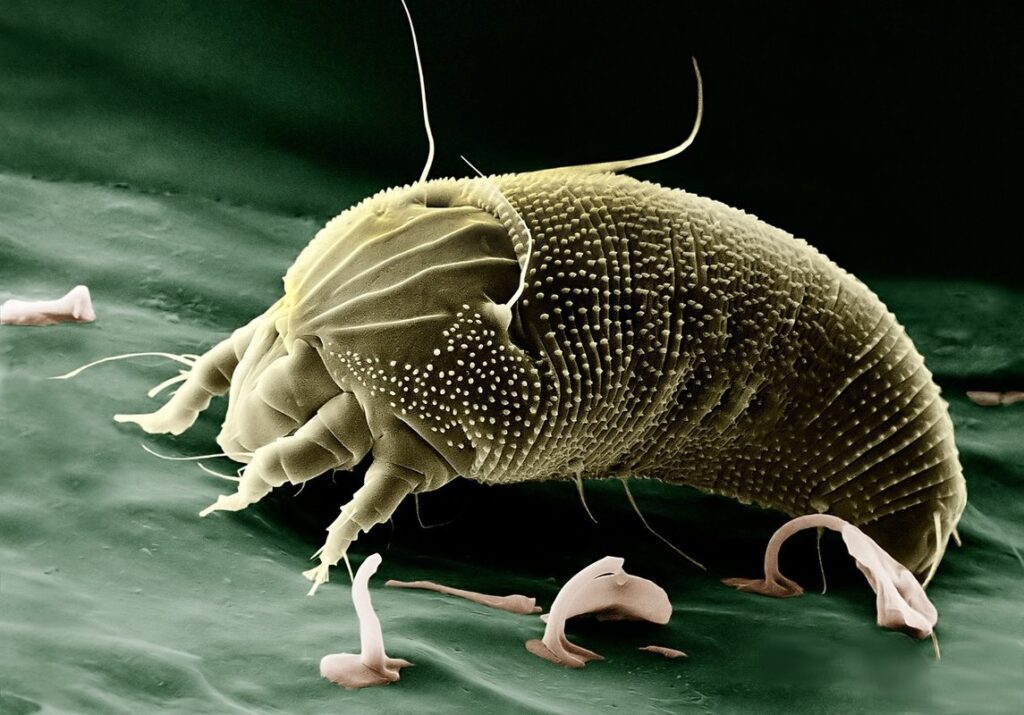
What are Predatory Mites and How Do They Work?
Predatory mites are a crucial part of biological pest control, so let’s start by understanding what they are and how these tiny creatures work their magic on pests.
Introduction to Predatory Mite Biology
At their core, predatory mites are fascinating creatures that have adapted to feed on other small insects, making them a valuable asset in integrated pest management (IPM) strategies. These beneficial arachnids belong to the Acari order and can be found in various environments, from gardens to agricultural fields.
Predatory mites have a few key characteristics that set them apart from other beneficial insects. They are typically small, ranging from 0.1-2 millimeters in size, and have distinct mouthparts adapted for piercing and sucking the fluids of their prey. Their life cycle is relatively short, with most species completing multiple generations within a single growing season.
One of the most significant benefits of predatory mites is their ability to target specific pest populations without harming beneficial insects or the environment. For instance, Phytoseiulus persimilis is a popular species used to control spider mite infestations, while Amblyseius andersoni is effective against thrips and whiteflies.
The Benefits of Using Predatory Mites for Pest Control
Using predatory mites for pest control offers numerous benefits over traditional chemical pesticides. One of the most significant advantages is their non-toxic nature, making them a safer choice for households with pets and young children. Predatory mites are also long-lasting, providing effective pest control for several months without the need for frequent reapplication.
In contrast to chemical pesticides, predatory mites target specific pests, reducing the risk of harming beneficial insects or contaminating soil and water. For instance, Phytoseiulus persimilis targets spider mites, while Amblyseius andersoni is effective against thrips and whiteflies. This targeted approach ensures that the pest population is significantly reduced without affecting other organisms.
When choosing predatory mites for pest control, consider the specific pest you’re targeting and select a mite species that’s specifically designed to combat it. By incorporating these beneficial insects into your integrated pest management strategy, you can enjoy long-term benefits while minimizing environmental harm. Regular monitoring of the pest population is crucial to ensure the effectiveness of the predatory mites.
Types of Predatory Mites Used in Pest Control
There are several types of predatory mites that can be used to control pest populations, each with its own unique characteristics and benefits. Let’s take a closer look at some of the most common ones used in pest control.
Phytoseiulus Persimilis: The Most Widely Used Species
Phytoseiulus persimilis is widely regarded as one of the most effective and popular species used in pest control due to its unique ability to target spider mites and other soft-bodied insects. Native to Central America, this predatory mite thrives in environments with high humidity levels, making it an ideal choice for greenhouses and indoor gardens.
P. persimilis feeds exclusively on Tetranychus urticae (two-spotted spider mite), one of the most common pests affecting crops worldwide. Its feeding habits are centered around detecting vibrations from the prey’s movement, allowing it to track down its target with ease. By releasing P. persimilis into infested areas, farmers and gardeners can quickly establish a population that will work tirelessly to eliminate the pest.
In optimal conditions, a single female P. persimilis can produce up to 15 offspring within two weeks, creating an exponential growth rate that allows for efficient control of spider mite populations. This remarkable reproductive capacity makes it an essential tool in integrated pest management (IPM) strategies, particularly when used in conjunction with other beneficial insects and organic practices.
Other Predatory Mite Species: Alternatives to Phytoseiulus Persimilis
While Phytoseiulus persimilis is one of the most widely used predatory mite species for pest control, there are other alternatives that can be effective against specific pests. For instance, Amblyseius spp. are known to prey on various soft-bodied pests such as thrips, whiteflies, and spider mites. These mites are often used in greenhouse environments where these pests can cause significant damage.
Amblyseius andersoni, specifically, is a popular choice for controlling thrips populations. It’s also worth noting that Amblyseius swirskii has been shown to be effective against whiteflies and mealybugs. When it comes to spider mites, Macrocheles spp. are often used as an alternative to Phytoseiulus persimilis. These predatory mites are particularly useful in controlling pest populations on plants that are sensitive to pesticides.
It’s essential to consider the specific pest you’re trying to control when selecting a predatory mite species. Different species have varying levels of efficacy against different pests, so research is crucial before making a decision. By choosing the right predatory mite species for your needs, you can create an effective and sustainable pest control strategy.
How to Introduce Predatory Mites into Your Ecosystem
To successfully introduce predatory mites into your ecosystem, you’ll want to carefully consider factors such as climate, food availability, and predator-prey ratios. This section will walk you through the essential steps to get started.
Preparation for Introduction: Creating a Suitable Environment
Before introducing predatory mites into your ecosystem, it’s crucial to create an environment that supports their survival and effectiveness. This involves several key steps that you should take beforehand.
Firstly, prepare the substrate by ensuring it is free from debris, dust, and other contaminants. A clean substrate will not only facilitate the mites’ movement but also prevent them from getting stuck or trapped. You can achieve this by gently raking the surface with a soft-bristled brush or sifting it through a fine mesh.
Next, monitor temperature to create an optimal environment for the mites. Predatory mites thrive in temperatures between 65°F and 75°F (18°C and 24°C). Avoid placing the mites near heating vents, radiators, or air conditioning units as this can disrupt their delicate ecosystem.
Finally, control humidity levels by maintaining a relative humidity of 50-60%. This range allows for comfortable movement and feeding habits among the mites. You can achieve this using a humidifier or dehumidifier depending on your environment’s current conditions.
Remember to research specific guidelines tailored to the type of predatory mite you’re introducing, as some may have unique requirements.
Release Methods and Timing: Ensuring Success
When introducing predatory mites into your ecosystem, the release method and timing are crucial factors that can significantly impact their success. Direct application is a common method, where the mites are released directly onto the affected area. This method is suitable for small-scale infestations or when targeting specific pests.
For larger areas or more extensive pest control, incorporating predatory mites into potting media can be an effective approach. This involves mixing the mites with soil or compost before planting, allowing them to establish a colony and start controlling pests from within.
Timing is also essential for maximizing the impact of predatory mites. It’s best to release them during periods of optimal pest activity, typically when pests are most active and vulnerable. Avoid releasing them during extreme weather conditions, such as intense heat or cold, which can harm or kill the mites. Typically, spring and fall seasons are ideal for introducing predatory mites into your ecosystem.
Monitoring and Maintaining Predatory Mite Populations
To ensure your predatory mite populations thrive, it’s crucial to monitor their numbers regularly and take corrective action when necessary to prevent population crashes. Regular monitoring helps maintain optimal pest control effectiveness.
The Importance of Regular Monitoring
Monitoring predatory mite populations is essential to maintain their effectiveness in controlling pest populations. This process involves regular visual observations and quantitative assessments to ensure that the mites are thriving and continuing to target pests effectively.
Start by observing the mite population’s overall health, including factors such as egg hatch rates, adult longevity, and the presence of any diseases or parasites. Look for signs of stress, such as reduced reproduction or increased mortality. Regularly inspect the mite population’s food source, ensuring that it remains adequate to support their growth.
Quantitative assessments involve tracking specific metrics, like the number of mites per square inch or the proportion of females to males. This data helps identify trends and potential issues before they become major problems. For example, a sudden drop in female-to-male ratio may indicate an imbalance in sex ratios due to environmental factors.
It’s also crucial to track pest populations simultaneously with mite population metrics. By doing so, you can determine whether the mites are having a significant impact on pest control efforts.
Managing Pest Pressure and Predator-Prey Ratios
Maintaining optimal predator-prey ratios is crucial to ensure the continued success of predatory mite-based pest control programs. If pest pressure becomes too high, it can lead to a decline in predatory mite populations, undermining the effectiveness of the program. To manage pest pressure, monitor your crops regularly for signs of infestation and take prompt action if pests are detected.
One key strategy is to maintain a balance between predator and prey species. This can be achieved by introducing multiple species of predatory mites or supplementing with other beneficial organisms. For example, in a greenhouse setting, combining the Neoseiulus californicus (Californian mite) with Phytoseiulus persimilis (P persimilis) can create a robust predator-prey dynamic.
Additionally, consider implementing cultural controls to prevent pest buildup. This may involve adjusting irrigation schedules, pruning plants to improve air circulation, or using physical barriers to limit pest entry points. By taking these proactive steps, you can reduce the pressure on your predatory mite populations and maintain optimal predator-prey ratios, ultimately safeguarding the success of your pest control program.
Challenges and Limitations of Using Predatory Mites
While predatory mites can be a powerful tool for pest control, they’re not without their drawbacks. This section will explore some common challenges you may face when using these beneficial insects.
Factors Affecting Predatory Mite Performance: Temperature, Humidity, and More
When using predatory mites as part of your pest control strategy, it’s essential to understand that their performance can be affected by various environmental and biological factors. One crucial factor is temperature, which directly influences the mite’s development rate, survival, and reproduction. For example, some species of predatory mites are active in temperatures between 64°F and 90°F (18°C and 32°C), while others may be more sensitive to extreme temperatures.
Humidity also plays a significant role, with optimal levels typically ranging from 50% to 80%. If the humidity is too low or too high, it can impact mite reproduction and survival. Another critical factor is food availability, which affects the mite’s ability to feed on pest populations effectively. A sufficient prey population and an ideal predator-prey ratio are necessary for the predatory mites to thrive.
Maintaining a suitable environment and ensuring proper care can significantly impact their performance. For instance, providing adequate shelter, avoiding over-crowding, and maintaining optimal food sources can help promote healthy mite colonies. By understanding these factors and adjusting your strategy accordingly, you can maximize the effectiveness of predatory mites in controlling pest populations.
Overcoming Challenges: Strategies for Success
Implementing predatory mite-based pest control programs can be challenging due to factors like environmental conditions, inadequate monitoring, and insufficient resource allocation. For instance, a common obstacle is the sensitivity of predatory mites to temperature fluctuations. If temperatures drop below their optimal range, these beneficial organisms may not thrive.
To overcome such challenges, it’s essential to conduct thorough site assessments and monitor environmental conditions closely. This includes maintaining adequate humidity levels and providing shelters for predatory mites. Moreover, regular monitoring is crucial to detect any issues promptly and make necessary adjustments.
Inadequate resource allocation can also hinder the success of these programs. This might involve insufficient funding or lack of technical expertise. To mitigate this risk, it’s vital to assemble a multidisciplinary team comprising entomologists, agronomists, and other relevant specialists. They can collectively develop effective strategies tailored to specific site conditions.
Another key strategy is to adopt an integrated pest management (IPM) approach that incorporates multiple control methods. This might include the use of beneficial nematodes or parasitic wasps in conjunction with predatory mites. By combining these tactics, you can create a robust and resilient pest control system capable of addressing complex pest problems effectively.
Frequently Asked Questions
Can I use predatory mites indoors, or are they best suited for outdoor environments?
Yes, predatory mites can be used indoors to control pests like spider mites, mealybugs, and thrips on houseplants. However, ensure proper ventilation and a controlled environment to optimize their performance.
How long do predatory mites live, and how often should I release them?
Predatory mites typically have a lifespan of 2-4 weeks in optimal conditions (60-70°F, 40-50% relative humidity). Release new mites every 1-2 weeks as needed to maintain population levels and control pest pressure.
Are predatory mites effective against all types of pests, or are there limitations?
Predatory mites are most effective against small arthropods like spider mites, thrips, and mealybugs. They may not be as effective against larger pests like aphids or whiteflies. Monitor your ecosystem and adjust your strategy accordingly.
Can I combine predatory mites with other pest control methods, such as neem oil or insecticidal soap?
Yes, combining predatory mites with other integrated pest management (IPM) strategies can enhance their effectiveness. However, ensure the chemical products you choose are non-toxic to predatory mites and won’t disrupt their population.
How do I know if my predatory mite population is thriving, and what signs should I look for?
Regularly inspect your ecosystem for signs of a healthy predatory mite population, such as increased mite density (100-200 individuals per square inch), reduced pest populations, and no evidence of mite decline or death.