
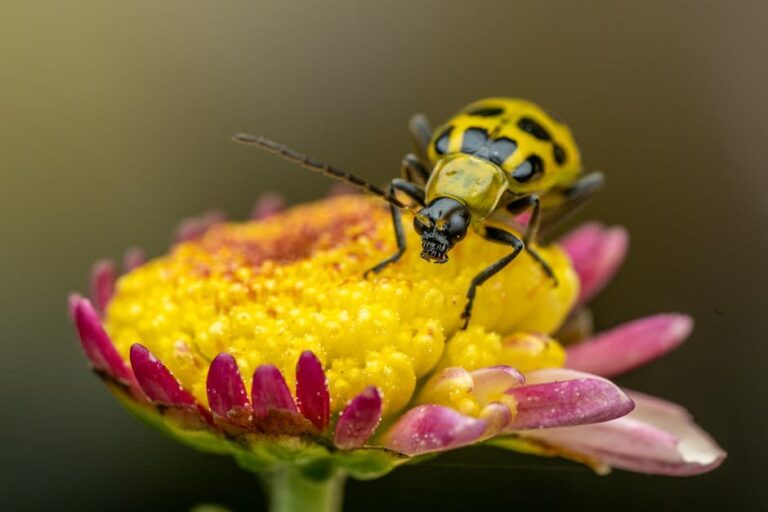
Cucumber beetles can be a real nuisance in your garden, causing significant damage to your prized cucumbers and other summer vegetables. These pesky insects not only feed on plant leaves but also transmit bacterial wilt and other diseases, making them a major concern for gardeners. If you’ve noticed tiny holes on the surface of your cucumber plants or seen beetles flying around your garden, it’s likely that you’re dealing with an infestation. But don’t worry, there are effective organic methods to prevent and control these pests. In this article, we’ll walk you through the life cycle of cucumber beetles, the damage they cause, and provide practical strategies for management, including identification, prevention, and control techniques using natural approaches.
The Problem of Cucumber Beetles
Cucumber beetles can cause significant damage to your garden, but understanding what drives them to target cucumbers is key to finding a solution. Let’s explore the reasons behind their destructive behavior.
Identifying Common Species of Cucumber Beetles
When it comes to identifying cucumber beetles in your garden, it’s essential to know which species you’re dealing with. Two of the most common culprits are the four-lined plant bug and the striped cucumber beetle.
The four-lined plant bug (PoPoolonotus quadrilineatus) is a tiny insect, about 1/8 inch long, with a distinctive red and black pattern on its back. It’s often mistaken for a ladybug or a small stink bug due to its similar appearance. However, the four-lined plant bug has a more oval-shaped body and a characteristic “M” shape on its thorax.
On the other hand, the striped cucumber beetle (Acalymma vittatum) is slightly larger, about 1/4 inch long, with yellow and black stripes running along its back. Its elytra (wing covers) are usually transparent or lightly colored, giving it a slightly translucent appearance. The striped cucumber beetle is often found near cucumbers, squash, and melons, feeding on the plant’s sap.
If you suspect either of these beetles is in your garden, check for their distinctive markings and habits. Keep in mind that both species can cause significant damage to your crops if left unchecked.
Damage Caused by Cucumber Beetles to Garden Plants
Cucumber beetles can cause significant damage to garden plants, leading to reduced plant health and lower yields. These pests feed on leaves, flowers, and fruits, causing the most damage during the larval stage. When they’re fully grown, adults can also inflict harm by eating holes in leaves and flowers.
Feeding damage from cucumber beetles can weaken a plant’s ability to produce, impacting its overall yield and quality. This is especially concerning for vegetable gardeners as it directly affects the harvest. For instance, a severe infestation of cucumber beetles on a squash plant could cause the entire crop to be reduced or even lost.
Cucumber beetles are particularly fond of cucumbers, zucchinis, melons, and other members of the Cucurbitaceae family, but they can also damage plants from other families if the opportunity arises. These pests thrive in gardens where weeds, debris, and overgrown vegetation provide hiding spots for them to escape detection and hide.
Regular garden maintenance is crucial in preventing cucumber beetle infestations. This includes eliminating potential breeding sites, clearing weeds around plants, and keeping plants well-watered but not too moist – a perfect environment for these pests. Regular monitoring of your garden will help you catch any issues early on and prevent severe damage before it’s too late.
Life Cycle and Behavior of Cucumber Beetles
To truly understand how to manage cucumber beetles, let’s take a closer look at their life cycle and behavior, including their habits and typical growth patterns. This will help you anticipate their attacks on your plants.
Understanding the Egg Stage
The egg stage of the cucumber beetle’s life cycle is a critical phase that sets the stage for the rest of their development. Female cucumber beetles typically lay their eggs on the underside of leaves or on stems, usually near the base of the plant. This is where they are most vulnerable to predators and environmental factors.
It takes around 3-5 days for the eggs to hatch into larvae, although this can vary depending on temperature and other conditions. During this time, it’s essential to keep a close eye out for signs of egg-laying, as early detection can help prevent infestations from taking hold. Look for small, yellowish or white specks on the underside of leaves, which are usually clusters of eggs.
To manage egg-laying in your garden, ensure that your plants have good air circulation and are not overcrowded, making it harder for beetles to lay eggs. Consider using row covers to prevent adult beetles from reaching your plants.
Larval Stage: What You Need to Know
The larval stage of cucumber beetles is a crucial period in their life cycle. During this time, they undergo significant changes to prepare for adulthood. The larvae, also known as grubs, are typically 1/4 inch long and have a plump, white body with a distinctive head and mandibles.
These young beetles feed on the same plants that their adult counterparts infest, including cucumber, squash, and melons. They can cause significant damage by chewing on leaves, stems, and fruit, leading to reduced yields and poor plant quality. The larval stage typically lasts around 2-4 weeks, depending on factors like temperature and food availability.
As they mature, the larvae will eventually burrow into the soil in search of a safe place to pupate. It’s essential for gardeners to monitor their crops closely during this period, as early detection can help prevent severe infestations. By understanding the larval stage, you’ll be better equipped to identify and manage cucumber beetle populations before they reach adulthood.
Signs and Symptoms of Cucumber Beetle Infestation
As you inspect your cucumbers, it’s crucial to know what signs and symptoms to look out for that indicate a cucumber beetle infestation is underway. Be aware of these telltale signs to catch the issue early on.
Visual Identification
When it comes to detecting a cucumber beetle infestation, visual identification is key. To spot these pests, start by inspecting your plants carefully, particularly on the underside of leaves and along stems. Look for adult beetles, which are typically 1/4 inch long and have a shiny yellow or black body with distinctive white spots.
Check for eggs on the undersides of leaves, where females often lay them in batches. The eggs are small, white, and usually shaped like tiny footballs. If you suspect an infestation, examine your plants thoroughly, paying attention to areas where beetles tend to congregate, such as near water sources or under eaves.
To make identification easier, consider using a magnifying glass or hand lens to zoom in on potential trouble spots. When handling plants, wear gloves to avoid transferring beetles or eggs from one plant to another. Don’t rely solely on visual inspections – also check for other signs of infestation, such as holes in leaves or flowers, which can be indicative of beetle feeding habits.
Other Indicators of Infestation
When inspecting your garden for signs of cucumber beetle infestation, it’s not just about looking for actual beetles. Other indicators can also suggest that you have a problem on your hands. For instance, damage to plants is a clear sign of an infestation. Cucumber beetles are notorious for feeding on plant leaves and stems, leaving behind torn or chewed areas. If you notice unsightly holes or tears on your cucumber plants, it could be a sign that these pests are present.
Another indicator of infestation is the presence of frass – insect waste. Beetles tend to defecate in large quantities, especially after feeding. A pile of dark, granular material near your plants may indicate an infestation. To inspect for frass, simply gently brush away any debris from the plant’s base and examine the area.
If you notice that your plants are becoming stressed or weakened, it could be due to beetle activity. Cucumber beetles can transmit bacterial wilt and other diseases through their feeding behavior, weakening the plant and making it more susceptible to further damage. By keeping an eye out for these subtle signs, you can catch an infestation early on and take preventative measures to protect your garden.
Management Strategies for Cucumber Beetles
To effectively manage cucumber beetles, you’ll need to employ a combination of cultural and biological controls that minimize their presence and impact on your garden. We’ll explore these management strategies in more detail below.
Cultural Controls: Preventative Measures
Implementing cultural controls is an essential preventative measure to keep cucumber beetles at bay. When it comes to choosing the right plants for your garden, opt for varieties that are resistant to these pesky insects. Look for cultivars with built-in resistance genes or those bred specifically for their ability to withstand beetle attacks.
Practicing good garden hygiene is also crucial in preventing infestations. Regularly remove weeds and debris from around your plants, as cucumber beetles often overwinter on nearby vegetation. Keep your garden clean by removing any infested plant material and disposing of it properly.
Another critical aspect to consider is watering habits. Avoid overwatering, which can attract cucumber beetles and create an ideal breeding environment for them. Instead, maintain a consistent moisture level in your soil, allowing the top 1-2 inches to dry out between waterings. By implementing these cultural controls, you’ll be well on your way to preventing cucumber beetle infestations and protecting your garden’s health.
Biological Controls: Encouraging Beneficial Insects
Biological controls offer an effective way to manage cucumber beetle populations without harming the environment. By introducing beneficial insects like ladybugs and lacewings into your garden, you can encourage them to control pest populations naturally.
Ladybugs are one of the most well-known predators of cucumber beetles. These tiny insects feed on aphids and other pests, but they also have a voracious appetite for cucumber beetle eggs and larvae. To attract ladybugs to your garden, plant nectar-rich flowers like marigolds and zinnias near your cucumber plants. Ladybugs are also attracted to yellow-colored flowers, so consider adding some sunflowers or daisies to your garden.
Lacewings are another beneficial insect that can help control cucumber beetle populations. These delicate insects have long, slender bodies and a distinctive lace-like pattern on their wings. Lacewings feed on aphids, whiteflies, and other soft-bodied pests, but they also prey on cucumber beetle eggs and larvae. To encourage lacewings to visit your garden, plant flowers with strong scents like fennel or dill near your cucumber plants.
To introduce beneficial insects into your garden, consider purchasing them from a reputable supplier or attracting them naturally by planting a diverse range of flowers that provide nectar and shelter for these tiny predators.
Organic Pesticide Options for Cucumber Beetle Control
If you’re looking for a more natural approach to cucumber beetle control, there are several organic pesticide options worth considering. These include neem oil and insecticidal soap, which can be effective alternatives to chemical pesticides.
Soap-Based Sprays
When it comes to managing cucumber beetle infestations, soap-based sprays are a popular organic pesticide option that’s worth considering. These sprays work by suffocating the insects, causing them to drown in their own bodily fluids. This is a non-toxic and environmentally friendly approach to controlling cucumber beetles.
To use soap-based sprays effectively, mix 2-3 tablespoons of mild dish soap with 1 quart of water. Spray the solution directly on the leaves and stems of affected plants, making sure to cover all surfaces evenly. Repeat as needed, but be cautious not to overdo it, as excessive soap residue can harm your plants.
While soap-based sprays are generally effective against cucumber beetles, they may not provide long-term control. Regular monitoring is essential to prevent re-infestation. Additionally, soap-based sprays may not be suitable for use on sensitive or delicate plant species.
Before using soap-based sprays, it’s also worth noting that they can be affected by weather conditions. Avoid spraying in direct sunlight or during windy conditions to ensure the best results. By understanding how to use soap-based sprays effectively and taking necessary precautions, you can enjoy a healthier cucumber crop without resorting to harsh chemicals.
Neem Oil: A Natural Insecticide
Neem oil is a natural insecticide that has been used for centuries to control pests, including cucumber beetles. Its mode of action involves interfering with the beetle’s hormone system, preventing them from reproducing and eventually killing them. This makes it an effective tool for integrated pest management (IPM) strategies.
When using neem oil to control cucumber beetles, it’s essential to follow the recommended application rates. A general rule of thumb is to mix 2-4% neem oil with water, which translates to 2-4 tablespoons per gallon of water. This solution can be applied to the entire plant, including the leaves and soil.
It’s also crucial to note that neem oil should be applied during the cooler parts of the day or evening when bees are less active. Make sure to avoid spraying it on flowers as this may harm beneficial pollinators. For best results, use a neem oil-based insecticide that is specifically labeled for use against cucumber beetles and follow all instructions carefully.
Remember to reapply every 7-10 days as needed to ensure continuous control of the pest population. By incorporating neem oil into your IPM strategy, you can effectively manage cucumber beetle populations without harming the environment or exposing yourself to harsh chemicals.
Frequently Asked Questions
What are the signs of a severe cucumber beetle infestation, and how can I determine if I need to take more drastic control measures?
A severe infestation is characterized by extensive leaf damage, widespread presence of beetles, and significant reduction in plant growth. To determine if you need more drastic control measures, monitor your plants closely for these signs and consider the severity of the damage. If left unchecked, cucumber beetles can lead to the transmission of bacterial wilt and other diseases that may be difficult to treat.
Can I use a combination of natural methods to manage cucumber beetles effectively?
Yes, combining multiple organic methods can provide more effective control over cucumber beetle populations. For example, using neem oil to repel adult beetles while also introducing beneficial insects like ladybugs or lacewings to prey on the larvae can help reduce damage and prevent disease transmission.
How long does it take for cucumber beetles to complete their life cycle, and when should I expect a new generation of pests?
The length of the cucumber beetle’s life cycle varies depending on environmental factors such as temperature and humidity. Typically, a female beetle lays eggs in 2-4 days after mating, and the eggs hatch into larvae within 3-5 days. The larval stage lasts around 10-14 days, followed by pupation for another 3-5 days. After emerging from the pupal stage, adult beetles begin reproducing, creating a new generation of pests.
What are some common mistakes gardeners make when trying to control cucumber beetle populations?
Some common mistakes include using broad-spectrum insecticides that can harm beneficial insects, failing to remove weeds and debris that provide shelter for beetles, and not introducing natural predators or parasites early enough in the infestation process. It’s essential to identify these potential pitfalls before implementing management strategies.
How often should I inspect my garden for signs of cucumber beetle damage, especially during peak seasons?
Regular inspections are crucial during peak seasons when cucumber beetles are most active. Set a schedule to check your plants at least once every 3-5 days, focusing on areas with dense foliage and near the soil surface where larvae tend to congregate. Early detection allows for timely intervention and reduces the risk of severe damage and disease transmission.