
If you’re like many gardeners and farmers, you’ve likely struggled with pests that threaten your tomato crop. Pests can be devastating, not only reducing yields but also forcing you to reach for pesticides as a last resort. However, there’s good news: beneficial insects are here to help! Beneficial insects like bees, ladybugs, and lacewings are naturally occurring allies that can manage pest populations without harming your plants or the environment.
In this article, we’ll explore how these helpful insects can benefit your tomato garden or farm. We’ll discuss which beneficial insects are best suited for controlling common tomato pests, and provide tips on creating a welcoming environment for them to thrive. By learning how to attract and support these beneficial insects, you can reduce your reliance on pesticides, improve yields, and create a more sustainable growing practice.
Understanding Tomato Insect Pests and Their Impact
Let’s take a closer look at the common tomato insect pests that can wreak havoc on your plants, from hornworms to aphids. Understanding these critters is key to knowing what beneficial insects to call in for help.
Common Tomato Pests: Identification and Damage
When growing tomatoes, it’s essential to be aware of common pests that can harm your plants. Let’s take a closer look at some of the most notorious tomato pests: hornworms, aphids, and whiteflies.
Hornworms are large, green caterpillars with a distinctive horn on their rear end. They can grow up to 4 inches long and feed on tomato leaves, stems, and fruit. Their damage often appears as holes or notches in the leaves and can weaken the plant’s overall health. To control hornworms, inspect your plants regularly and hand-pick them off.
Aphids are small, soft-bodied insects that feed on plant sap, causing curled or distorted leaves. They can also transmit plant viruses like tomato spotted wilt virus. These pests often appear in clusters on stems and leaves. Prune infested areas to prevent further damage.
Whiteflies are tiny flying insects that feed on plant sap, weakening the plant’s defenses. Their eggs can hatch into a cloud of winged adults, spreading quickly through your garden. Inspect your plants for sticky honeydew droplets, which can indicate whitefly presence. Use neem oil or insecticidal soap to control these pests.
Remember, early detection and intervention are key to preventing pest damage. Regularly inspect your tomato plants and use integrated pest management techniques to maintain a balanced ecosystem in your garden.
Economic and Environmental Significance of Tomato Pest Management
Tomato pest management is not just crucial for maintaining healthy crops, but it also has significant economic and environmental implications. Tomato infestations can lead to substantial losses for farmers worldwide. According to the Food and Agriculture Organization (FAO), tomato crop losses due to pests are estimated to be around 12% globally each year. In the United States alone, this translates to a loss of over $600 million annually.
To mitigate these economic impacts, environmentally friendly management practices must be adopted. This can include using beneficial insects like ladybugs and lacewings that prey on tomato pests. These beneficial insects are an effective and sustainable way to control infestations without harming the environment or human health. By incorporating beneficial insect-based pest management strategies into their farming practices, farmers can reduce chemical use and minimize crop damage.
In addition to economic benefits, environmentally friendly management practices also contribute to a healthier ecosystem. Chemical pesticides can have long-term effects on soil quality, waterways, and biodiversity. By opting for integrated pest management (IPM) approaches that incorporate beneficial insects, farmers can create a balanced ecosystem that supports the health of both crops and the environment.
Introduction to Beneficial Insects in Tomato Ecosystems
When it comes to cultivating healthy tomato plants, beneficial insects play a crucial role in keeping pests under control and promoting overall plant growth. Let’s take a closer look at these tiny helpers!
Beneficial Insects That Pollinate Tomatoes: Bees, Wasps, and More
When it comes to pollinating tomatoes, beneficial insects like bees, wasps, and butterflies play a vital role. These insects are attracted to the sweet nectar of tomato flowers, which they use as a source of food. In the process of collecting nectar, they transfer pollen from one flower to another, facilitating fertilization and ultimately leading to fruit set.
Bees, in particular, are some of the most effective pollinators of tomatoes. A single honey bee can visit hundreds of tomato flowers in a single day, transferring pollen and increasing the chances of successful pollination. Some species of wasps, such as mason bees and leafcutter bees, are also important tomato pollinators.
Butterflies, including monarchs and sulfurs, also contribute to tomato pollination. As they move from flower to flower in search of nectar, they transfer pollen, although their role is generally less significant than that of bees and wasps. To attract these beneficial insects to your garden, plant a diverse range of flowers that provide nectar and pollen throughout the growing season.
By understanding the importance of these insects and how they interact with tomato plants, you can take steps to create a pollinator-friendly environment that supports the health and productivity of your tomato crop. This may involve planting specific flowers, reducing pesticide use, or creating sheltered areas for beneficial insects to nest and overwinter.
Natural Enemies of Tomato Pests: Ladybugs, Lacewings, and Parasitic Wasps
In addition to the beneficial insects that prey on tomato pests through predation, there are also natural enemies that feed on them by laying their eggs inside. These natural enemies of tomato pests are just as essential to maintaining a healthy and balanced ecosystem.
One such group is parasitic wasps, which are known for their ability to inject their eggs into the bodies of pest insects. The larvae then feed on the internal organs of the host, ultimately killing it from within. For example, Trichogramma wasps prey on tomato hornworms by laying their eggs inside the caterpillars’ bodies.
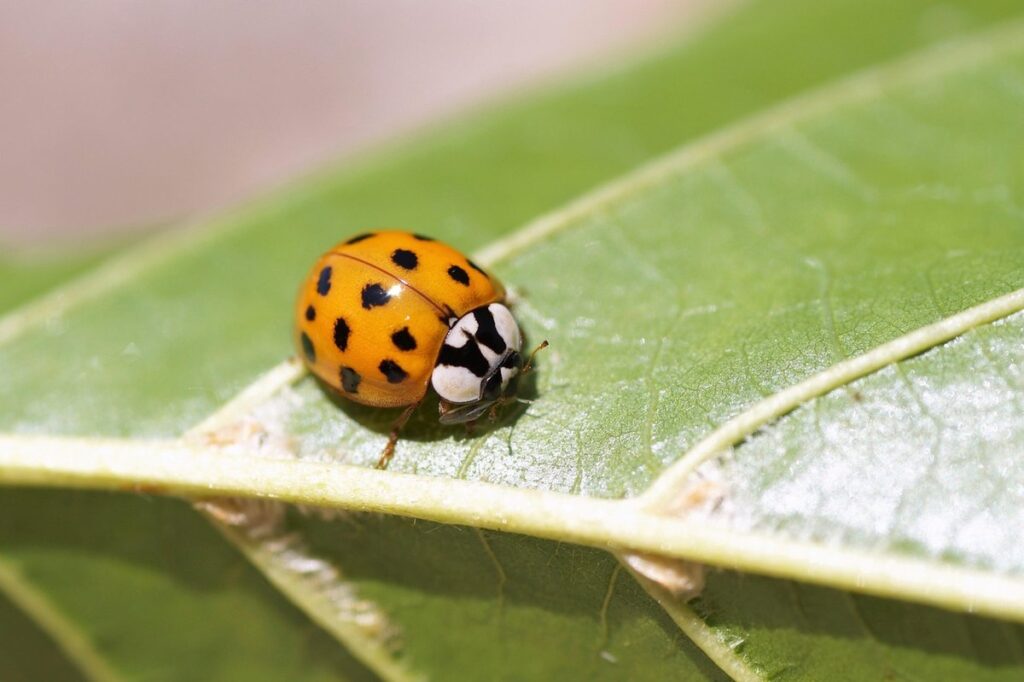
Ladybugs and lacewings are another type of natural enemy that is beneficial to tomato crops. These insects prey on aphids, whiteflies, and other pests through predation, reducing their populations and preventing them from causing significant damage. Lacewings, in particular, can consume up to 60 times their own body weight in aphids per day.
To attract these natural enemies to your garden, plant a diverse range of flowers that are rich in nectar and pollen, such as marigolds, calendula, and cosmos. These flowers will provide a food source for the beneficial insects and encourage them to stay on your farm or in your backyard.
Biological Control Methods for Managing Tomato Pest Populations
When it comes to managing tomato pest populations, biological control methods offer a safe and effective way to reduce pesticide use and promote healthy gardens. Let’s explore some natural approaches together!
Encouraging Beneficial Insect Populations in Tomato Crops
Attracting beneficial insects to your tomato crops is crucial for maintaining a balanced ecosystem. To encourage these helpful creatures, consider planting a diverse range of flowers and herbs that attract pollinators. This approach not only supports the well-being of your tomatoes but also fosters biodiversity in your garden.
Planting nectar-rich flowers like marigolds, sunflowers, and cosmos near your tomato plants can draw in bees, butterflies, and other pollinators. These beneficial insects are essential for transferring pollen between plants, promoting fruit set, and increasing yields.
Some key considerations when selecting flowers and herbs include their blooming periods and fragrance strength. For example, calendula blooms in the spring and summer months, providing a consistent nectar source for pollinators during peak growing seasons. Additionally, incorporating herbs like mint, basil, and oregano can help repel pests that target tomatoes, such as aphids and whiteflies.
By incorporating these beneficial flowers and herbs into your garden design, you’ll create an inviting environment for helpful insects to thrive, ultimately promoting the health and productivity of your tomato crops.
Introduction and Maintenance of Beneficial Insects in Greenhouses or Indoor Spaces
Introducing beneficial insects to greenhouses or indoor spaces requires careful planning and execution. Before bringing in these natural allies, it’s essential to ensure that the environment is suitable for their survival. This includes providing a stable temperature range, adequate humidity levels, and an optimal pH balance.
Once you’ve created a welcoming space, it’s time to introduce the beneficial insects. A general rule of thumb is to start with a small population and gradually increase numbers as the colony establishes itself. This approach allows you to monitor the effectiveness of the introduction and make any necessary adjustments.
Some beneficial insects, such as ladybugs and lacewings, can be introduced through physical releases, while others, like parasitic wasps, may require more complex introductions involving host plants or artificial habitats. Regular monitoring of temperature, humidity, and pest populations will help you identify areas for improvement and ensure the beneficial insects continue to thrive.
In addition to these considerations, it’s crucial to maintain a clean and well-ventilated environment to prevent disease outbreaks among both the beneficial insects and the tomato crop.
Encouraging a Healthy Balance Between Beneficial and Pest Insect Populations
As you work to create an ecosystem that supports your tomatoes, it’s essential to encourage a balance between beneficial insects and those that might harm them. This delicate harmony is crucial for long-term success.
Habitat Management: Creating a Balance Between Beneficials and Pests
When it comes to cultivating a thriving tomato garden, creating an environment that supports both beneficial and pest insects is crucial. This delicate balance can be achieved through effective habitat management. By designing and maintaining the perfect environment for beneficial insects, you’ll naturally attract fewer pests.
To create this balance, consider incorporating a variety of plants that serve as food sources or shelter for beneficial insects. For instance, planting marigolds near your tomatoes will attract beneficial nematodes, which prey on tomato hornworms. Intercropping with herbs like basil and mint also provides a haven for lacewings and parasitic wasps, which are natural predators of pests.
Avoid using broad-spectrum pesticides that can harm beneficial insects as well. Instead, opt for targeted solutions or introduce beneficial nematodes to control pest populations naturally. By making these simple adjustments to your garden’s ecosystem, you’ll create a self-sustaining environment where beneficial insects thrive, and pests are kept under control.
Integrated Pest Management (IPM) Strategies for Tomato Crops
When it comes to growing tomatoes, integrated pest management (IPM) strategies are essential for maintaining a healthy balance between beneficial and pest insect populations. IPM combines biological, cultural, physical, and chemical controls to manage pest populations while preserving beneficial insects.
Start by monitoring your crop regularly for signs of pests, such as aphids, whiteflies, or hornworms. Use sticky traps or yellow traps to capture adult pests and prevent them from laying eggs on your plants. For severe infestations, consider introducing natural predators like lacewings or parasitic wasps that feed on pest larvae.
Cultural controls involve modifying the growing conditions to discourage pests. This can be achieved by rotating crops, maintaining soil health through organic amendments, and adjusting irrigation schedules to prevent water stress. Physical barriers like fine mesh or fine netting can also keep flying pests away from plants.
Chemical controls should only be used as a last resort, as they can harm beneficial insects. Instead, opt for neem oil-based sprays or soap solutions that specifically target pest eggs and larvae while preserving beneficial insects.
Integrating Beneficial Insects into Commercial Tomato Production
To successfully integrate beneficial insects into your commercial tomato production, you’ll need to consider factors like crop timing and insect species selection. Let’s dive deeper into these crucial considerations.
Large-Scale Implementation of Biological Control Methods in Tomatoes
Implementing large-scale biological control methods in commercial tomato production is not only feasible but also highly effective. In fact, many large-scale farms have successfully incorporated beneficial insects into their integrated pest management (IPM) strategies with remarkable results.
For example, a study conducted by the University of California found that introducing beneficial insects such as lacewings and parasitic wasps reduced the need for chemical pesticides in tomato crops by up to 75%. This not only improved crop yields but also minimized environmental impact. To implement large-scale biological control methods, farmers can start by identifying areas with high pest pressure and introducing beneficial insect species accordingly.
Some key considerations include:
• Monitoring pest populations regularly to determine the most effective beneficial insect introduction schedule
• Maintaining a diverse range of beneficial insects to ensure long-term pest suppression
• Educating farm staff on the importance of preserving beneficial insects’ habitats and reducing chemical pesticide use
By adopting these strategies, farmers can create a balanced ecosystem that promotes the health and well-being of their tomato crops.
Overcoming Challenges: Climate Change, Pesticide Resistance, and More
As you integrate beneficial insects into commercial tomato production, you may encounter challenges that hinder their effectiveness. One significant obstacle is climate change, which can disrupt the delicate balance between pests and beneficial insects. Rising temperatures and changing precipitation patterns can lead to an increase in pest populations, making it more difficult for beneficial insects to control them.
Another challenge is pesticide resistance, where repeated exposure to synthetic chemicals selects for resistant pest strains. This can render beneficial insects less effective or even obsolete. To mitigate this issue, consider adopting integrated pest management (IPM) strategies that combine physical barriers, crop rotation, and biological controls. For example, introducing parasitic wasps that prey on tomato hornworms can be an effective way to control populations.
By monitoring your crops closely and adapting your beneficial insect programs accordingly, you can overcome these challenges and maintain a thriving and resilient tomato production system. Regularly assess the effectiveness of your beneficial insects and make adjustments as needed to ensure their continued success.
Supporting Research and Future Directions for Beneficial Insect Management in Tomatoes
Research has shown that beneficial insects play a crucial role in tomato production, but there’s still much to be learned. Let’s explore the latest findings and future directions for these essential helpers.
Ongoing Research on Beneficial Insects and Tomato Pest Management
Researchers are continually exploring innovative ways to harness the power of beneficial insects for effective tomato pest management. One notable area of focus is the use of parasitoid wasps, such as Trichogramma and Braconidae, which prey on tomato pests like whiteflies and aphids. Studies have shown that these wasps can significantly reduce pest populations when introduced early in the growing season.
Another research initiative involves the development of attract-and-kill systems for beneficial insects like lady beetles and lacewings. These systems utilize specific pheromones or visual cues to lure beneficial insects towards pest hotspots, increasing their efficacy as biological control agents. For example, researchers at the University of California have developed an attract-and-kill system for lady beetles that has shown a 90% reduction in aphid populations.
These ongoing research initiatives demonstrate the growing recognition of beneficial insects’ potential in integrated pest management strategies for tomatoes. As our understanding of these insects and their interactions with tomato pests deepens, we can expect to see more effective and sustainable solutions emerge.
Recommendations for Further Study and Action in this Field
If you’re eager to dive deeper into the world of beneficial insects and their role in tomato cultivation, there are several key areas to explore. One critical area is the study of insect-plant interactions, which can provide valuable insights into how to optimize the relationships between beneficial insects and tomato plants.
To this end, researchers could investigate the effects of different tomato varieties on beneficial insect populations, as well as the impact of various agricultural practices on these delicate ecosystems. By understanding the complex dynamics at play, growers may be able to develop more effective strategies for attracting and retaining beneficial insects.
Some recommended readings include studies examining the role of pollinators in tomato production, such as a study from the University of California that demonstrated the importance of bees in pollinating tomatoes. You can also explore online resources like the USDA’s pollinator program, which offers guidance on creating pollinator-friendly habitats in agricultural settings.
For those looking to take action, consider experimenting with introducing beneficial insects into your tomato garden through techniques such as companion planting or using insect-attracting flowers nearby. This hands-on approach can help you develop a more nuanced understanding of the interconnectedness between plants and beneficial insects.
Frequently Asked Questions
Can I use beneficial insects alongside other pest management methods, or do they need to be my sole solution?
Beneficial insects can complement other integrated pest management (IPM) strategies, such as physical barriers and cultural controls. In fact, using a combination of methods can enhance their effectiveness. Just ensure that the beneficial insects are introduced in harmony with these other tactics.
How long does it take for beneficial insect populations to establish themselves in my tomato garden or farm?
The time it takes for beneficial insects to establish themselves can vary depending on factors like climate, crop diversity, and initial population density. Generally, you may start seeing noticeable benefits within 2-6 weeks after introducing the beneficial insects.
What are some common mistakes that can hinder the success of biological control methods in tomato pest management?
Common pitfalls include inadequate habitat creation, insufficient initial population densities, poor timing (e.g., releasing beneficial insects too late), and insufficient monitoring and maintenance. Regularly inspect your garden or farm for potential issues and make adjustments accordingly.
Can I use beneficial insects in greenhouses or indoor spaces, or are they limited to outdoor environments?
Beneficial insects can thrive in controlled environments like greenhouses or indoor spaces. However, you may need to provide specialized care, such as tailored habitat management and climate control, to ensure their success.
How do I monitor the effectiveness of my beneficial insect introduction, and what signs should I look for?
Regularly inspect your tomato plants for pest populations, observing any changes in abundance or severity over time. Additionally, note any visible benefits like improved growth rates, increased yields, or reduced pesticide usage. Consider using monitoring tools, such as sticky traps or sentinel plants, to track the presence of beneficial insects and pests alike.