
Are you ready to take your gardening skills to the next level? Growing an espalier apple tree can be a rewarding experience, but it requires careful planning and maintenance. With our comprehensive guide, you’ll learn how to select the perfect variety of apple tree for your space, plan its layout, and train it to thrive on a trellis or wall. We’ll cover everything from pruning and fertilization to troubleshooting common issues that can affect your harvest. By following our step-by-step instructions, you’ll be well on your way to enjoying a bountiful harvest of juicy apples right in your own backyard. Whether you’re a seasoned gardener or just starting out, this guide will walk you through the process of growing an espalier apple tree with ease and confidence.
Choosing the Right Apple Variety
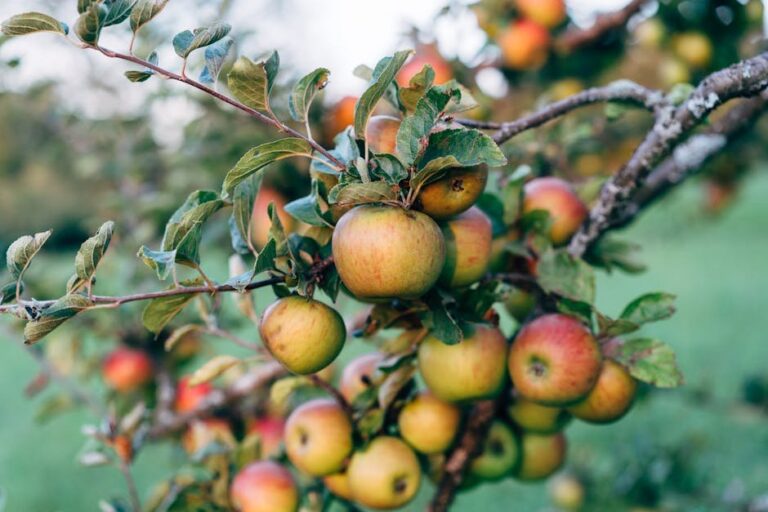
When selecting the perfect apple variety for your espalier tree, consider factors such as climate, flavor preferences, and pollination needs to ensure optimal growth and fruit production.
Factors Influencing Selection
When selecting an apple variety for espalier training, several key factors come into play. Climate is one of the most significant considerations, as different varieties thrive in varying temperature and precipitation conditions. For example, ‘Anna’ apples excel in warm climates with minimal chill hours, while ‘Red Delicious’ prefers a slightly cooler climate.
Soil type also plays a crucial role in apple variety selection. Apple trees require well-draining soil to prevent root rot, but some varieties are more tolerant of poor soil conditions than others. For instance, ‘Braeburn’ apples can thrive on shallow soils with low fertility, making them an excellent choice for espalier training in areas with challenging soil.
Disease resistance is another vital factor to consider, as many apple varieties are susceptible to common diseases like powdery mildew and scab. Selecting a disease-resistant variety will save you from frequent pruning and fungicide applications. Look for varieties bred for specific disease resistances, such as ‘Honeycrisp’, which offers natural resistance to powdery mildew.
Ultimately, the desired fruit characteristics should also guide your selection. Do you prefer sweet and crunchy apples or tart and tangy ones? Choose a variety that matches your taste preferences and uses.
Popular Apple Varieties Suitable for Espaliering
When it comes to espaliering apple trees, not all varieties are created equal. Some are more suited for this type of training than others due to their growth habits and characteristics. Here are some popular apple varieties that thrive when trained on an espalier system:
One popular choice is the ‘Red Delicious’ variety, known for its compact growth habit and small leaves. This makes it an ideal candidate for a narrow espalier system, perfect for smaller gardens or spaces with limited room to grow.
Another great option is the ‘Gala’ variety, which has a naturally upright growth habit that lends itself well to espalier training. Its branches are also relatively easy to manipulate into the desired shape, making it a favorite among espalier enthusiasts.
The ‘Braeburn’ and ‘Granny Smith’ varieties also excel when trained on an espalier system. Both have a more open growth habit that allows for excellent air circulation and sunlight penetration, reducing the risk of disease and promoting healthy fruit production.
These popular apple varieties not only thrive in an espalier system but also produce delicious fruit, making them perfect for home growers looking to maximize their space while still enjoying a bountiful harvest.
Planning Your Espalier System
Before you start planting, it’s essential to plan out your espalier system carefully, considering factors such as space and trellis type. Let’s get started on designing a supportive structure for your apple tree.
Determining the Right Location and Orientation
When it comes to planning your espalier apple tree system, choosing the right location is crucial for its success. This means considering more than just aesthetics; you need to think about sunlight exposure, wind direction, and access to water.
First, think about how much direct sunlight your chosen spot receives. Apple trees generally require at least six hours of direct sunlight per day to produce fruit well. If your yard has a shaded area, make sure it’s not the one you choose for your espalier system.
Next, consider the direction of prevailing winds in your area. A south-facing wall is ideal for an espalier apple tree as it catches sunlight throughout the day and protects against cold winds coming from the north. However, if this isn’t feasible, a west or east-facing wall can work too – just be mindful of potential heat stress during hot summer months.
Finally, don’t overlook access to water when selecting your location. Your espalier apple tree will need regular watering, especially during its first year after planting. Choose a spot that’s close enough to an irrigation source for easy maintenance.
Calculating Space Requirements
When calculating space requirements for your espalier apple tree, it’s essential to consider not only its mature size but also its pruning needs and desired training structure. The average mature apple tree can grow up to 15-20 feet tall, so you’ll want to ensure you have enough space for the tree to reach its full height while still allowing for proper air circulation.
To give you a better idea of what to expect, consider the following factors:
* A dwarf or semi-dwarf rootstock will typically require more space than a larger rootstock, as it will eventually outgrow its constraints.
* If you plan to prune your tree heavily, you’ll want to leave even more space for the branches to grow and be pruned in future seasons. Pruning not only maintains shape but also promotes healthy growth.
For an espalier system, consider a minimum of 6-8 feet wide by 10-12 feet long for a single tree. This will give you enough room to work with when shaping and training the branches to your desired structure. Keep in mind that this is just a starting point, and adjustments may be necessary as your tree grows.
Training the Apple Tree
To train your espalier apple tree successfully, you’ll need to learn how to prune and shape its branches to maximize fruit production and maintain a beautiful, balanced structure. This section will guide you through that process step-by-step.
Step 1: Planting and Pruning Initial Setup
When planting your espalier apple tree, it’s crucial to choose a suitable rootstock and graft. For espalier training, you’ll want to opt for a dwarfing rootstock that will help control the tree’s size while promoting a robust fruit set. Some popular choices include M9 and M26 rootstocks, which are well-suited for espalier systems.
Next, carefully inspect your graft union to ensure it’s not too close to the soil surface or buried beneath soil debris. Proper graft alignment is essential for the tree’s overall health and growth potential.
Upon planting, prune your espalier apple tree minimally to encourage a strong central leader and balanced branch structure. Remove any weak or damaged branches, as well as suckers that may arise from the rootstock. Cut back any vigorous shoots by about one-third of their length, leaving only three to five main branches per side. This will promote air circulation, sunlight penetration, and even fruit distribution. Keep your pruning cuts clean and angled, making sure not to crush or tear surrounding bark.
Step 2: Fruiting Wood Selection and Development
When it comes to training an espalier apple tree, selecting and developing fruiting wood is crucial for healthy fruit production and optimal tree structure. Fruiting wood refers to the branches that produce flowers and fruits. To identify these branches, look for ones with a smaller diameter than 1 inch (2.5 cm) and have a reddish-brown color. These are typically the current year’s growth.
To encourage healthy fruiting wood development, prune your espalier apple tree during its dormant season. Cut back any weak or damaged branches to about 6-8 inches from the trunk. This will allow new growth to emerge in the spring and promote a strong structure. Prune laterals (side branches) to maintain an open center system, which allows sunlight to penetrate the canopy and promotes air circulation.
For example, if you have a dwarf apple tree variety, like ‘Red Delicious’, prune it every winter to about 18 inches from the ground. This will encourage new growth to emerge from the base of the plant, producing more fruiting wood.
Managing Your Espalier Apple Tree
To keep your espalier apple tree thriving, you’ll need to learn how to prune and shape it regularly, which we cover in detail next. Regular pruning is key.
Regular Maintenance Tasks
Regular maintenance tasks are crucial for your espalier apple tree’s health and productivity. Pruning is one of the most critical tasks to ensure proper growth and fruiting. Prune your tree annually, removing dead, diseased, or damaged branches. Thin out dense areas to allow sunlight penetration and air circulation.
Fertilization is another essential task. Feed your espalier apple tree with a balanced fertilizer in early spring, following the manufacturer’s instructions. You can also use compost tea as an alternative. This will provide necessary nutrients for fruit development and overall health.
Pest management involves monitoring your tree regularly for signs of pests like aphids, codling moths, and spider mites. Use organic or integrated pest management methods to control infestations. For disease management, inspect your tree frequently for fungal infections, cankers, or powdery mildew. Remove infected branches promptly to prevent the spread.
A well-designed irrigation system is vital for optimal growth. Water your espalier apple tree deeply but infrequently to encourage deep root development. Mulch around the base to retain moisture and suppress weeds. Aim to provide about 1 inch of water per week, either from rainfall or irrigation. Adjust your watering schedule according to seasonal changes and weather conditions.
Tips for Overwintering and Winter Protection
As winter approaches, it’s essential to prepare your espalier apple tree for the harsh months ahead. Proper overwintering and protection will ensure your tree survives the cold temperatures and potential extreme weather conditions.
When preparing your tree for winter, start by inspecting its structure and pruning any dead or diseased branches. This will prevent damage from snow and ice accumulation. Prune also at a 45-degree angle to maintain water flow in case of frost.
To protect your espalier apple tree from wind, use a burlap wrap or a breathable cloth around the trunk, securing it with twine. Make sure not to tie it too tightly as this can damage the bark. Another option is to apply a layer of mulch or straw around the base of the tree.
In addition to protecting your tree’s structure, take measures to prevent winter damage from extreme weather conditions. Secure any loose branches and cover young shoots with a sheet or tarp if you live in an area prone to heavy snowfall. Regularly check on your tree during the winter months to ensure it remains stable and secure.
Harvesting Your Fruiting Companion
Now that your espalier apple tree is bearing delicious fruit, it’s time to harvest your bounty and enjoy the fruits of your labor. This section will guide you through the harvesting process.
Timing of First Harvest
Identifying when your espalier apple tree is ready for its first harvest can be a bit tricky, but don’t worry, we’ve got you covered. The timing of the first harvest depends on several factors, including the variety of your apple tree and the climate you’re in.
Generally, most apple trees are ready to harvest between 2-10 years after planting, with some varieties ripening faster than others. For example, early-season varieties like ‘Red Delicious’ and ‘Gala’ tend to be ready in mid-to-late summer (August-September), while late-season varieties like ‘Granny Smith’ and ‘Braeburn’ may not be ripe until October or even November.
In terms of climate, warmer temperatures can accelerate the ripening process, so if you live in a region with mild winters and hot summers, your apples might be ready earlier than expected. On the other hand, cooler climates with shorter growing seasons can delay ripening. To ensure optimal flavor and texture, harvest your apples when they’re fully ripe, as this is typically when their sugars have reached peak levels.
Keep an eye on the tree’s fruit: check for a yellow or green skin that’s slightly soft to the touch, and a sweet aroma. For most varieties, you’ll want to pick apples within 1-2 weeks of reaching full color, as they can quickly become overripe if left on the tree too long.
Tips for Maximum Fruit Quality and Yields
As you’ve successfully harvested your espalier apple tree’s fruit, it’s essential to prioritize post-harvest care to maintain quality and maximize yields for subsequent seasons. Proper storage techniques are critical to preserving the freshness of your apples.
To store apples, choose a cool, dry place with consistent temperatures between 32°F and 40°F (0°C and 4°C). Avoid direct sunlight, as it can cause spoilage. Store fruits in breathable containers or bags to maintain airflow and prevent moisture buildup.
When handling harvested fruit, handle them gently to avoid bruising, which can lead to rot and decay. Regularly inspect stored apples for signs of spoilage, such as mold, sliminess, or an off smell. Remove any affected fruits immediately to prevent the spread of decay.
By following these storage techniques and handling procedures, you’ll be able to maintain your espalier apple tree’s fruit quality while also promoting healthy growth for next year’s harvest. This will ensure a bountiful yield in subsequent seasons, allowing you to enjoy fresh apples from your very own espalier tree.
Troubleshooting Common Issues
Don’t worry if things don’t go as planned – we’ll walk you through common issues and their solutions, from diseased leaves to weak branch growth.
Identifying and Addressing Health Problems
As you nurture your espalier apple tree, it’s essential to monitor its health closely. Potential issues can arise from pests, diseases, or environmental factors, which if left unchecked, may compromise the overall health of your tree. Look out for signs such as yellowing leaves, black spots on branches, or an unbalanced canopy.
Some common problems include powdery mildew, scab, and fire blight. These can be identified by inspecting your tree regularly. For instance, powdery mildew appears as a white coating on the upper side of leaves, while scab causes black spots to form on fruit and leaves. Fire blight results in a dieback of branches.
To address these problems, maintain good sanitation practices by removing any infected or damaged branches. Use organic methods such as neem oil or insecticidal soap to control pests like aphids and spider mites. Prune your tree annually to promote healthy growth and prevent disease from spreading. Regularly inspect your tree’s roots for signs of root rot, which can be caused by overwatering or poor drainage.
By staying vigilant and taking prompt action when issues arise, you’ll ensure the continued health and productivity of your espalier apple tree.
Resolving Training and Structural Issues
As you train your espalier apple tree, it’s essential to monitor its structure and address any issues that may arise. Keep a close eye on the tree’s shape, ensuring that the branches are balanced and evenly spaced. Look out for signs of strain or weakness, such as droopy or bent limbs.
To identify structural problems, inspect your tree regularly during the training process. Check if the branches are growing in the desired direction and if they’re being supported adequately by the framework. Be mindful of the weight of the fruit, which can cause branches to become overloaded.
Address any structural issues promptly to prevent damage or reduced fruiting. Prune weak or damaged limbs, and use stakes or ties to support branches that need extra help. Regular pruning will also encourage a strong, balanced structure and promote healthy growth.
Frequently Asked Questions
What are the ideal conditions for an espalier apple tree to thrive during its first year of growth?
Espalier apple trees require a year or two to establish themselves before they start producing fruit. During this time, it’s essential to provide them with optimal growing conditions, including full sun, well-draining soil, and regular watering. Mulch around the base to retain moisture and suppress weeds.
Can I grow an espalier apple tree in containers if I have limited space?
Yes, container-grown espalier apple trees can thrive in small spaces as long as they receive sufficient sunlight (at least 6 hours a day) and are watered regularly. Use a large container with good drainage and fertilize the tree regularly to promote healthy growth.
How often should I prune my espalier apple tree, especially during its first year of growth?
Prune your espalier apple tree in late winter or early spring when it’s dormant. Pruning will help control the tree’s shape, encourage fruiting branches, and remove any dead or diseased wood. For the first year, aim to prune about 1/3 to 1/2 of the tree’s new growth to promote healthy development.
Can I grow multiple apple varieties together on a single espalier system?
Yes, but you’ll need to choose varieties that are compatible in terms of pollination needs and growth habits. Some popular combinations include ‘Red Delicious’ and ‘Gala’, or ‘Granny Smith’ and ‘Fuji’. Make sure to plant at least two trees for cross-pollination purposes.
How can I troubleshoot issues with my espalier apple tree’s leaves turning yellow or developing black spots?
Common problems like leaf discoloration or fungal infections often require a combination of good gardening practices and targeted treatment. Regularly inspect your tree, remove any affected areas, and adjust your watering schedule to ensure the tree isn’t too wet or dry. Consider using organic fungicides as a preventative measure during high-risk periods.