
Identifying purslane in your garden can be a challenge, especially if you’re new to gardening. This common weed is often mistaken for other plants due to its similarity in appearance. But knowing how to accurately identify purslane is crucial, as it can outcompete and crowd out your desired plants, affecting their growth and health.
In this comprehensive guide, we’ll walk you through the distinct characteristics of purslane, helping you distinguish it from similar plants that may be growing in your garden. We’ll cover its unique features, such as its succulent leaves and stems, and provide tips on how to identify it at various stages of growth. By the end of this article, you’ll be able to confidently recognize purslane and take steps to manage it effectively, ensuring a healthier and more balanced garden ecosystem.
What is Purslane?
Purslane, a common weed found in many gardens, has a unique appearance that can be both striking and deceiving to gardeners. Let’s take a closer look at its distinctive features.
Overview of Purslane’s Appearance
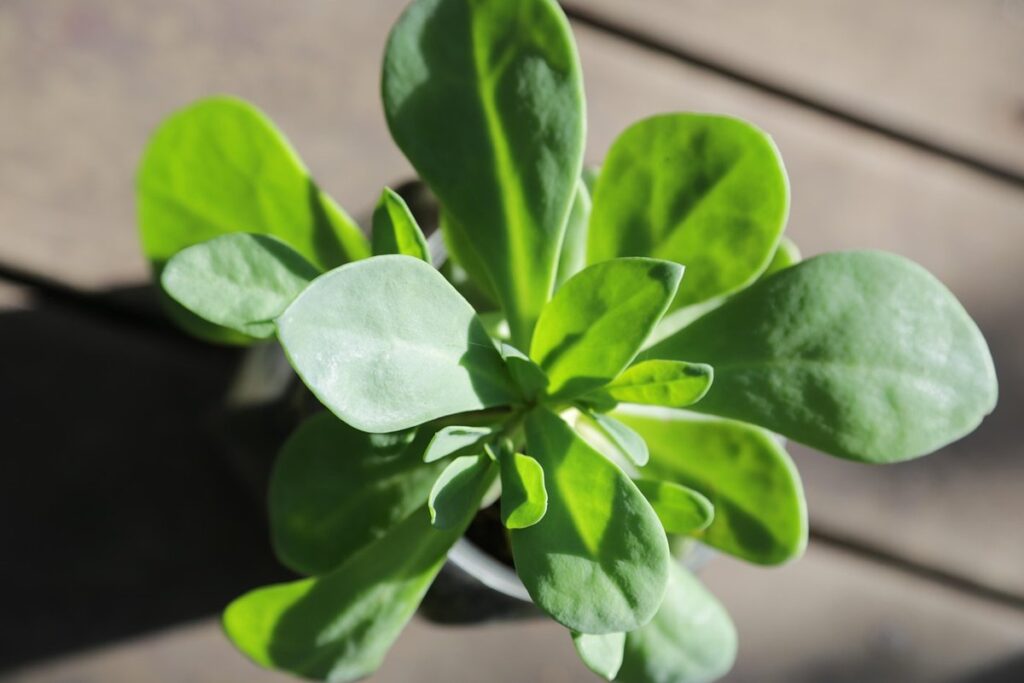
When it comes to identifying purslane in your garden, one of the most distinctive features is its appearance. Purslane is a succulent plant that has thick, fleshy leaves and stems that are perfectly adapted to conserve water in arid environments.
The leaves of purslane are typically narrow and ovate, measuring between 1-4 inches (2.5-10 cm) in length, with a pointed tip at the end. They have a soft, pliable texture and can be a deep green color or slightly reddish tint depending on the amount of sunlight they receive. What’s more distinctive is that purslane leaves are attached to the stem by a small stalk, giving them a somewhat loose appearance.
The stems themselves are also fleshy and succulent, often growing up to 1-2 feet (30-60 cm) in length. They can be branched or unbranched and have tiny, inconspicuous flowers that are usually yellowish-green in color. When observing purslane, it’s essential to pay attention to the overall shape of its leaves and stems as they grow; this can give you a clear indication of whether it’s indeed purslane growing in your garden or another succulent plant altogether.
To help identify purslane confidently, keep an eye out for these distinctive features: fleshy leaves with pointed tips, loose attachment to the stem, and branched or unbranched stems with tiny yellowish-green flowers.
Common Misidentifications
When it comes to identifying purslane in your garden, it’s not uncommon for it to be mistaken for other plants that share similar characteristics. One of the most common misidentifications is with lamb’s quarters (Chenopodium album), a weed that can often be found growing alongside purslane. The two plants have some similarities, including their sprawling habit and edible leaves. However, purslane has distinctive features such as its juicy stems and red-tinted leaves, which are not typically found in lamb’s quarters.
Another plant that is often mistaken for purslane is wild spinach (Chenopodium ambrosioides). While both plants have edible leaves, wild spinach tends to grow more upright and has a coarser texture than purslane. Additionally, the leaves of wild spinach often have a slightly bitter taste compared to the mild flavor of purslane.
To avoid misidentifying purslane, take note of its distinctive appearance, including its succulent stems and triangular-shaped leaves with red-tinted veins.
Identifying Purslane by Leaf Characteristics
To identify purslane, take a closer look at its leaves: they’re usually thick and fleshy, oval-shaped, and often have reddish tinges.
Shape and Arrangement of Leaves
When examining the leaves of purslane plants in your garden, it’s essential to observe their shape and arrangement on the stem. Purslane leaves are typically long and narrow, with a pointed tip at the end. They can grow up to 1 inch (2.5 cm) wide, but often range between 0.4-0.6 inches (1-1.5 cm). The leaves are usually flat or slightly cupped, giving them a distinctive shape.
The arrangement of purslane’s leaves on the stem is another key identifying feature. They tend to grow in pairs opposite each other, with the next pair directly below it, forming an alternate pattern along the stem. This means that if you’re looking at a leaf, the one directly across from it will be the next one down.
When examining multiple leaves on the same stem, look for this alternating pattern. It’s a simple yet distinctive characteristic that can help confirm purslane identification.
Margins and Veination of Leaves
When examining purslane leaves, one of the distinctive features is their margins and veination patterns. The leaf edges are typically crenate, meaning they have small indentations along the edge, giving them a wavy appearance. This can make it easier to distinguish purslane from other weeds with smooth-edged leaves.
The veins on purslane leaves form a network of fine lines that run parallel to each other and to the leaf’s edges. These veins are often prominent and can be visible to the naked eye, especially when the leaf is held against a contrasting background. One way to confirm the presence of these distinctive veins is to hold the leaf up to a light source; this will help highlight their delicate pattern.
As you examine purslane leaves in your garden, look for these characteristic margins and veination patterns. By paying attention to these details, you’ll be able to identify purslane with greater accuracy and take steps to control its spread if desired.
Identifying Purslane by Stem Characteristics
When examining purslane, pay close attention to its stem characteristics, as they can be a key factor in distinguishing it from similar-looking weeds and plants. Note the color, texture, and shape of the stems.
Color, Texture, and Shape of Stems
When examining purslane stems, one of the most distinctive features is their color. Typically, purslane stems are a bright green hue, but they can also range from yellowish to reddish tones, depending on factors such as soil quality and sunlight exposure. To identify purslane, look for a stem that’s around 1-3 feet long, with a diameter of about 0.2 inches.
The texture of the stems is another key characteristic. Purslane stems are relatively smooth, although they can be slightly hairy in some cases. When examining the stems under magnification, you may notice tiny oil glands along the surface, which give purslane its distinctive flavor and aroma.
In terms of shape, purslane stems are usually cylindrical with a slight tapering towards the base. They often grow in clusters or bundles, especially when they’re competing for space or light. When examining your garden plants, look for these characteristic stem features to help you confidently identify purslane.
Hairs or Glands on Stems
When inspecting purslane stems, one of the key identification features is the presence of hairs or glands. These can be found on various parts of the stem, including the nodes (where leaves meet the stem) and internodes (the areas between nodes). To identify hairs or glands, gently run your finger along the length of the stem. Hairs will feel like fine threads or tiny bristles, while glands will appear as small bumps or ridges.
Observe how the stems are covered – some purslane varieties have densely hairy stems, while others may be almost hairless. Glands can also come in different shapes and sizes; look for raised patches, lines, or dots that might indicate their presence. For example, the common purslane (Portulaca oleracea) has small, bead-like glands scattered along its stem.
If you’re still unsure, try a simple test: rub your finger on a section of the stem and then sniff it gently. If the scent is strong or pungent, it may indicate the presence of glands. Remember that purslane stems can vary in appearance depending on environmental factors, so be sure to inspect multiple plants for consistency.
Identifying Purslane in Different Environments
Purslane can be found growing in various environments, from gardens to parks and even alongside roads, making it crucial to know how to identify it in different settings. Let’s explore its distinctive characteristics in these diverse environments.
Coastal Areas
In coastal areas, purslane thrives in moist environments with high salt tolerance. This succulent can be found growing in sandy dunes, rocky shores, and even lawns near the ocean. Its ability to withstand harsh salt conditions makes it a common sight along coastlines.
When identifying purslane in coastal environments, look for its characteristic succulent leaves that grow in opposite pairs on stems as short as 2-4 inches. These fleshy leaves are edible and have a slightly sour taste. The plant’s stems can produce small yellow flowers, but these are less common in coastal areas where salt levels may inhibit flowering.
To differentiate purslane from other weeds, note its distinctive rounded leaves with smooth edges. Coastal purslane often grows in dense clusters due to its ability to tolerate high salt and moisture conditions. Be cautious not to confuse it with closely related species like portulaca or sea purslane, which also have similar growth habits but may exhibit distinct differences in leaf shape or flower color.
Mountainous Regions
In mountainous regions, purslane thrives in areas with high altitudes and rugged terrain. This succulent plant loves well-drained soil and full sun, making it a common sight on rocky outcroppings, mountain slopes, and even at high elevations near timberline. To identify purslane in these environments, look for its characteristic fleshy stems and leaves, which are often a vibrant green color.
When growing in the wild, purslane tends to spread quickly through underground stolons, forming dense patches on rocky outcroppings. Its ability to adapt to poor soil conditions makes it a hardy pioneer species that can thrive in areas where other plants struggle to survive. When foraging or gardening in mountainous regions, be sure to identify purslane carefully, as its edible leaves and stems are a valuable addition to salads and cooked dishes.
In fact, some gardeners intentionally cultivate purslane in their gardens, recognizing its value as a low-maintenance, drought-tolerant crop that requires minimal care. If you’re gardening in mountainous regions, consider introducing purslane into your garden beds or containers – with proper identification, of course!
Distinguishing Purslane from Similar Plants
Now that you’ve learned what purslane looks like, let’s take a closer look at how to tell it apart from its sneaky similarities in other plants.
Lamb’s Quarters (Chenopodium album)
Lamb’s quarters (Chenopodium album) is another common weed that often gets mistaken for purslane. While it shares some similarities with purslane, there are distinct differences to look out for when trying to identify the two plants.
One of the key differences between lamb’s quarters and purslane is the shape and size of their leaves. Lamb’s quarters have wider, more rounded leaves that are typically 2-5 inches long, whereas purslane has narrower, pointed leaves that can grow up to 6 inches in length. Additionally, lamb’s quarters have a smoother stem without the small, round glands found on the stems of purslane.
The flowers of both plants also differ significantly. Lamb’s quarters produce clusters of small, greenish-white flowers that turn pink or reddish as they mature, whereas purslane produces tiny, yellow-green flowers in a dense cluster along its stem.
When foraging or identifying these weeds in your garden, it’s essential to take a closer look at the plant’s leaves and stems. By paying attention to these key differences, you’ll be able to confidently distinguish lamb’s quarters from purslane and avoid any potential confusion.
Wild Spinach (Amaranthus retroflexus)
Distinguishing purslane from wild spinach can be challenging, as they share some physical characteristics. Wild spinach (Amaranthus retroflexus) is a common weed that often grows alongside purslane in gardens and meadows. To tell them apart, observe the leaves’ shape and arrangement on the stem.
Wild spinach has narrower, lance-shaped leaves compared to purslane’s thicker, oval leaves. The key difference lies in the number of leaf veins – purslane typically has 3-5 prominent veins running through its leaves, while wild spinach has only one or two.
Another way to distinguish between the two is by examining their growth habits. Purslane tends to form dense mats with numerous stems and leaves, whereas wild spinach grows more erectly with fewer stems.
Be cautious not to confuse purslane with other weeds that might resemble it, as incorrect identification can lead to mismanagement of the garden ecosystem.
Using Online Resources for Identification
For accurate identification, we’ll delve into using online resources such as plant databases and field guides that can help you pinpoint what’s growing in your garden. These tools are incredibly valuable for confirmation.
Weeds Identification Guides
When it comes to accurately identifying purslane and similar plants, online resources can be a valuable asset. One of the most reliable sources for identification guides is the USDA’s PLANTS Database, which provides detailed information on over 70,000 plant species, including purslane.
Another excellent resource is the Lady Bird Johnson Wildflower Center’s Plant Database, which features high-quality images and expert-written descriptions to aid in identification. You can also explore online field guides like iNaturalist or PlantSnap, which offer a vast library of photos and user-generated observations to help narrow down your search.
To get started with using these resources effectively, follow these tips: Begin by searching for key identifiers such as leaf shape, stem color, and growth habit. Use the images provided in the databases to confirm your observations and rule out similar-looking plants. Finally, consult multiple sources to cross-verify your findings – it’s not uncommon for online resources to have varying levels of accuracy.
Plant Identification Apps
If you’re still unsure about whether the weed in your garden is purslane or not, don’t worry! There are many plant identification apps that can help you figure out what it is. These apps use a combination of photos and databases to identify plants based on their characteristics.
Some popular options include Leafsnap, PlantSnap, and FlowerChecker. You can take a photo of the weed with your smartphone and upload it to these apps for instant results. Leafsnap, for example, uses a database from universities like Harvard, Columbia, and the University of Maryland to identify plants based on their leaf shape and other characteristics.
PlantSnap claims to be able to identify over 1 million plant species using just one photo. FlowerChecker also allows you to upload photos or use its camera feature to scan the plant in real-time. These apps are super helpful for gardeners who want to know exactly what’s growing in their yard, especially when it comes to invasive weeds like purslane.
Remember, while these apps can be super accurate, they’re not foolproof, so always double-check with a gardening expert or consult multiple sources before making any decisions about removing the weed from your garden.
Conclusion: Tips for Effective Purslane Identification
To confidently identify purslane in your garden, take note of its succulent leaves, which are typically thick and fleshy. These leaves can be a light green or reddish-purple color and often have a slightly hairy texture. Pay attention to the stem’s hairiness as well – purslane stems tend to be smooth or slightly hairy.
When examining the plant more closely, look for small yellow flowers that grow in clusters along the stem. Purslane flowers are usually found near the top of the plant. Take your time to observe these distinctive features and compare them with images or descriptions from trusted sources.
By combining these characteristics and keeping an eye out for their unique growth habits, you’ll become more adept at identifying purslane in your garden. With practice, you’ll be able to accurately distinguish it from other weeds that may resemble it.
Frequently Asked Questions
Can I identify purslane effectively if I’m not familiar with succulent plants?
Yes, even without prior knowledge of succulents, you can still accurately identify purslane by paying attention to its distinctive leaf and stem features, such as the soft texture and pointed tips on the leaves. Take your time to examine the plant carefully, and consult our guide for detailed descriptions.
How do I prevent purslane from spreading in my garden?
To effectively manage purslane, remove any mature plants before they produce seeds. This will help prevent further spread and reduce competition for resources with other plants in your garden. Additionally, consider implementing a regular weeding schedule to catch purslane at an early stage.
What if I’m unsure about the identity of a plant that resembles purslane?
If you’re still uncertain after reviewing our guide’s detailed descriptions, consult online resources such as weeds identification guides or plant identification apps. These tools can provide additional information and help narrow down potential identities for your plant.
Can purslane be beneficial in any way, or is it solely an invasive species?
While purslane can outcompete other plants and affect their growth, some gardeners cultivate it for its edible leaves and stems, which are rich in omega-3 fatty acids. However, in most cases, it’s considered a weed due to its tendency to spread rapidly.
Will purslane identification be more challenging in areas with unique environmental conditions?
Yes, identifying purslane can be more challenging in environments such as coastal areas or mountainous regions, where other plants may share similar characteristics. Pay close attention to the plant’s leaf and stem features, and consider consulting online resources for guidance on how purslane behaves in different ecosystems.