
If you’re anything like me, you’ve probably fallen in love with the vibrant, heart-shaped leaves of the banana plant. But let’s face it – these stunning plants can be finicky to care for! That’s why I’m excited to share my expert advice on how to bring out the best in your banana leaf plant.
From selecting the perfect variety to mastering propagation and pruning techniques, we’ll cover everything you need to know to keep your banana plant thriving. Whether it’s lighting, watering, temperature, or humidity, we’ll dive into the nitty-gritty details of what makes a happy banana leaf plant. By the end of this article, you’ll be well on your way to becoming a banana leaf care pro! Let’s get started and unlock the secrets to growing a lush, green beauty that will brighten up any room.
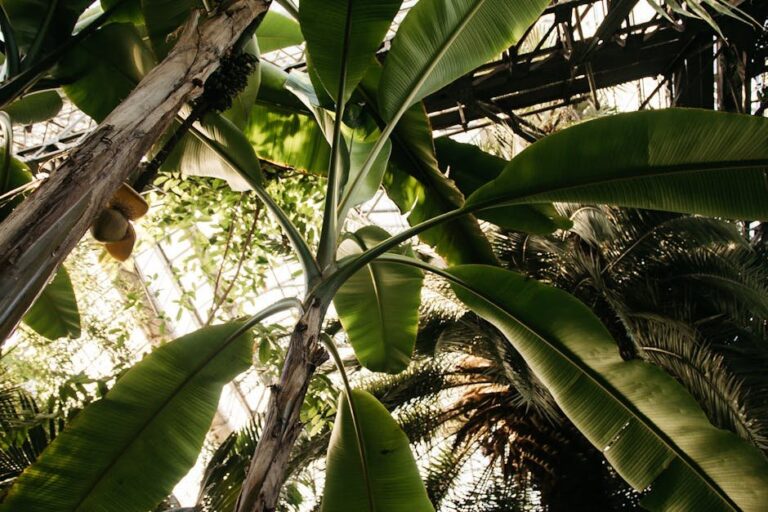
Choosing the Right Banana Leaf Plant
When it comes to bringing a banana leaf plant into your home, choosing the right one is crucial for its health and success. We’ll walk you through what to look for in selecting the perfect plant.
Selecting the Perfect Variety
When selecting the perfect banana leaf plant variety, it’s essential to consider your specific climate, soil type, and personal preference. With over 70 species of banana plants (Musa spp.) and several Ensete spp. varieties, choosing the right one can be overwhelming.
Start by considering your region’s climate. If you live in a hot and humid area, look for varieties like Musa balbisiana or Musa acuminata, which are more tolerant of heat and humidity. On the other hand, if you’re in a cooler climate, Ensete spp. varieties like Ensete glaucum or Ensete ventricosum might be a better fit.
Think about the size and growth habit you prefer. Some banana leaf plants can grow quite large (up to 15 feet tall!), while others remain compact and bushy. For example, Musa paradisiaca is known for its towering height, whereas Musa basjoo remains relatively small.
Lastly, consider your soil type. Some varieties are more adaptable to different soils than others. Look for plants that thrive in your specific soil conditions to avoid potential health issues down the line. With these factors in mind, you’ll be well on your way to selecting a banana leaf plant variety that thrives in your unique environment and meets your aesthetic needs.
Understanding the Lighting Requirements
When it comes to choosing the right spot for your banana leaf plant, lighting is one of the most crucial factors to consider. These plants are native to tropical regions and thrive in bright, indirect light conditions. In fact, they can tolerate a range of light conditions, from direct sunlight to low-light environments.
However, providing too much direct sunlight can cause the leaves to become scorched and develop brown tips. To avoid this, place your banana leaf plant near an east- or west-facing window, which offers gentle, indirect light. If you don’t have access to a sunny windowsill, don’t worry – these plants can also do well in low-light conditions, such as north-facing windows.
As a general rule of thumb, aim for 4-6 hours of bright, indirect light per day. This will promote healthy growth and prevent your plant from becoming leggy or stretched out. Remember to rotate your banana leaf plant regularly to ensure even light distribution and maintain its compact shape. By getting the lighting right, you’ll be well on your way to creating a thriving and beautiful banana leaf plant.
Planting and Repotting Banana Leaf Plants
When it comes time to transfer your banana leaf plant into a new pot, you’ll want to know the best practices for planting and repotting these sensitive plants. We’ve got you covered with our expert tips!
Preparing the Soil and Pot
When preparing to plant or repot your banana leaf plant, it’s essential to give its roots the best possible start. This begins with selecting a well-draining potting mix that will prevent waterlogged soil and root rot. A mix specifically designed for tropical plants like the banana leaf plant is ideal, as it will retain moisture but also drain excess water quickly.
In addition to using the right soil, make sure your pot is large enough to accommodate your plant’s growing roots. Banana leaf plants can grow quite deep, so a container that’s at least 6-8 inches deep is recommended. This will give the roots room to expand and help prevent the need for frequent repottings.
As for when to plant or repot, spring and summer are typically the best times, as this allows your plant to take full advantage of the growing season. However, if you’re looking to refresh your soil or move your plant to a larger container, fall or early winter can also be good options. Just be sure not to disturb the roots excessively, as this can cause shock and stress to the plant.
Watering and Humidity Requirements
When it comes to watering and humidity requirements for banana leaf plants, getting it just right can be a challenge. As a general rule, banana leaf plants prefer well-draining soil that’s moist but not waterlogged. Aim to water your plant once or twice a week, depending on the climate and time of year. A good way to check if your plant needs watering is to stick your finger into the soil up to the first knuckle – if it feels dry, it’s time for a drink.
When it comes to how much water to use, a good starting point is to water your banana leaf plant until you see water dripping from the bottom of the pot. It’s better to err on the side of caution and underwater than overwater, as this can lead to root rot and other problems. To maintain optimal humidity levels, place your banana leaf plant in a spot with high humidity or use a humidifier nearby. You can also group plants together to create a microclimate that retains moisture. Aim for a humidity level between 50-70% – any lower than this and you may see yellowing leaves or browning tips.
Maintaining Optimal Temperature and Humidity
To keep your banana leaf plant thriving, it’s essential to maintain optimal temperature and humidity levels that mimic its natural environment in tropical regions. Find out how to create this perfect climate for your plant.
Temperature Tolerances
When it comes to temperature tolerances, banana leaf plants are relatively adaptable but still require some care. They can thrive in temperatures between 65°F (18°C) and 75°F (24°C), making them suitable for indoor spaces. However, exposure to extreme temperatures can cause problems.
If the temperature drops below 55°F (13°C), the plant may experience stunted growth or even dieback of leaves. On the other hand, high temperatures above 85°F (29°C) can lead to scorched leaves and reduced humidity levels. During winter months, banana leaf plants are susceptible to frost damage.
To protect your plant from frost damage, bring it indoors if possible or move it to a location with minimal temperature fluctuations. You can also cover the plant with a sheet or blanket at night to retain warmth. Another option is to use a humidifier nearby to maintain humidity levels above 50%. Regularly monitoring temperature changes and taking preventative measures will ensure your banana leaf plant stays healthy throughout the year.
Humidity Considerations
When it comes to banana leaf plant care, maintaining optimal humidity levels is crucial for its health and well-being. Banana plants thrive in humid environments, typically between 50-70% relative humidity. If the air is too dry, the leaves may develop brown tips or edges, while excessively high humidity can lead to fungal diseases.
To increase humidity around your banana plant, you can use a humidifier or mist it with water daily. However, be cautious not to overwater, as this can cause root rot. You can also group plants together to create a microclimate, which can help retain moisture in the air. Alternatively, placing the pot on a tray filled with water and pebbles can increase humidity through evaporation.
It’s essential to monitor your plant’s response to different humidity levels and adjust accordingly. For example, if you notice brown tips on the leaves, try increasing the humidity level. Conversely, if you observe leaf drop or fungal growth, reduce the humidity by moving the plant away from humid areas or using a dehumidifier.
Common Pests and Diseases
As you tend to your banana leaf plant, it’s essential to be aware of common pests that can damage its leaves and stems. These unwanted visitors include spider mites, mealybugs, and scale insects.
Identifying Potential Problems
As you tend to your banana leaf plant, it’s essential to stay vigilant for potential problems that can arise. Unfortunately, even the healthiest plants can fall prey to pests and diseases. Here are some common issues to watch out for:
Spider mites are tiny, spider-like insects that feed on the sap of banana leaf plants, causing yellowing leaves and fine webbing. Mealybugs, on the other hand, secrete a sticky substance called honeydew that attracts ants and promotes fungal growth. To diagnose these problems, inspect your plant regularly for signs of infestation or disease.
Look for white cottony patches, eggs, or actual insects on the underside of leaves or stems. Yellowing leaves can also indicate root rot, caused by overwatering or poor drainage. Check your soil moisture levels and repot your plant in well-draining potting mix if necessary.
If you notice any of these symptoms, act quickly to prevent further damage. Isolate infested plants, and treat with insecticidal soap or neem oil according to the product’s instructions. Prune infected areas, and adjust your watering schedule to prevent future problems. Regular monitoring and prompt action will help keep your banana leaf plant healthy and thriving.
Prevention and Treatment Strategies
To keep your banana leaf plant healthy and pest-free, it’s essential to implement prevention and treatment strategies. Regularly inspect your plant for signs of pests like spider mites, mealybugs, or scale insects. These pesky creatures can be controlled using neem oil or insecticidal soap. Mix the recommended concentration with water and spray it on the affected areas, making sure to cover all surfaces.
For more severe infestations, prune the affected leaves to prevent the spread of the problem. This will also promote air circulation around the plant, which can help prevent future pest issues. If you catch a problem early, repot your banana leaf plant in fresh soil with good drainage. This will give it a clean slate and reduce the risk of pests re-emerging.
In addition to these measures, maintain a consistent watering schedule and ensure proper air circulation around the plant. These simple practices can go a long way in keeping your banana leaf plant healthy and pest-free.
Propagation and Pruning Techniques
Now that you’ve learned how to propagate your banana leaf plant, let’s move on to essential propagation techniques. Proper pruning will help keep your plant healthy and encourage more growth.
Propagation Methods
Propagating banana leaf plants can be an exciting way to share this beautiful plant with friends and family, or to multiply it for your own indoor space. There are three primary methods of propagation: division, stem cuttings, and air-layering.
Division is the most common method of propagation for banana leaf plants. It involves separating a mature plant’s rhizome into sections, each containing at least one “eye” (or growing point). This method is ideal for older plants that have outgrown their pots or are showing signs of stress. To do division correctly, gently remove the plant from its pot and separate the rhizome using a sharp, sterile tool. Replant the separated sections in well-draining soil, making sure each section has at least one “eye”.
Stem cuttings can also be used to propagate banana leaf plants. Cut 4-6 inch stem sections from mature plants, removing lower leaves and leaving only two or three sets of leaves at the top. Dip the cut end into a rooting hormone powder to stimulate root growth. Place the cutting in a glass of water or a propagation tray filled with moistened potting mix, making sure the node (where the leaf meets the stem) is submerged.
Air-layering involves creating a small wound on a mature plant’s stem, allowing roots to form and eventually detach from the mother plant. This method is ideal for plants with long stems that can be supported by a trellis or stake. Make a small incision about 6-8 inches above the node, just deep enough to expose the inner tissue. Wrap moistened sphagnum moss around the wound, securing it with twine. Roots should form within a few weeks, and you can carefully cut the stem below the roots to separate the new plant.
When choosing which method of propagation to use, consider the age and health of your banana leaf plant. Younger plants or those in poor health may not respond well to division or air-layering, whereas stem cuttings are often more successful with younger tissue.
Pruning Techniques for Optimal Growth
When it comes to pruning techniques for optimal growth, regular maintenance is essential. Pruning helps remove yellow or dying leaves that can become a haven for pests and diseases, preventing them from spreading to the rest of the plant. To start, identify the oldest leaves on the plant as they typically turn yellow first due to their age.
Use clean, sharp pruning tools to cut these leaves off at the base, taking care not to damage the stem or nearby leaves. This process should be repeated regularly to maintain a balanced appearance and promote healthy growth. It’s also important to trim back long stems that have grown too tall or unruly, as this encourages new growth and prevents them from becoming leggy.
Some common problems associated with improper pruning practices include over-pruning, which can stress the plant, making it more susceptible to disease, or under-pruning, which fails to remove weak or dying leaves, leaving the plant vulnerable to pests. To avoid these issues, prune your banana leaf plant when it’s actively growing, usually during the spring and summer months, and follow a consistent pruning schedule.
Prune your banana leaf plant at least once a month to maintain its shape and encourage new growth. This can be done by removing any yellow or dying leaves and trimming back long stems as needed.
Advanced Care Tips and Tricks
As you gain more experience caring for your banana leaf plant, it’s time to dive into some advanced techniques to keep it thriving. We’ll share expert tips on pruning, repotting, and pest control.
Fertilization Strategies
Fertilizing your banana leaf plant is crucial to promote healthy growth and prevent nutrient deficiencies. During active growth periods, typically spring and summer, fertilize your plant every 1-2 weeks with a balanced fertilizer (20-20-20). This will provide essential nutrients like nitrogen, phosphorus, and potassium.
However, be cautious not to over-fertilize, as this can damage the roots and cause more harm than good. Organic options like fish emulsion or compost tea are excellent alternatives, providing a slow release of nutrients that won’t burn your plant’s roots.
Consider using a fertilizer with a higher phosphorus content (10-20-10) during the fruiting stage to promote flower and fruit production. Keep in mind that banana leaf plants prefer slightly acidic soil pH, around 5.5-6.5. Regularly testing your soil will help you determine the best fertilization schedule for your specific plant.
To ensure optimal results, always read the fertilizer label and follow instructions carefully. Start with a small dose and gradually increase as needed to avoid over-fertilizing. With proper care and attention, your banana leaf plant should thrive under your nurturing hands.
Troubleshooting Common Issues
If you’re experiencing issues with your banana leaf plant, don’t worry – it’s more common than you think. Yellowing leaves are one of the most common problems gardeners face when caring for this plant. The causes can range from overwatering to underwatering, but the solution is often simple. Make sure the soil isn’t waterlogged, and avoid getting water on the leaves to prevent fungal diseases.
Another issue you might encounter is slow growth or stunted development. This could be due to inadequate light, poor air circulation, or even a lack of nutrients in the soil. To address this, ensure your plant is receiving sufficient direct sunlight (at least 4-6 hours per day) and prune any dead or damaged leaves to promote healthy growth.
If you notice pests like spider mites, mealybugs, or scale on your banana leaf plant, treat it immediately with insecticidal soap or neem oil. Regularly inspecting your plant will help you catch these issues early on, preventing them from spreading and causing further damage. By staying vigilant and taking prompt action when problems arise, you can keep your banana leaf plant thriving and healthy.
Final Tips for Success
As you continue to care for your banana leaf plant, remember that consistency is key. Stick to your watering schedule, even if it means adjusting it slightly over time as the plant grows. Don’t forget to rotate the plant regularly to maintain even growth and prevent leaning towards one side. You can also fertilize sparingly during the growing season to promote healthy new leaves.
When repotting, gently tease apart any tangled roots with a blunt instrument or your fingers. This will encourage the roots to grow outward, absorbing nutrients more efficiently. Keep in mind that banana leaf plants prefer slightly acidic soil, so be mindful of your potting mix and adjust as needed. With these final tips, you’ll be well on your way to creating a thriving environment for your banana leaf plant to flourish.
Frequently Asked Questions
Can I propagate my banana leaf plant by using stem cuttings from other plants?
Yes, you can propagate your banana leaf plant using stem cuttings from healthy mother plants. However, it’s essential to choose a stem with at least two growing points and remove any lower leaves to prevent rotting. This method is ideal for beginners, but be aware that the resulting plants may take longer to mature.
How often should I water my banana leaf plant during the winter months when it’s not actively growing?
Yes, you should still water your banana leaf plant regularly during the winter months, even though it’s not actively growing. In fact, consistent moisture levels will help prevent pest infestations and maintain humidity around the plant. Aim to water once a week or whenever the top 1-2 inches of soil feels dry.
What are some common pests that can affect banana leaf plants indoors?
Spider mites, mealybugs, and scale insects are common pests that can harm your banana leaf plant indoors. Regularly inspect your plant for any signs of infestation, such as white cottony patches or sticky substance on the leaves. If you notice any, treat your plant with neem oil or insecticidal soap.
Can I grow my banana leaf plant in a container on a sunny balcony with high winds?
While it’s possible to grow your banana leaf plant in a container on a sunny balcony, high winds can cause damage to the plant. To mitigate this risk, ensure your container is securely anchored and provide some protection from direct wind using burlap or a windscreen.
How long does it take for a newly propagated banana leaf plant to produce its first banana flower?
The time it takes for a newly propagated banana leaf plant to produce its first banana flower can range from 6-18 months, depending on factors like temperature, humidity, and light exposure. Provide your young plant with optimal growing conditions and maintain a consistent fertilization schedule to promote healthy growth.