
Trellising your peas is one of the simplest yet most effective ways to maximize their growth and increase your harvest. Not only does it keep your plants organized and off the ground, but it also helps prevent disease and pests from taking hold. If you’re new to gardening or struggling with legumes, don’t worry – this process is easier than you think.
In this step-by-step guide, we’ll walk you through everything you need to know about trellising peas for a bountiful harvest. From selecting the right type of trellis and preparing your soil, to providing support for your plants and harvesting at the right time, we’ve got you covered. By following our expert advice, you’ll be able to enjoy a healthy and thriving pea crop in no time. Whether you’re looking to get creative with vertical gardening or simply want to make the most of your garden space, this article is perfect for you.
Choosing the Right Trellis and Location
When it comes to trellising peas, selecting the right trellis and location is crucial for optimal growth. Choose a sturdy trellis that can support the weight of your pea plants in the best spot in your garden.
Understanding Different Types of Trellises
When it comes to supporting your pea plants as they grow upwards, you have several trellis options available. Understanding the different types of trellises will help you choose the most suitable one for your garden.
Bamboo stakes are a great option for small spaces or when you need to add support to individual plants. They’re lightweight, inexpensive, and easy to install. However, they might not provide enough structural support for larger pea varieties or if you have multiple plants to trellis. Consider using 3-4 bamboo stakes per plant, spaced evenly apart to create a sturdy framework.
Teepees are another popular option for peas, especially when space is limited. Made from wooden or metal stakes, they’re easy to set up and provide a compact support system. Just be sure to secure the teepee firmly into the ground to prevent it from toppling over in windy conditions.
Arbors are more substantial structures that can serve as both a trellis and a decorative feature for your garden. They come in various designs, from simple wooden frames to ornate metalwork. Arbors can provide excellent support for heavy loads of peas and create a beautiful focal point in your garden. However, they might be more expensive than other options and require more installation effort.
A living wall trellis is an eco-friendly option that uses plants as part of the support system. This type of trellis allows you to train pea vines up a vertical surface, such as a wooden panel or a trellised planter box, which is covered in a mix of plants like herbs and succulents. Living walls not only provide excellent structural support but also add aesthetic value to your garden.
When choosing the right trellis for your peas, consider factors like plant size, growth habits, space constraints, and personal style. For instance, if you’re growing compact varieties like ‘Telegraph’ or ‘Meteor’, a simple bamboo stake or teepee might be sufficient. On the other hand, larger varieties like ‘Tall Telephone’ or ‘Sugar Ann’ will require more substantial support from an arbor or living wall trellis.
Ultimately, selecting the right trellis for your peas involves balancing structural requirements with design preferences and budget considerations.
Selecting a Suitable Location for Your Pea Trellis
When selecting a suitable location for your pea trellis, it’s essential to consider three key factors: sunlight, soil quality, and accessibility. Peas require full sun to produce an abundant harvest, so choose a spot that receives direct sunlight for at least six hours a day.
Soil quality is also crucial for pea growth. Opt for a location with well-draining soil that’s rich in organic matter. Avoid areas prone to waterlogging or where the soil tends to dry out quickly. You can check your soil type by digging a small hole and observing how it holds water.
In terms of accessibility, consider how easily you’ll be able to tend to your peas without straining your back. Position your trellis near a path or walkway to make harvesting and pruning more manageable. A location that’s close to a watering source is also beneficial, as peas require consistent moisture throughout their growth cycle.
When possible, choose a spot with protection from strong winds and extreme temperatures. This will help prevent damage to the plants and promote healthy growth.
Preparing the Soil and Planting
Before you start trellising your peas, make sure your soil is ready for planting by loosening it to a depth of at least 12 inches. This will help your pea plants establish strong roots.
Testing and Amending the Soil
Before you start planting your peas on their trellis, it’s essential to ensure that your soil is suitable for them. Peas prefer a slightly acidic to neutral soil pH, ranging from 6.0 to 7.0. You can use a DIY kit or send a sample to a laboratory for testing.
If your test results show that your soil pH is too high or low, you’ll need to make some adjustments. To lower the pH, you can add elemental sulfur or aluminum sulfate. On the other hand, if your soil pH is too alkaline, adding lime won’t be effective as it will just neutralize the sulfuric acid in the lime.
A simple test for determining nutrient levels involves using a small sample of soil and mixing it with distilled water to create a solution. Observe the color change: blue or purple indicates an abundance of manganese, while yellow is indicative of an iron deficiency.
Once you’ve made any necessary adjustments, be sure to give your peas enough space (about 3-4 inches between each plant) to grow their taproots and support system without competing for resources. Now that your soil is ready, let’s move on to setting up the trellis!
Sowing Pea Seeds Directly into the Ground or in Containers
When it comes to sowing pea seeds, whether you’re direct-sowing into the ground or growing them in containers, there are a few key things to keep in mind. When planting directly into the ground, space each seed about 2-3 inches apart and 1 inch deep. This will give the seedlings room to grow without becoming overcrowded. If your soil is particularly poor or you’re concerned about drainage, consider adding a layer of compost or well-rotted manure to improve its fertility.
For container gardens, things are slightly different. Peas need a well-draining potting mix and plenty of support as they grow. Choose a container that’s at least 6-8 inches deep to accommodate the mature plant height. Sow seeds about 2-3 inches apart and 1 inch deep in the pot. Water gently but thoroughly after planting, and make sure not to overwater – peas don’t like wet feet!
Building and Installing the Trellis
Now that you’ve got your peas planted, it’s time to build a sturdy trellis to provide support for their climbing tendrils. This section will walk you through building and installing the perfect pea trellis.
Creating a Trellis from Scratch or Using Pre-Made Frames
Building a trellis from scratch or using pre-made frames is a crucial step in creating a sturdy and efficient support system for your peas. When it comes to building a trellis, you can use materials like wood, bamboo, or metal. For a small-scale setup, you can start by gathering wooden stakes (at least 3-4) and some twine or wire. Tie the stakes together at one end using the wire, leaving space for your peas to grow in between.
For a more substantial structure, use wooden planks or bamboo poles instead of individual stakes. You can attach them to a base or create an ‘A-frame’ design to provide better support. Consider adding some extra features like a top layer or a roof for added stability and protection from the elements. Alternatively, you can opt for pre-made frames specifically designed for trellising peas. These are often easy to assemble and provide a uniform structure that can accommodate multiple rows of plants.
Consider your space constraints, budget, and desired level of customization when deciding between building from scratch or using pre-made frames. Both options offer benefits, and the choice ultimately depends on your personal preferences and needs.
Securing the Trellis in Place and Adding Supports
Once you’ve built and installed the trellis, it’s essential to secure it firmly in place. This will prevent it from toppling over in strong winds or under the weight of heavy pea plants. Start by digging a few inches into the ground and inserting a few stakes at regular intervals along the sides and back of the trellis. These stakes should be driven in at an angle, about 1-2 feet deep, to provide extra stability.
Next, tie the trellis to these stakes using soft ties or wire. Make sure the ties are not too tight, as this can damage the trellis material. You can also use garden clips to attach the trellis to nearby plants or other supports. If you’re using a freestanding trellis, consider adding additional support wires or strings between the stakes and the top of the trellis. This will provide extra stability and help keep the peas growing upwards rather than outwards.
Remember to check your trellis regularly for any signs of instability or damage. Make sure all ties are secure and the structure is still firmly in place.
Training Peas to Grow Up the Trellis
Now that you’ve got your peas planted, it’s time to teach them how to climb up the trellis. In this next step, we’ll show you exactly how to train them for maximum growth.
Using Twine, Strings, or Plant Clips for Support
Once your pea seeds have germinated and are growing rapidly, it’s essential to provide them with support as they climb up the trellis. While you can use traditional materials like stakes and ties, there are other innovative options that can be just as effective. One such method is using twine, strings, or plant clips to gently guide your pea plants upwards.
Twine and strings work particularly well for climbing peas as they allow for flexibility and adjustability. Simply tie the string around the trellis at a slight angle, then gently weave it through the stems of the pea plants, securing them in place. As the plants grow, you can easily reposition or remove the string to accommodate their changing needs.
Plant clips are another excellent option for supporting peas. These small plastic clips can be attached directly to the trellis and used to hold individual stems in place. This method is especially useful if you’re growing a variety of pea that tends to grow more horizontally than vertically.
Remember, it’s crucial to handle your plants gently when using these support methods to avoid causing damage or promoting weak growth habits.
Encouraging Vertical Growth with Companion Plants and Pruning
Companion planting is an effective way to encourage vertical growth in peas by creating a beneficial environment for them to thrive. By incorporating nitrogen-fixing plants like beans and legumes into the trellis system, you can provide peas with the essential nutrients they need to grow upwards. For example, planting runner beans alongside peas will not only add visual interest but also contribute to the soil’s fertility.
Regular pruning is another crucial aspect of promoting vertical growth in peas. Remove any weak or spindly stems that may be competing with the stronger ones for resources. This technique is called “pinching” and can help direct the pea plant‘s energy towards producing more vigorous and upright growth. By pinching off flower buds, you’re also preventing the plant from focusing its energy on seed production, which can encourage a bushy habit.
Pruning should be done about 2-3 weeks after planting, when the peas are around 6 inches tall. Remove any weak stems and trim back the tips of the stronger ones to encourage branching. This will not only promote vertical growth but also create a more compact and manageable plant.
Maintaining and Harvesting Your Pea Trellis
Now that your pea trellis is up, let’s focus on keeping it thriving with regular maintenance and planning for a bountiful harvest when the time comes. With these tips, you’ll be harvesting like a pro in no time!
Regular Watering, Fertilization, and Pest Management
Maintaining and harvesting your pea trellis requires consistent attention to ensure optimal growth and production. Regular watering is crucial to prevent peas from becoming stressed due to dry spells. Aim for about 1-2 inches of water per week, either through rainfall or irrigation. You can also use a soaker hose to deliver water directly to the roots, reducing evaporation.
Fertilization is another vital aspect of pea trellis maintenance. Use a balanced fertilizer (10-10-10 NPK) once a month to provide essential nutrients. Follow the product’s instructions for application rates and timing. Consider side-dressing with high-phosphorus fertilizers (15-30-15 NPK) when the plants are about 6 inches tall, as this promotes robust root development.
Pest management is also vital to prevent damage to your pea trellis. Common pests like aphids, slugs, and snails can decimate a crop if left unchecked. Use neem oil or insecticidal soap to control aphid populations, while hand-picking or using copper tape can help deter slugs and snails.
Timing the Perfect Harvest and Enjoying Your Fresh Peas
Timing the Perfect Harvest and Enjoying Your Fresh Peas is one of the most rewarding parts of growing peas on a trellis. When to expect harvests depends on several factors, including the pea variety, weather conditions, and how well you’ve maintained your trellis.
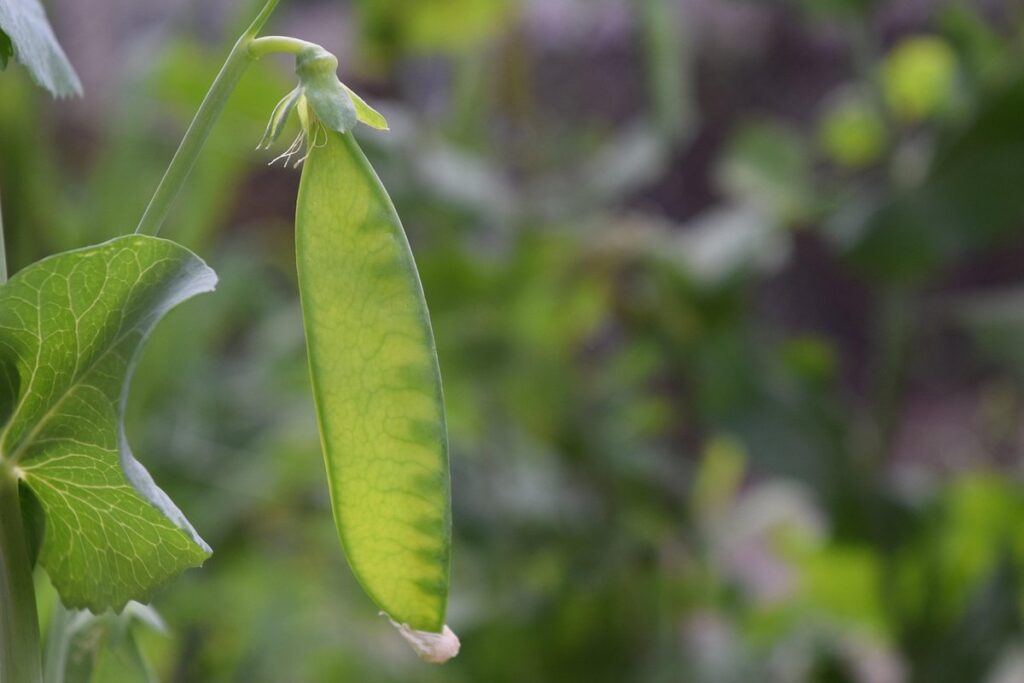
As a general rule, sugar snap peas and snow peas are ready to harvest about 50-60 days after sowing. Garden peas, on the other hand, take around 70-80 days. Keep an eye out for the pods’ size and color – they should be plump, tender, and a vibrant green.
To check if your peas are ready, gently pull down on a few of the larger pods to see if they’re easily removable from the stem. If they come off with some resistance, wait another day or two. Harvesting at the right time is crucial – peas become starchy quickly, which affects their flavor and texture.
For maximum enjoyment, harvest your peas early in the morning after a light frost. This will help retain their sweetness and tender crunch. Simply snip the pods from the stem with scissors or pinch them off by hand.
Frequently Asked Questions
Can I use a trellis with a small garden or container?
Yes, you can use a trellis even if you have limited space. Opt for compact pea varieties that thrive in containers and choose a smaller trellis to maximize your garden’s potential.
How often should I water my peas while they’re on the trellis?
Regular watering is crucial when growing peas on a trellis. Water your plants deeply once or twice a week, depending on weather conditions. Make sure the soil remains consistently moist but not waterlogged to prevent root rot.
Can I use companion planting to help support my pea trellis?
Yes! Companion planting can be an excellent way to encourage vertical growth and add structural support to your pea trellis. Consider using plants like beans or cucumbers, which have a natural tendency to climb and will help stabilize the trellis.
How do I prevent pests from damaging my peas while on the trellis?
To minimize pest damage, keep your garden area clean, remove weeds regularly, and use physical barriers like fine mesh or fine netting to cover your plants. Regularly inspect your pea plants for signs of pests and take action promptly if you notice any issues.
Can I reuse a pea trellis year after year?
Yes, with proper maintenance and care, a well-made pea trellis can be reused multiple times. Clean the trellis thoroughly after each growing season, disassemble it to prevent damage from harsh weather conditions, and reassemble it when you’re ready to plant again.