
Orchids have been captivating botanists and enthusiasts for centuries with their unique beauty and fascinating characteristics. With over 30,000 species to date, these exotic flowers are not only stunning but also incredibly diverse. But there’s more to orchids than just their breathtaking appearance – they have a rich history that spans thousands of years, from ancient civilizations to modern times. From their intriguing growth patterns and complex reproduction strategies to their surprising applications in medicine and technology, the world of orchids is full of interesting facts waiting to be uncovered. In this article, we’ll delve into the fascinating realm of orchids, exploring their evolution, care, and uses, so you can bring a touch of these exotic flowers into your home with confidence.
The Fascinating History of Orchid Discovery
Let’s take a step back in time and explore how orchids were first discovered, their early classification, and the fascinating journey that led us to our modern understanding of these incredible flowers.
Ancient Civilizations’ Obsession with Orchids
Orchids have long been prized for their exceptional beauty and rarity throughout history. In ancient China, orchids were considered a symbol of good fortune and prosperity. The Chinese poet and philosopher, Lu Tong, even wrote an entire collection of poems dedicated to the orchid. He was so enamored with these flowers that he used them as a metaphor for the fleeting nature of life.
In ancient Greece and Rome, orchids were also highly valued for their beauty and rarity. In fact, the Greek philosopher, Aristotle, noted the unique characteristics of orchids in his work on botany. The Romans, too, cherished orchids, often using them in perfumes and fragrances to convey luxury and sophistication.
The allure of orchids has endured through the centuries, and it’s not hard to see why these exotic flowers have captivated people for so long. Their delicate petals and intricate patterns make them a true marvel of nature. Whether you’re an avid gardener or simply appreciate the beauty of these flowers, there’s no denying the timeless allure of orchids.
Orchid Hunting: A Brief History of the Industry
In the 19th century, orchid hunting experienced a significant surge in popularity, transforming from a niche hobby to a global phenomenon. One key figure behind this rise was John Lindley, an English botanist who played a crucial role in cultivating and introducing exotic orchids to the Western world. Lindley’s work helped establish the London Orchid Rooms, where rare species were showcased, fueling the demand for these enigmatic flowers.
The 19th century saw the rise of “orchid fever,” with collectors competing to obtain rare specimens. This frenzy led to widespread over-collection and habitat destruction, as orchids were often uprooted from their natural habitats without regard for the long-term consequences. The consequences of unchecked orchid hunting would later become a pressing concern in the conservation community.
Notable events like the 1875 World Orchid Conference in London further fueled the industry’s growth. Attendees and collectors clamored for the rarest species, driving prices up and creating an incentive for more aggressive collection methods. It wasn’t until later that regulations began to be put in place to curb these destructive practices and promote sustainable orchid collecting practices.
The Biology and Evolution of Orchids
Orchid biology is fascinating, and understanding how they’ve evolved over time can help us appreciate their incredible diversity. Let’s dive into the complex story of orchid evolution and biology.
Unusual Growth Patterns and Adaptations
One of the most fascinating aspects of orchids is their unique growth patterns and adaptations that enable them to thrive in diverse environments. Aerial roots are a distinctive feature of many orchid species, allowing them to absorb moisture and nutrients from the air rather than relying on traditional root systems. This adaptation enables orchids to grow on trees or rocks with little soil, making them one of the most versatile flowering plants.
Some orchid species have developed pseudobulbs, which are thickened stems that store water and nutrients. These pseudobulbs act as a reservoir for dry periods, allowing the orchid to survive until conditions become favorable again. This adaptation is particularly evident in epiphytic orchids, which grow on other plants such as trees or shrubs without harming them.
As you explore the world of orchids, keep an eye out for these unique growth patterns and adaptations. By understanding how they thrive in their environments, you’ll be better equipped to provide optimal care for your own orchid specimens.
The Orchid Family Tree: A Complex Web of Relationships
The orchid family tree is a vast and intricate web of relationships that spans over 30,000 species. Within this diverse group, you’ll find six subfamilies: Apostasioideae, Cypripedioideae, Orchidoideae, Spiranthoideae, Vanilloideae, and Epidendroideae. These subfamilies are further divided into over 800 genera, each with its unique characteristics and traits.
To illustrate the complexity of orchid relationships, consider the fact that some species within a single genus can be more closely related to members of another genus than they are to their own siblings. This phenomenon is known as “widespread hybridization.” For example, the vanilla orchid (Vanilla planifolia) and the cattleya orchid (Cattleya spp.) may exhibit greater genetic similarity despite being in different genera.
Understanding these relationships can help you appreciate the unique characteristics of individual orchids. By recognizing which subfamily or genus a particular species belongs to, you’ll gain insight into its growth habits, flower shape, and other distinctive features.
Interesting Facts About Orchid Reproduction
Let’s take a closer look at how orchids reproduce, as their unique methods are both fascinating and essential to understanding these beautiful plants’ remarkable diversity. From seeds to seed pods, we’ll explore some of their most intriguing reproductive habits.
How Orchids Pollinate: A Dance of Deception and Attraction
Orchids have mastered the art of deception and attraction when it comes to pollination. These exotic flowers employ a range of strategies to lure in pollinators, including scent, color, and shape mimicry.
One of the most effective ways orchids attract pollinators is through their signature scents. Many species produce fragrances that are irresistible to bees and wasps, which are often drawn in by the sweet aroma. For example, the Paphiopedilum victoria-regina orchid emits a scent that’s similar to rotting flesh – not exactly pleasant for humans, but a feast for carrion-loving flies. By mimicking the smell of something they’d naturally be attracted to, these flowers ensure a steady stream of pollinators.
Orchids also use color and shape manipulation to draw in their visitors. Some species mimic the appearance of female insects, complete with pseudo-ovipositors that trick male pollinators into attempting to mate. The result is often a confused but obliging pollinator who inadvertently transfers pollen from one flower to another. By employing these clever tactics, orchids have evolved to become some of the most successful flowers in the plant kingdom when it comes to reproduction.
The Role of Fungi in Orchid Seed Germination
When it comes to orchid seed germination, a fascinating and crucial aspect of their reproduction process is often overlooked – the role of fungi. Yes, you read that right – fungi! These tiny organisms play a vital part in helping orchid seeds sprout into new plants.
In nature, orchid seeds lack the energy to germinate on their own due to their extremely small size and hard outer coating. This is where fungi come into the picture. Fungi such as mycorrhizal species form symbiotic relationships with orchids, providing essential nutrients in exchange for carbohydrates produced by the plant’s photosynthesis process.
This unique partnership allows the orchid seeds to absorb water and nutrients more effectively, breaking down their hard outer shell and triggering germination. In fact, some studies have shown that up to 90% of orchid species rely on fungi for successful seed germination! So, if you’re trying your hand at cultivating orchids from seed, remember – a healthy dose of mycorrhizal fungi is just as essential as optimal growing conditions and precise care.
Types of Orchids: From Paphiopedilum to Phalaenopsis
Orchid enthusiasts, let’s delve into the world of diversity that orchids offer, from the unique Paphiopedilum to the popular Phalaenopsis. We’ll explore the fascinating types of orchids that exist.
A Guide to Common Types of Orchids
Orchid enthusiasts often get fascinated by the diverse range of species available. Among them are some popular types that stand out for their unique features and care requirements.
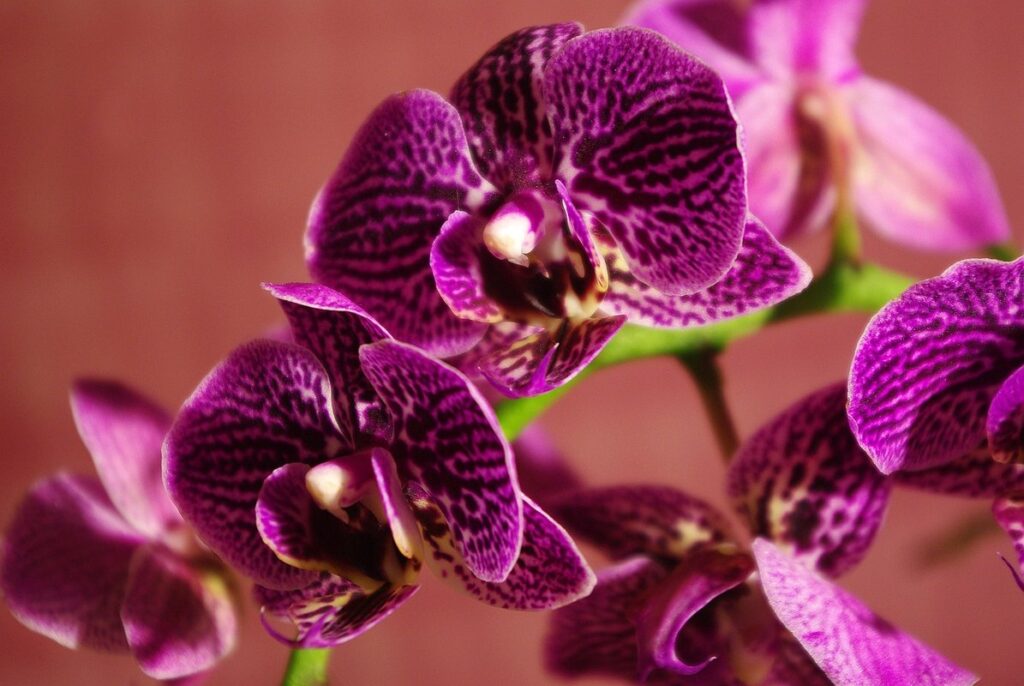
Let’s start with Phalaenopsis, commonly known as the moth orchid. This type is a favorite among beginners due to its ease of care and long-lasting blooms. They thrive in bright, indirect light and require moderate watering, making them ideal for indoor spaces. Their flowers come in various colors, including whites, pinks, and purples.
Paphiopedilum or Venus slipper orchids are another popular choice. These unusual-looking flowers have a unique petal shape that resembles a slipper. They prefer high humidity, moderate light, and infrequent watering. Some species even require repotting every year to maintain their health.
Dendrobium orchids are also well-loved for their delicate appearance and long-lasting blooms. They thrive in bright, indirect light and require more frequent watering than Phalaenopsis. These orchids come in various colors, including whites, pinks, and purples.
Oncidium orchids are known for their intricate patterns and vibrant colors. They prefer high humidity, moderate light, and infrequent watering. To ensure optimal growth, it’s essential to repot them every year or two.
Exploring the World’s Rarest and Most Exotic Orchid Species
Deep within the world’s most remote and unforgiving environments, there exist orchid species so rare and exotic that they defy explanation. Take for instance, the critically endangered Paphiopedilum victoria-regina, found only on the mountainous slopes of Borneo. This delicate beauty is prized by collectors for its unique shape and vibrant colors, but its fragile existence makes it a prized treasure.
Other notable mentions include the Phalaenopsis amabilis from the Himalayas, known for its iridescent petals that shimmer in the light like opals. Then there’s the Cattleya warscewiczii, native to Mexico, which boasts an extraordinary, long-lasting bloom period of up to 6 months.
Each one of these species offers a glimpse into the vast diversity of orchids worldwide, and just how vulnerable their existence can be. To appreciate such beauty is not only a privilege but also an obligation – to acknowledge their rarity and take steps towards preserving them for generations to come.
Some notable stats about rare orchid species:
• Over 30,000 orchid species exist globally.
• Only about 10% of these are cultivated commercially.
• Many rare species have limited availability due to habitat destruction or over-harvesting.
The Role of Orchids in Culture and Society
Orchids have captivated human imagination across cultures and centuries, often symbolizing luxury, beauty, and refinement in art, literature, and even medicine. They’ve played a significant role in many societies’ traditions and customs as well.
Symbolism and Significance in Art and Literature
Orchids have long been a source of inspiration for artists, writers, and musicians, conveying symbolic meanings that transcend their physical beauty. In art, orchids are often depicted as delicate and exotic flowers, symbolizing refinement and elegance. A famous example is the still-life paintings by Dutch Masters such as Rembrandt and Vermeer, which frequently feature orchids in luxurious settings.
In literature, orchids have been used to convey themes of love, desire, and the fleeting nature of beauty. In Victor Hugo’s novel “Les Misérables”, an orchid serves as a symbol of hope and redemption for the protagonist Jean Valjean. Similarly, in poetry, orchids are often associated with the ephemeral nature of life, as seen in John Keats’ sonnet “Ode to Melancholy”, where he describes the orchid’s “fragrant breath” as a reminder of the transience of beauty.
Throughout history, orchids have also been featured prominently in music, particularly in classical compositions. The iconic opera “Madama Butterfly” by Puccini features an orchid as a symbol of the protagonist Cio-Cio-San’s love and devotion.
Modern Applications: Medicine, Research, and Conservation
Orchids have been a staple in many cultures for centuries, not just for their beauty and fragrance but also for their medicinal properties, research potential, and role in conservation efforts. Beyond being a popular ornamental flower, orchids have numerous applications that showcase their versatility.
In the realm of medicine, orchids are being studied for their potential to treat various health conditions. For instance, the Vanilla orchid (Vanilla planifolia) contains vanillin, an ingredient used in medicines for its anti-inflammatory and antiseptic properties. The slipper orchid (Paphiopedilum spp.) has been found to possess antimicrobial compounds that may aid in treating skin infections.
Orchids are also instrumental in research endeavors. Their unique adaptations have led scientists to study their ability to survive in extreme environments, which can inform strategies for improving crop yields and developing more efficient irrigation systems. Furthermore, orchid species exhibit fascinating pollination mechanisms, making them an interesting subject for researchers studying plant biology.
In terms of conservation, many orchid species are facing threats due to habitat loss and over-collection. As a result, efforts are being made to cultivate these plants in controlled environments and promote their preservation through education and community engagement.
Care and Maintenance for the Home Orchid Enthusiast
To get the most out of your exotic orchids, you’ll need to provide them with proper care, from watering techniques to pruning, to ensure they thrive and continue to bloom. A little TLC will go a long way in keeping these stunning flowers happy.
Setting Up an Ideal Environment for Your Orchid
Creating an ideal environment for your orchid is crucial to its survival and thriving. Temperature plays a significant role; most orchids prefer daytime temperatures between 65-75°F (18-24°C) and nighttime temperatures 5-10°F (3-6°C) lower. For example, Phalaenopsis orchids can tolerate warmer temperatures up to 85°F (29°C), but some species like Paphiopedilum require cooler temperatures.
Humidity is another critical aspect; orchids thrive in humid environments between 40-70% relative humidity. To maintain this level, you can place the pot on a tray filled with water and pebbles or use a humidifier near the plant. Lighting requirements vary depending on the species; some prefer bright indirect light, while others require low light conditions.
Watering is also essential but should be done carefully to avoid overwatering, which can lead to root rot. Water your orchid when the potting medium is dry to the touch, and make sure not to get water on the plant’s crown or leaves. For instance, the Cattleya orchid requires more frequent watering than the Phalaenopsis.
By providing the right environment, you’ll be able to enjoy the beauty of your orchids for years to come.
Common Problems and Solutions: Troubleshooting for Beginners
As an orchid enthusiast, you’re likely to encounter some common issues that can be frustrating and detrimental to your plant’s health. Don’t worry; we’ve got you covered! Let’s address some of the most frequent problems faced by novice growers and provide expert advice on how to troubleshoot them.
One of the most common issues is over-watering, which can lead to root rot and kill your orchid. Check the moisture level by sticking your finger into the potting medium – if it feels dry, it’s time for a drink! Be cautious not to waterlog the plant, as this can cause more harm than good. A general rule of thumb is to water your orchid once a week in the summer and once every 10-14 days in the winter.
Another issue is inadequate lighting, which can stunt growth and prevent flowering. Place your orchid near an east- or west-facing window for optimal light exposure. Be mindful not to over-expose your plant to direct sunlight, as this can cause leaf scorch.
Leaf yellowing and dropping are also common problems. If your leaves are turning yellow, it may be a sign of root rot caused by over-watering. Remove any affected leaves to prevent the spread of disease, and repot your orchid in fresh potting medium.
By following these simple tips, you’ll be well on your way to becoming an expert orchid grower! Remember, prevention is key – monitor your plant’s needs regularly, and take prompt action if you notice any issues. With a little care and attention, your orchid will thrive and bloom beautifully for years to come.
Frequently Asked Questions
How can I choose the right type of orchid for my home environment?
Choose an orchid species that thrives in your local climate and lighting conditions. For example, Phalaenopsis prefers bright indirect light, while Paphiopedilum requires more shade. Research the specific needs of different types of orchids to ensure you provide the best environment for their growth.
What are some common mistakes beginners make when caring for orchids?
One common mistake is overwatering, which can lead to root rot and other issues. To avoid this, repot your orchid in a well-draining potting mix and water only when the potting mix feels dry to the touch. Be patient and observe your orchid’s specific needs, adjusting your care routine accordingly.
Can I grow an orchid indoors without proper ventilation?
While it’s possible to grow an orchid indoors without proper ventilation, this can lead to fungal diseases and root rot. To prevent these issues, ensure good air circulation by placing the orchid near a window or using a fan to circulate air around the plant.
How often should I fertilize my orchid to promote healthy growth?
Fertilize your orchid once a month during the growing season (spring-fall) with a balanced, water-soluble fertilizer. Dilute the fertilizer to half the recommended strength to avoid burning your orchid’s roots. During the dormant season (winter), skip fertilizing altogether.
Can I propagate my orchid by dividing the plant, or is this not recommended?
Yes, you can propagate an orchid by dividing the plant. Choose a mature orchid with multiple pseudobulbs and carefully separate them to create new plants. Make sure each division has at least one growth point (or “eye”) to ensure it will grow.