
Are you fascinated by the majestic beauty of nature? Then, let’s dive into the world of one of America’s most iconic trees: the bald cypress. These ancient giants have been standing tall for thousands of years, with a rich history that spans centuries. As we explore the fascinating world of bald cypress trees, you’ll discover their unique physical characteristics, including their distinctive “knees” and reddish-brown bark. But that’s not all – this comprehensive fact sheet will also take you on a journey to understand their remarkable growth patterns and cultural significance. Whether you’re a nature enthusiast or simply curious about these incredible trees, this article is packed with interesting facts and insights that will leave you in awe of the bald cypress. So, let’s get started and uncover the secrets behind one of North America’s most beloved tree species!
Introduction to Bald Cypress Trees
Let’s start with the basics: bald cypress trees are a unique and fascinating species, and understanding their characteristics is key to appreciating them. In this introduction, we’ll explore the fundamental traits of bald cypresses.
What is a Bald Cypress Tree?
The bald cypress tree is one of the most iconic and fascinating species native to North America. These trees are known for their unique characteristics that set them apart from other coniferous trees. Bald cypress trees are evergreen, meaning they keep their needles year-round, but unlike many other conifers, these trees shed their lower branches as they age, giving them a distinctive “bald” appearance.
One of the key reasons bald cypress trees are so important is their ability to thrive in wet environments. They can tolerate standing water and even grow in brackish conditions, making them a staple in swampy areas like the southeastern United States. In fact, some bald cypress trees have been known to live for thousands of years, with the oldest living tree estimated to be over 2,000 years old. This remarkable longevity is due in part to their ability to adapt to changing environments and resist disease.
These incredible trees are also an important part of many ecosystems, providing habitat and food for countless species of plants and animals.
History and Evolution of Bald Cypress
The bald cypress has a rich and fascinating history that spans thousands of years. Native to North America, this majestic tree has been an integral part of various ecosystems since the Mesozoic Era, when dinosaurs roamed the Earth. Over time, it has undergone significant changes due to shifting environmental conditions and human activities.
Its role in North American ecosystems is multifaceted. The bald cypress plays a vital part in providing habitat for numerous plant and animal species, including birds, fish, and insects. Its extensive root system helps maintain water quality by filtering out pollutants and sediments from the water table. In addition to its ecological significance, the bald cypress has also been used by indigenous communities for food, shelter, and spiritual purposes.
One of the most striking aspects of the bald cypress is its ability to adapt to changing environments. It can thrive in both freshwater and brackish conditions, making it a hardy species that can survive in diverse habitats. Throughout history, the bald cypress has been resilient enough to withstand extreme weather events, such as hurricanes and droughts, allowing it to continue playing a vital role in its ecosystems.
Physical Characteristics of Bald Cypress Trees
Bald cypress trees are known for their unique physical characteristics, which set them apart from other coniferous tree species. Let’s take a closer look at what makes these trees so distinctive.
Bark and Trunk Features
The bark and trunk features of bald cypress trees are quite distinctive and can be an important identifier for those trying to spot this species in the wild. One of the most notable characteristics is the reddish-brown color of the bark, which often develops a flaky, scaly texture over time. In younger trees, the bark may appear smooth and gray, but as the tree matures, it will begin to develop these characteristic reddish-brown patches.
As the tree ages, the bark will also start to exhibit unique patterns, including prominent ridges and furrows that give it a rugged appearance. These features are not only visually striking but can also help to protect the tree from disease and pests by providing an extra layer of defense against infection.
When looking at a bald cypress trunk, you may notice that the bark often seems to peel or flake off in large sections, revealing a smooth, grayish-white underlayer beneath. This is completely normal and is simply the tree’s way of shedding old, damaged bark and making room for new growth.
Leaf and Branch Structure
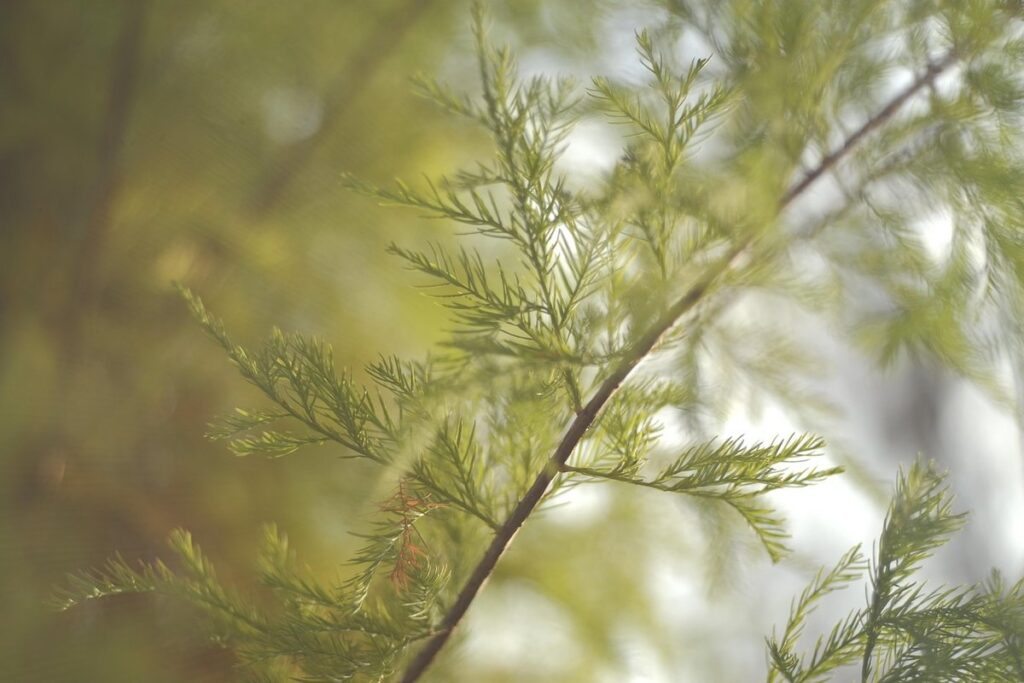
The unique leaf and branch structure of bald cypress trees plays a vital role in their ability to thrive in wetland environments. The leaves, also known as needle-like foliage, are arranged in clusters at the end of branches, giving them a feathery appearance. This adaptation allows for maximum exposure to sunlight and facilitates efficient gas exchange during photosynthesis.
Bald cypress branches grow from the trunk in a distinctive “knee” or “crotch” formation, which can be an indicator of tree age and health. As the tree matures, its canopy spreads outwards, forming a broad, rounded shape that shades the understory below. The branching structure also creates a network of channels for water and nutrients to flow through the tree.
To appreciate the intricate leaf and branch system of bald cypress trees, consider observing them during different seasons. Note how new growth emerges in spring, with bright green needles unfurling from the tips of branches. In autumn, older needles turn golden yellow before falling off, allowing the tree to conserve energy for the next growing season. By understanding the unique characteristics of bald cypress leaves and branches, you’ll gain a deeper appreciation for these remarkable trees’ ability to adapt and thrive in their environments.
Growth Patterns and Habitats of Bald Cypress Trees
Bald cypress trees thrive in a variety of habitats, from swamps to riverbanks, and their growth patterns are adapted to these unique environments. Let’s take a closer look at where they like to grow and how they’ve developed to survive there.
Adaptation to Wetlands
In wetland environments, bald cypress trees have evolved unique features to thrive and adapt. One of the most distinctive characteristics of these trees is their ability to grow stilt roots, also known as “pneumatophores” or simply “knees.” These above-ground growths allow the tree’s roots to breathe in low-oxygen conditions, making it possible for bald cypress to flourish in areas with high water tables.
The unique shape of a bald cypress’ root system is crucial to its adaptation. The stilt roots not only provide oxygen but also help anchor the tree firmly in place, preventing uprooting during seasonal flooding. In turn, this stability enables the tree to develop an extensive network of lateral roots, which facilitate nutrient uptake and water absorption.
By growing in harmony with their surroundings, bald cypress trees become essential components of wetland ecosystems. Their ability to tolerate periodic flooding makes them a vital part of these environments’ ecological balance.
Spread and Migration Patterns
Bald cypress trees are renowned for their remarkable ability to spread and migrate through various regions and climates over time. This phenomenon is largely due to the tree’s adaptability, resilience, and unique characteristics that enable it to thrive in diverse environments.
One of the primary methods by which bald cypress trees spread is through the formation of new roots and shoots from stumps or logs left behind after harvesting or natural events like floods. This process allows them to colonize new areas, often resulting in dense stands and extensive root systems. In addition, bald cypress trees can migrate vertically, growing up to several feet per year, which enables them to adapt to changing water levels and environments.
In their native southeastern United States range, bald cypress trees have been observed migrating northward due to climate change, with some populations expanding into areas that were previously too cold for the species. This expansion has significant implications for forest ecosystems, as it can lead to shifts in species composition, changes in ecosystem processes, and altered hydrological cycles.
In terms of practical advice, landowners and managers of bald cypress forests should be aware of these dynamics when developing management plans or restoration strategies. For example, they may need to adapt their approaches to accommodate the changing spatial patterns and population distributions of this ecologically significant species. By understanding and embracing these unique characteristics, we can better conserve and manage bald cypress populations for long-term sustainability.
Reproduction and Life Cycle of Bald Cypress Trees
Bald cypress trees have a unique reproductive process, and understanding their life cycle is crucial for appreciating these remarkable trees. Let’s delve into how they propagate and grow from seed to maturity.
Flowering and Pollination
The flowering and pollination process of bald cypress trees is a vital aspect of their reproduction cycle. These coniferous giants produce male and female cones, but not flowers as they are commonly associated with broadleaf trees. The male cones, also known as staminate cones, release pollen in late spring to early summer, typically between May and June. This pollen is carried by the wind to the female cones, known as ovulate cones, where it fertilizes the eggs.
Pollination occurs when the male pollen reaches the female cones, allowing for fertilization to take place. After successful pollination, the female cones will develop seeds over a period of several months. Seed dispersal usually takes place in late summer or early fall, with wind playing a significant role in distributing the seeds. Bald cypress trees can live for hundreds of years, and their seeds are an essential component of their life cycle.
In natural settings, bald cypress trees rely on wind pollination to reproduce successfully. However, human activities such as selective logging can impact seed dispersal and forest regeneration. To promote healthy growth and reproduction in your own bald cypress tree or forest, consider preserving the surrounding environment and allowing for natural seed dispersal.
Seed Germination and Growth Stages
When you plant a bald cypress seed, it undergoes several stages of growth to develop into a mature tree. The process begins with seed germination, where the embryo inside the seed starts to grow and sprout roots and shoots. This typically takes place within 1-3 months after planting, depending on factors like temperature, moisture, and light.
As the seedling emerges from the soil, it develops its first set of leaves, known as cotyledons or seed leaves. These leaves are usually flat and oval-shaped, and they help the young tree absorb sunlight for photosynthesis. During this stage, the seedling is highly susceptible to damage from animals, insects, and diseases.
Over time, the bald cypress seedling develops its first set of true leaves, which are larger and more complex than cotyledons. These leaves are dark green and needle-like, and they continue to grow as the tree matures. As the tree reaches 1-2 years old, it begins to produce its characteristic kinked branches and conical shape.
To ensure successful germination and growth, make sure to plant bald cypress seeds in a well-drained area with full sun to partial shade. Keep the soil consistently moist but not waterlogged, and provide regular fertilization for optimal growth.
Uses and Cultural Significance of Bald Cypress Trees
Beyond their stunning physical appearance, bald cypress trees have been a vital part of human culture and daily life for centuries in various ways. Let’s explore some of these fascinating uses and cultural associations together.
Timber and Wood Products
Bald cypress wood is highly prized for its durability and resistance to rot and insects, making it an ideal choice for construction and furniture-making projects. In fact, bald cypress trees are often referred to as the “graveyard tree” due to their tendency to thrive in wetland environments where other species would succumb to rot.
One of the primary uses of bald cypress wood is in the production of kiln-dried lumber, which can be used for a wide range of applications including flooring, paneling, and even musical instruments. Its unique texture and grain pattern also make it a popular choice for decorative trim work and molding.
In addition to its aesthetic appeal, bald cypress wood is also highly valued for its durability and resistance to warping and shrinking. This makes it an excellent choice for outdoor construction projects such as decks, docks, and even entire homes built on stilts or pilings in wetland environments. With proper treatment and maintenance, a bald cypress wood structure can last for centuries with minimal upkeep.
To incorporate bald cypress wood into your next project, start by selecting kiln-dried lumber that has been properly seasoned to prevent warping and shrinking. Then, consider applying a natural finish or sealant to enhance the wood’s unique texture and grain pattern. With its exceptional durability and aesthetic appeal, it’s no wonder that bald cypress wood is a sought-after material in construction and furniture-making industries.
Spiritual and Symbolic Meanings
In many cultures, the bald cypress tree holds significant spiritual and symbolic meaning. For Native American communities, it’s a revered species often associated with protection, wisdom, and longevity. In some traditions, the bald cypress is believed to serve as a bridge between the physical and spiritual worlds. Its unique ability to grow in waterlogged environments makes it an apt symbol for resilience and adaptability.
In many indigenous cultures, the bald cypress is also considered a sacred tree, often linked with ancient wisdom and mysticism. For example, among the Choctaw Nation, the bald cypress is said to have healing properties and is used in traditional medicine. Similarly, in some African American spiritual traditions, the bald cypress is associated with spiritual growth and protection.
If you’re drawn to the symbolism of the bald cypress, consider incorporating its energy into your daily life by spending time near one of these majestic trees or learning about its medicinal properties. By honoring the cultural significance of this tree, we can deepen our connection with nature and foster a greater appreciation for its role in human history.
Frequently Asked Questions
What is the average lifespan of a bald cypress tree?
Bald cypress trees are known to live for thousands of years, with some specimens estimated to be over 3,000 years old! While their exact lifespan can vary depending on factors such as environment and care, these remarkable trees have been standing tall for centuries.
How do I identify the different types of bald cypress trees?
There are two main species of bald cypress: Taxodium distichum (eastern) and Taxodium ascendens (Pacific). You can distinguish between them by looking at their cone shape, leaf size, and growth patterns. The eastern bald cypress has flat, broad leaves and a more conical shape, while the Pacific bald cypress has smaller leaves and a more narrow crown.
Can I grow bald cypress trees in my backyard?
Bald cypress trees are relatively easy to grow, but they do require specific conditions. They thrive in wet environments with full sun to partial shade. If you have a large yard or a pond, you can consider planting a bald cypress tree. However, make sure to choose a location that meets their unique needs.
Are bald cypress trees resistant to pests and diseases?
Bald cypress trees are generally resistant to many common pests and diseases. However, they can be susceptible to root rot and other fungal infections if they’re not properly cared for. To minimize risks, ensure your tree receives adequate water and nutrients, and consider pruning or removing any dead branches.
Can I harvest wood from my own bald cypress tree?
Bald cypress trees are highly valued for their durable, resistant wood. However, it’s essential to consult with a professional before harvesting any wood from your tree. Not only do you want to ensure the health of your tree, but you also need to comply with local regulations and guidelines regarding timber harvesting.