
If you’re an iris enthusiast or just starting to explore the world of these stunning flowers, chances are you’ve come across German iris yellow with maroon falls. This beautiful variety is known for its striking yellow petals and deep maroon falls, adding a pop of color to any garden. However, growing and caring for these unique plants can be a challenge, especially if you’re new to gardening.
In this article, we’ll delve into the world of German iris yellow with maroon falls, exploring their characteristics, growth habits, and care requirements. We’ll cover everything from planting and watering to pruning and troubleshooting common issues that may arise. Whether you’re looking to add a splash of color to your garden or simply want to learn more about this fascinating plant, we’ve got you covered. By the end of this article, you’ll be equipped with the knowledge needed to grow healthy and thriving German iris yellow with maroon falls in your own garden.
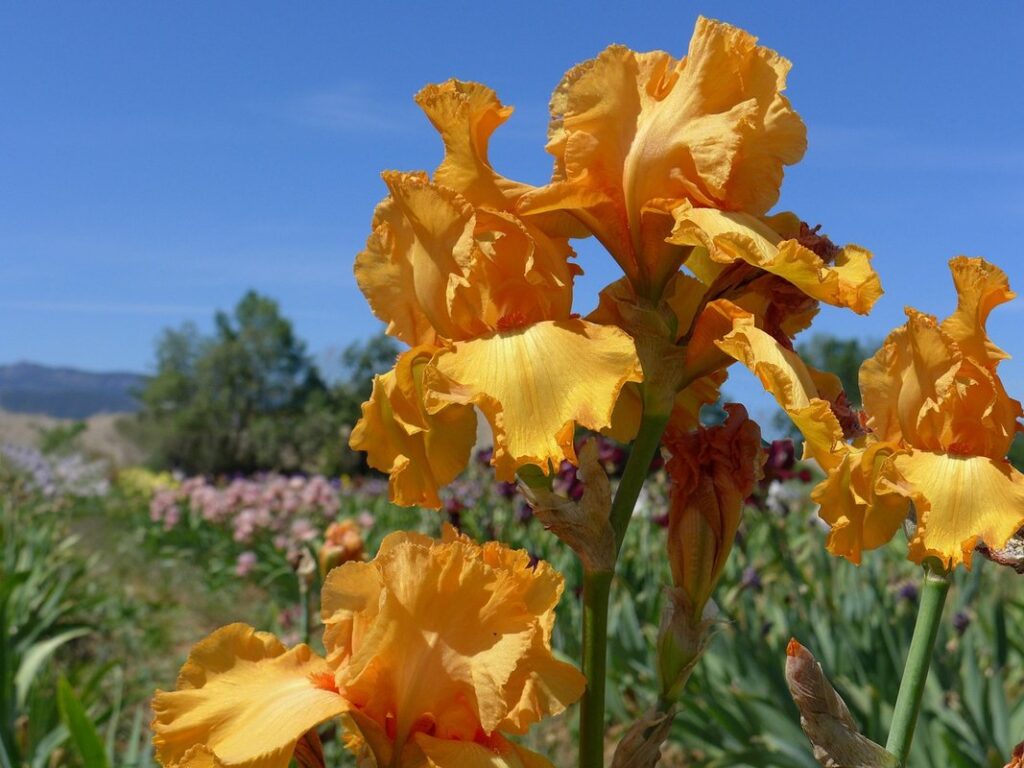
Understanding the Beauty of German Irises
Now that you know what makes German Iris Yellow with Maroon Falls so special, let’s dive deeper into understanding their beauty and unique characteristics.
What Are German Irises?
If you’re new to the world of iris cultivation, let’s start with the basics. German irises are a type of bearded iris that originated from Europe and Asia. They have been a popular choice among gardeners for centuries due to their vibrant colors, unique shapes, and fragrance. These stunning flowers typically bloom in late spring, producing an array of colors including whites, yellows, pinks, purples, and blues.
What sets German irises apart is their ability to thrive in various conditions. They can grow well in full sun or partial shade, making them suitable for a range of garden environments. Their hardy nature also allows them to tolerate extreme temperatures and humidity levels. This adaptability has contributed significantly to their widespread popularity among iris enthusiasts.
When choosing German irises for your garden, consider factors such as climate, soil type, and desired bloom color. Selecting varieties that suit your local conditions will ensure a thriving and successful iris cultivation experience.
Characteristics of German Irises
German irises are a type of bulbous perennial that boasts unique characteristics that set them apart from other iris varieties. One of the most striking features of German irises is their foliage. Their sword-shaped leaves, typically a deep green color with a waxy texture, provide an attractive backdrop for the stunning flowers that follow. The growth habits of German irises are also noteworthy. These plants tend to grow in clumps, producing new offsets or “babies” around the base of the plant, which can be divided and replanted to create more.
In terms of flowering patterns, German irises typically bloom in late spring to early summer, with some varieties flowering even earlier than this. The flowers themselves are often showy, with vibrant colors like yellow, maroon, and purple on display. When it comes to German Iris Yellow with Maroon Falls, the unique characteristics mentioned above become particularly apparent. This particular variety boasts bright yellow petals with deep maroon falls that add a pop of color to any garden.
The growth habits of German irises also mean they are relatively low-maintenance plants. They prefer well-drained soil and full sun to partial shade, making them suitable for a wide range of gardening conditions.
Choosing the Perfect Variety: German Iris Yellow with Maroon Falls
When selecting a German Iris Yellow with Maroon Falls, consider factors such as soil type and sunlight exposure to ensure optimal growth. This will help you choose the perfect variety for your garden needs.
What Sets German Iris Yellow with Maroon Falls Apart?
One key aspect that sets German Iris Yellow with Maroon Falls apart from other varieties is its striking coloration. This iris boasts a beautiful blend of yellow and maroon hues, creating a unique appearance that can add visual interest to any garden or floral arrangement. The yellow petals are intricately patterned with darker maroon markings, giving the flower an almost hand-painted effect.
In terms of bloom time, German Iris Yellow with Maroon Falls typically flowers in late spring, often between May and July, depending on your specific climate and location. This makes it a great choice for gardeners looking to add some color to their gardens during this season. In addition to its beauty, this iris is also relatively low maintenance, making it an excellent option for busy gardeners or those new to growing irises.
In terms of garden design, German Iris Yellow with Maroon Falls can be used in a variety of ways to add visual interest and depth. Consider pairing it with other flowering plants that complement its unique coloration, such as blue or purple flowers, to create a beautiful and balanced look.
Growing Conditions for German Iris Yellow with Maroon Falls
To grow German Iris Yellow with Maroon Falls to its full potential, you need to provide it with ideal conditions. This variety thrives in well-draining soil that is rich in organic matter. A mix of compost and perlite or sand will help maintain the right level of moisture without waterlogging. The rhizomes should be planted 3-4 inches deep, with the crown exposed.
In terms of sunlight, German Iris Yellow with Maroon Falls requires full sun to partial shade. It’s essential to provide at least six hours of direct sunlight per day, but avoid exposing it to intense afternoon sun during hot summer months. Consistent moisture is crucial, especially during the first growing season. Water regularly, aiming for about 1 inch of water per week, either from rain or irrigation.
You can also mulch around the plants to retain moisture and suppress weeds. However, be cautious not to cover the crown or rhizomes. Keep an eye on temperature extremes, as German Iris Yellow with Maroon Falls is sensitive to frost and temperatures above 90°F. Monitor your area’s weather forecast and take necessary precautions to protect your plants from extreme conditions.
Planting and Care: Tips for Success
To grow German Iris Yellow with Maroon Falls at home, you’ll want to learn how to properly plant and care for these beautiful flowers. Let’s dive into some expert tips for success.
Preparing the Soil for Your German Irises
To give your German irises a strong start, it’s essential to prepare the soil properly. Soil pH is crucial for German iris growth, as they prefer slightly acidic to neutral soil with a pH between 6.0 and 7.0. If your soil is too alkaline or acidic, it can affect nutrient availability and root development.
To adjust the soil pH, you can add elemental sulfur to lower the pH or limestone to raise it. However, be cautious not to over-correct, as this can cause more harm than good. A general rule of thumb is to make small adjustments (0.5-1.0 units) and monitor the soil’s pH response before making further changes.
Fertilization is also vital for German iris growth. Use a balanced, slow-release fertilizer in early spring when new growth begins. Avoid over-fertilizing, as this can lead to weak, leggy stems. A 10-10-10 NPK formula is an excellent choice for German irises.
Mulching around your plants helps retain moisture and suppress weeds, reducing the need for frequent watering and weeding. Organic mulch like wood chips or bark works well, but avoid using too much, as this can cause root rot. Keep a 2-3 inch layer of mulch around the base of your German irises to achieve optimal results.
Watering and Maintenance Routines
Proper watering and maintenance routines are crucial for German irises to thrive. These beautiful flowers require regular care to produce an abundance of vibrant blooms year after year. As a general rule, water your German iris yellow with maroon falls when the top 1-2 inches of soil feel dry to the touch. This typically translates to watering once or twice a week during spring and summer months when the plant is actively growing.
When it comes to deadheading, remove spent blooms as soon as they fade to encourage repeat flowering and prevent seed production. Cut back the flower stem to about an inch above the foliage, taking care not to damage any emerging buds. Deadheading also helps maintain your German iris’s appearance by removing unsightly browned flowers.
Keep in mind that German irises prefer well-draining soil and should not be overwatered, as this can lead to root rot. To ensure optimal growing conditions, make sure the area around your plant receives full sun to partial shade and has good air circulation. By following these simple watering and maintenance routines, you’ll be able to enjoy the stunning blooms of your German iris yellow with maroon falls for years to come.
Designing with German Iris Yellow with Maroon Falls: Tips and Ideas
When incorporating German Iris Yellow with Maroon Falls into your design, consider combining it with complementary colors to create a stunning visual effect. This section offers expert tips on achieving that perfect combination.
Using German Irises in Perennial Borders
When it comes to incorporating German irises into perennial borders, the possibilities are endless. One of the best things about these stunning flowers is their versatility and ability to complement a wide range of companion plants.
Consider pairing German Iris Yellow with Maroon Falls with bold, upright perennials like daylilies or catmint to create a striking contrast in texture and height. Alternatively, plant them alongside low-growing, spreading groundcovers like sedum or creeping thyme to add a sense of depth and dimension to the border.
When selecting companion plants for your German irises, keep in mind their bloom times and growth habits. Planting early-blooming perennials like spring-flowering bulbs can help fill gaps between iris blooms, creating a continuous display of color throughout the growing season. Remember to also consider the mature size of each plant to ensure a balanced and harmonious design.
For example, you could pair German Iris Yellow with Maroon Falls with coral bells (Heuchera) or Russian sage (Perovskia atriplicifolia), both of which share similar Mediterranean-inspired aesthetic.
Mixing German Irises with Other Flowers
When it comes to designing with German iris yellow with maroon falls, one of the most exciting aspects is experimenting with different combinations of flowers. By pairing this beautiful iris variety with other blooms, you can create visually stunning displays that will add a pop of color and interest to any garden bed or arrangement.
For instance, try pairing German iris yellow with maroon falls with roses in shades of pink or peach for a romantic and whimsical look. The soft pastel hues of the roses complement the bright yellow and deep maroon colors of the irises perfectly, creating a harmonious balance that’s both elegant and eye-catching.
Another option is to combine German iris yellow with maroon falls with daylilies in shades of coral or orange. This combination creates a vibrant and playful atmosphere that’s perfect for a sunny garden bed or container arrangement. You can also experiment with pairing the irises with coneflowers, whose drooping blooms will add a lovely contrast in texture to your design.
Remember, when mixing German irises with other flowers, it’s all about finding a balance between colors and textures. Experiment with different combinations to find what works best for you, and don’t be afraid to try new things – after all, that’s the fun of designing with these beautiful flowers!
Troubleshooting Common Issues: How to Fix Problems with German Irises
If you’re growing German Iris Yellow with Maroon Falls, chances are you’ll encounter a few common issues along the way. Let’s tackle them together and get your irises thriving in no time!
Dealing with Pest and Disease Issues
When it comes to growing German Irises, one of the most frustrating issues you may encounter is pest and disease problems. Fungal infections, such as leaf spot and crown rot, can be particularly devastating if left unchecked. These infections often manifest as yellowing or browning leaves, and in severe cases, can cause the rhizome to rot.
Aphid infestations are another common issue that can affect German Irises. These tiny sap-sucking insects can spread disease and weaken the plant over time. To identify aphids, look for white, cottony patches on the stems or leaves, as well as a sticky substance called honeydew that can attract ants.
To address these issues, start by inspecting your plants regularly for signs of infestation or infection. Remove any affected leaves or debris to prevent the spread of disease. For fungal infections, apply a fungicide specifically designed for ornamental plants, following the manufacturer’s instructions carefully. To control aphid populations, use neem oil or insecticidal soap to gently wash away the pests.
Overcoming Challenges in the Garden
German irises are known for their vibrant colors and delicate blooms, but even with proper care, gardeners may encounter challenges that can affect their performance. Poor soil quality is a common issue, as German irises prefer well-draining, slightly acidic to neutral soil. To overcome this, add organic matter like compost or manure to improve drainage and fertility. A pH meter can help you determine if your soil needs adjusting.
Inadequate sunlight can also impact flowering, so ensure your German irises receive at least six hours of direct sun per day. If possible, choose a location with full sun for the best results. Extreme weather conditions like drought or flooding can be detrimental to your German irises. During dry spells, water them regularly but avoid overwatering, which can lead to root rot.
Monitor your plants closely and adjust watering schedules accordingly. Additionally, consider mulching around your German irises to retain moisture and regulate soil temperature. By implementing these strategies, you’ll be better equipped to overcome challenges and enjoy the beauty of your German iris yellow with maroon falls all season long.
Conclusion: Why German Iris Yellow with Maroon Falls Belongs in Your Garden
As you’ve learned more about this stunning flower, now it’s time to consider making it a permanent addition to your garden, where its beauty can be enjoyed for years to come. Here’s why German Iris Yellow with Maroon Falls is the perfect choice.
Recap of Key Points
In conclusion to our comprehensive guide on German Iris Yellow with Maroon Falls, let’s recap the key points that make this stunning iris variety a must-have in every garden.
Firstly, we discussed its unique characteristics, including its vibrant yellow petals and striking maroon falls. This beautiful combination creates an eye-catching effect that’s sure to attract attention in your garden. Additionally, we highlighted its low maintenance requirements, making it perfect for busy gardeners who want to add a pop of color without the hassle.
We also touched on its deer resistance, which is ideal for those living in areas where deer are prevalent and can be a nuisance in gardens. Furthermore, German Iris Yellow with Maroon Falls is an excellent choice for naturalizing in lawns or meadows, as it produces numerous offsets that can spread quickly over time.
In terms of care, we emphasized the importance of providing well-draining soil and full sun to ensure optimal growth and blooming performance. By following these simple tips, you’ll be able to enjoy this magnificent iris variety for years to come.
Final Thoughts on Incorporating German Irises into Your Garden Design
As you’ve explored the beauty and unique characteristics of German Iris Yellow with Maroon Falls, it’s clear that this stunning flower is a valuable addition to any garden. By incorporating German irises into your design, you can enhance the beauty and diversity of your outdoor space while also attracting pollinators and adding depth to your landscape.
When planted alongside complementary flowers like lavender or rosemary, German Iris Yellow with Maroon Falls creates a striking combination that’s sure to impress. Consider pairing them with plants that bloom at different times to create a dynamic display of color throughout the growing season. For example, plant German irises in spring and follow up with summer-blooming perennials like coneflower or black-eyed Susan.
As you continue to nurture your garden, remember that German Iris Yellow with Maroon Falls is more than just a beautiful flower – it’s also a low-maintenance addition to your outdoor space. With proper care, these resilient plants will thrive in a variety of conditions, making them an ideal choice for busy gardeners or those new to gardening. By incorporating German irises into your design, you’ll not only be adding a pop of color but also creating a sustainable and thriving ecosystem.
Frequently Asked Questions
Can I grow German iris yellow with maroon falls in containers or do they require a lot of space in the ground?
German irises can be grown in containers, but make sure the container is at least 12-18 inches deep to accommodate their root system. This variety prefers well-draining soil and partial shade, so choose a location that provides these conditions.
How often should I water German iris yellow with maroon falls during hot summer months?
Yes, it’s essential to keep the soil consistently moist during hot summer months. Water your plants every 2-3 days if the top inch of soil feels dry to the touch. However, be cautious not to overwater, as this can lead to root rot and other issues.
Can I mix German iris yellow with maroon falls with other flowers in a perennial border, or do they require separate plantings?
While it’s possible to combine German irises with other flowers, make sure to choose complementary plants that thrive in similar conditions. Consider pairing them with grasses, daylilies, or other bearded irises for a stunning display of color and texture.
How can I prevent pests like aphids, slugs, and snails from damaging my German iris yellow with maroon falls?
No two gardens are alike, but some general tips include using physical barriers to deter aphids, hand-picking slugs and snails at night, and introducing beneficial insects that prey on pests. Regularly inspect your plants for signs of infestation and take action promptly if necessary.
Can I divide and replant German iris yellow with maroon falls in the spring or summer, or should I wait until fall?
No, it’s best to divide and replant German irises in the fall, typically around September or October. This allows the new divisions time to establish themselves before the next growing season. Avoid dividing in spring or summer when plants are actively growing and more susceptible to shock.