
Are you tired of watching your beautiful plants wither away, wondering if you’re giving them too much or not enough water? Overwatering and underwatering are two common mistakes that can make all the difference in keeping your plants happy and thriving. But how do you know when to give your plants a drink and when to let the soil dry out?
In this ultimate guide, we’ll help you avoid these common mistakes by covering the signs of proper watering, understanding the factors that affect water requirements, and providing tips for achieving the perfect balance between overwatering and underwatering. From recognizing the warning signs of too much or too little water to adapting your care routine based on the season, climate, and plant type, we’ve got you covered. By the end of this article, you’ll be a pro at giving your plants just what they need to stay healthy and vibrant.
Understanding Plant Water Needs
When it comes to giving plants just the right amount of water, understanding their individual needs is key. Let’s dive into what affects a plant’s water requirements and how to determine if you’re overwatering or underwatering.
Recognizing Signs of Proper Watering
Recognizing signs of proper watering is crucial to avoid overwatering and underwatering plants. Observe soil moisture levels by inserting a finger into the soil up to the first knuckle. If the soil feels damp but not waterlogged, it’s likely receiving the right amount of water. Conversely, if it’s dry or crumbly, the plant needs more hydration.
Monitor your plant’s growth to ensure proper watering. A healthy plant will typically exhibit rapid growth during its active growing phase. Look for vibrant green leaves and stems that are sturdy without being too limp or brittle. Avoid underwatering by checking the soil moisture daily, especially in dry environments. On the other hand, don’t overwater, as this can lead to root rot and other issues.
To verify proper watering, also consider observing your plant’s color changes and fragrance emissions. A well-watered plant will often display more vibrant colors and a sweeter scent compared to one that is underwatered or overwatered.
The Importance of Soil Type and Drainage
Soil type and drainage play a crucial role in determining a plant’s watering needs. Well-draining soils, such as those with a high sand content, allow excess water to escape quickly, reducing the risk of overwatering. On the other hand, poorly draining soils like clay can retain too much water, leading to root rot and other problems.
To illustrate this point, consider a cactus growing in sandy soil versus one in heavy clay. The cactus in sandy soil will require less frequent watering due to its ability to dry out quickly, while the cactus in clay will need more frequent watering as it retains moisture for too long.
When selecting a potting mix or assessing your garden’s native soil type, look for indicators of good drainage such as a high silt content. Avoid mixes with added fertilizers that can compact over time and impede drainage.
For example, you can create a self-draining planter by adding perlite or vermiculite to the potting mix. This will help excess water escape quickly, reducing the risk of root rot.
Factors Affecting Water Requirements
When it comes to determining a plant’s water requirements, several factors come into play. One of the most significant influences is climate. Plants grown in hot and dry climates will naturally require more water than those in cooler, more humid environments. For example, cacti thrive in arid conditions and can survive with minimal watering, while ferns prefer moist soil and high humidity.
Temperature also plays a crucial role in determining water needs. As temperatures rise or drop, plants may need more or less water to maintain optimal growth. During hot summer months, plants require more frequent watering, while during the winter, they may go dormant and require less water.
Humidity levels can also impact a plant’s water requirements. Plants grown in dry air will benefit from more frequent watering, while those in humid environments may need less water to prevent root rot. By considering these factors, you can tailor your watering schedule to meet the unique needs of each plant, helping to prevent both overwatering and underwatering.
Overwatering: Causes, Effects, and Prevention
Overwatering occurs when a plant receives more water than it can absorb, leading to a range of problems that can be detrimental to your plants’ health. In this section, we’ll explore what causes overwatering and how to prevent it.
The Risks of Overwatering
When you overwater your plants, it can lead to a multitude of problems that can ultimately be detrimental to their health. One of the most common consequences of overwatering is root rot, which occurs when the roots are consistently sitting in waterlogged soil. This creates an ideal environment for fungal growth, causing the roots to decay and ultimately leading to plant death.
In addition to root rot, overwatering can also cause leaf drop, as plants struggle to absorb enough oxygen from the waterlogged soil. This can lead to a range of symptoms, including yellowing or droopy leaves, which can be frustrating to diagnose and treat.
But that’s not all – overwatered plants are also more susceptible to pests and diseases. When a plant is weakened by excess moisture, it becomes easier for unwanted critters like aphids, whiteflies, and spider mites to take hold, causing further damage. Similarly, fungal diseases thrive in waterlogged conditions, making it essential to maintain good air circulation and soil drainage to prevent these issues from arising.
Identifying Overwatered Plants
When it comes to identifying overwatered plants, there are several visual indicators you can look out for. One of the most common signs is yellowing leaves. This is because when a plant’s roots are constantly saturated with water, they’re unable to absorb oxygen, leading to an imbalance in the plant’s nutrient uptake. As a result, the leaves may turn yellow or even drop off entirely.
Other signs of overwatering include soft stems that are prone to breaking, as well as a general droopy appearance. This is because excess moisture in the soil can cause the cell walls of the plant to weaken, making it harder for the plant to stand upright.
To diagnose an overwatered plant, start by checking the soil moisture by sticking your finger into the soil up to the first knuckle. If the soil feels waterlogged or squishy, it’s likely that the plant is getting too much water. Check the drainage holes in the pot as well – if they’re clogged with debris, it could be preventing excess water from draining out of the pot.
If you suspect your plant is overwatered, stop watering it immediately and let the soil dry out a bit before resuming care.
Strategies for Avoiding Overwatering
Adjusting your watering schedule is crucial to prevent overwatering. Different plant species have varying water requirements based on their natural habitats and growth patterns. For example, succulents thrive in dry environments and require infrequent watering, while plants like peace lilies prefer consistently moist soil.
Consider the size of your pot as well – a larger container can hold more moisture than a smaller one. This means you may need to water less frequently for larger pots or adjust the amount of water based on the plant’s growth stage. Environmental conditions also play a significant role in determining watering needs. Indoor plants, exposed to air conditioning or heating systems, will dry out faster due to lower humidity levels.
To tailor your watering schedule, observe your plant’s response to different watering frequencies and amounts. Monitor its leaves for signs of overwatering, such as yellowing or droopy appearance, while also checking the soil moisture by sticking a finger into it. Adjust your approach accordingly, increasing or decreasing water intake based on these observations.
Underwatering: Causes, Effects, and Prevention
Underwatering can be just as damaging as overwatering if left unchecked. In this section, we’ll explore the causes, effects, and prevention methods to get your plants back on track.
The Risks of Underwatering
Underwatering plants can have far-reaching consequences that may seem counterintuitive. While it’s easy to overwater and kill a plant, underwatering can be just as damaging. When a plant is consistently deprived of water, it goes into stress mode. This can lead to a cascade of problems, including stunted growth, yellowing leaves, and reduced yields.
As the plant tries to survive, it activates its built-in defense mechanisms, causing it to produce more roots in search of moisture. However, this can actually increase the plant’s water consumption in the long run, as the increased root system is more efficient at drawing up water from the soil. This phenomenon is known as “water stress adaptation,” and it’s a key factor in understanding why underwatering can be so detrimental.
To avoid the risks of underwatering, make sure to monitor your plants’ watering needs closely. Check the soil moisture regularly, and adjust your watering schedule accordingly. A good rule of thumb is to water when the top 1-2 inches of soil feels dry to the touch. With a little practice and attention, you can ensure that your plants receive just the right amount of water – neither too much nor too little.
Identifying Underwatered Plants
When it comes to underwatered plants, visual signs can be deceiving, but there are telltale indicators that will alert you to their distress. If you’re unsure whether your plant is struggling with too little water, look for these common giveaways: crispy leaves and wilting stems.
Crispy or brittle leaves may resemble the edges of a leafy green after being left out in the scorching sun – dry, crinkled, and fragile to the touch. This occurs when the plant’s cells have shriveled up from lack of moisture, causing the cell walls to become more rigid than pliable. If you gently pinch a crispy leaf between your thumb and index finger, it will likely snap in half.
Wilting stems are another red flag for underwatered plants. Healthy stems should be firm and slightly springy; if they’re limp or sagging, it’s a clear indication that the plant is thirsty. Check the soil by sticking your finger into it – if it feels dry to the touch, it’s time to water your plant.
To prevent your plants from suffering from underwatering, make sure to check on them regularly and adjust their watering schedule accordingly.
Strategies for Avoiding Underwatering
When it comes to avoiding underwatering, understanding that each plant has its unique watering needs is crucial. The size of the pot and environmental conditions also play a significant role in determining the right watering schedule. For example, plants in smaller pots tend to dry out faster than those in larger pots due to reduced soil volume.
To adjust your watering schedule accordingly, consider the following factors: climate, humidity, light exposure, and growth rate. In arid climates or during winter months when temperatures are lower, you may need to water more sparingly. Conversely, in humid environments with plenty of sunlight, plants require more frequent watering. For indoor plants, place them near a south-facing window for optimal light conditions.
Observe your plant’s growth rate and adjust the watering schedule accordingly. If you notice your plant is growing rapidly, it will likely require more water to support its growth. Remember that overwatering can be just as detrimental as underwatering, so monitor soil moisture closely by sticking your finger into the soil up to the first knuckle. Adjust your watering schedule based on this feedback to ensure you’re providing the right amount of water for your plant’s needs.
Balancing Water Intake: The Middle Ground
Finding that sweet spot can be tough, but identifying signs of overwatering and knowing how to adjust your watering schedule is key to achieving balance in plant care. Let’s explore this middle ground together.
Finding the Optimal Watering Schedule
Finding the optimal watering schedule for your plants can be a trial-and-error process, but there are some methods to help you determine their ideal frequency. The first step is to monitor soil moisture levels by inserting your finger into the soil up to the knuckle. If it feels dry, it’s time to water. However, if it still feels moist or damp, wait another day or two before checking again.
Another way to gauge when to water is by observing your plant’s responses. A general rule of thumb is that plants will droop slightly as their soil dries out. By keeping an eye on this behavior, you can adjust your watering schedule accordingly. For example, if you notice your plants are consistently dropping their leaves or exhibiting yellowing foliage, it may be a sign that they need more water.
It’s also worth considering the plant species and potting mix when determining the ideal watering frequency. Some plants prefer well-draining soil and may require more frequent watering, while others prefer to dry out slightly between waterings. By observing your plant’s specific needs and adjusting your schedule accordingly, you can strike a balance that keeps them healthy and thriving.
Adjusting Watering Based on Seasonal Changes
Adjusting watering schedules to accommodate seasonal changes is crucial for maintaining healthy plants. As temperatures rise and fall, humidity levels fluctuate, and daylight hours change, plants’ water requirements also shift. In warmer months, the increased temperature and sunlight lead to higher evaporation rates, causing plants to dry out faster. Conversely, in cooler months, plant growth slows down, reducing their need for water.
To adjust your watering schedule accordingly, consider these factors:
• Observe the weather forecast to anticipate any extreme temperature or humidity fluctuations.
• Monitor your plants’ responses to seasonal changes – if they’re getting too wet or dry, adjust your schedule.
• Increase watering frequency during spring and summer when plants are actively growing and need more moisture. Decrease it in fall and winter when growth slows down.
For example, a plant that requires daily watering in the summer might only need watering every 3-4 days in the winter. Keep an eye on your plants’ signs of stress – yellowing leaves, droopy stems, or brittle tips – to adjust their care routine accordingly.
Plant-Specific Watering Needs
Understanding which plants need more or less water can be a challenge, so let’s break down some of the most common plant species and their unique watering requirements.
Understanding the Unique Requirements of Different Plant Species
When it comes to watering plants, one size does not fit all. Different species have unique requirements that can make a big difference between overwatering and underwatering. Let’s take a closer look at the specific needs of popular houseplants.
Succulents and cacti are perfect examples of plants that love to dry out between waterings. They store water in their leaves, stems, or roots, making them incredibly resilient against drought. In fact, overwatering is often more detrimental to these plants than underwatering. Water them sparingly, allowing the soil to dry completely before giving them a drink.
On the other hand, tropical plants like ferns and peace lilies thrive in humid environments with consistent moisture levels. They prefer well-draining potting mixes and should be watered regularly, but make sure not to overdo it – these plants can rot if the roots are constantly waterlogged.
If you’re unsure about your plant’s specific needs, research its native habitat or consult a gardening expert. With a little practice, you’ll develop an intuitive sense of how often to water each plant in your care.
General Guidelines for Common Plant Types
When it comes to watering common plant types, there are some general guidelines you can follow to avoid overwatering and underwatering. For flowering plants, for instance, allow the top inch of soil to dry out between waterings. This will encourage root growth and promote healthy blooms.
Trees require less frequent watering than other plants, as their extensive root systems can draw moisture from deep within the soil. Water trees when the top 6-8 inches of soil feels dry to the touch. Shrubs are more forgiving than trees but still need regular waterings. Aim for about 1 inch of water per week, either through rainfall or irrigation.
It’s also essential to consider the potting mix and container size when watering plants. Well-draining mixes can tolerate more moisture, while smaller containers dry out faster due to increased evaporation. Keep in mind that these are general guidelines, and specific plant requirements may vary depending on climate, soil type, and other factors.
Tools and Techniques for Effective Watering
To water your plants effectively, you’ll need the right tools and techniques, including a watering schedule and gauge to measure soil moisture. Let’s explore these essentials in more detail.
Watering Tools: A Review of Options
When it comes to watering plants effectively, having the right tools for the job can make all the difference. Let’s take a closer look at some of the most common watering tools on the market, including their advantages and disadvantages.
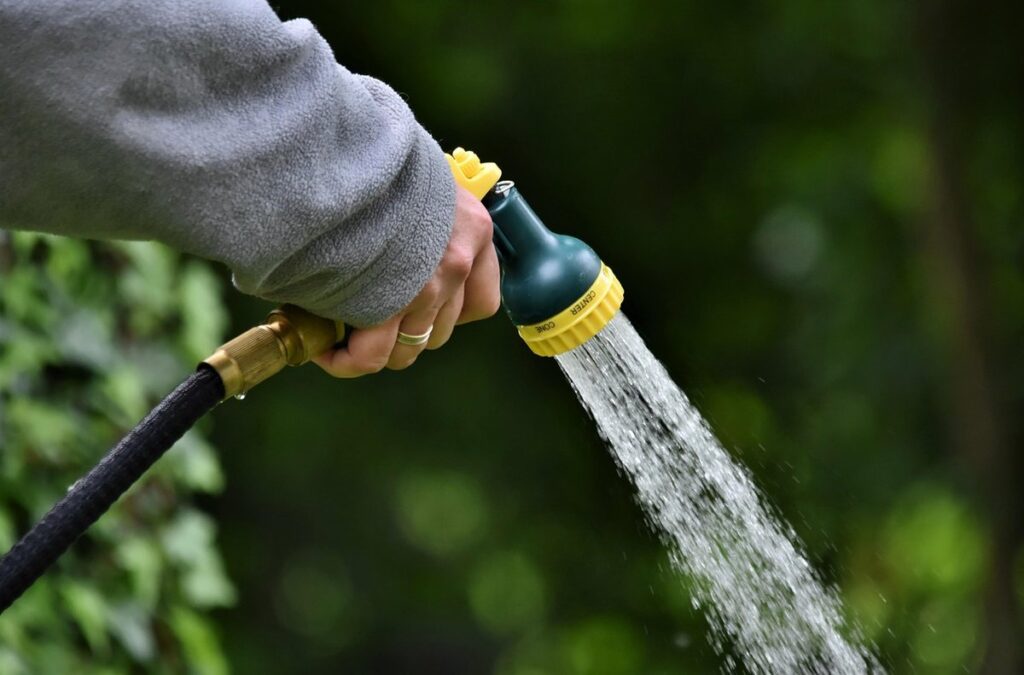
Water guns are often used for large-scale watering tasks, such as watering entire gardens or lawns. They’re easy to use and can cover a lot of ground quickly. However, they can be messy and may not provide a precise amount of water to each plant.
Irrigation systems, on the other hand, offer more precision and efficiency. They can be customized to meet the specific needs of your plants and can be set to deliver just the right amount of water at the right time. While they can be more expensive upfront, irrigation systems can save you time and money in the long run.
Manual watering cans are another popular option for those who prefer a more hands-on approach. They allow for precise control over the amount of water delivered and can be used to target specific areas or plants. However, they may not be as efficient as other options for larger spaces.
When choosing a watering tool, consider your specific needs and preferences. If you have a small garden or indoor plants, a manual watering can or even a simple cup may be sufficient. For larger areas, irrigation systems or water guns might be more practical.
Tips for Efficient Watering Practices
When it comes to watering your plants, it’s essential to strike the right balance between keeping them hydrated and conserving resources. One way to do this is by minimizing waste and making the most of available water sources.
One practical tip for efficient watering practices is to collect rainwater and use it for your plants. You can install a simple rainwater collection system, which involves placing a gutter or downspout extension to direct rainwater into a large container. This way, you’ll have access to free, chemical-free water that’s perfect for your plants.
Another idea is to use greywater – wastewater generated from sinks, showers, and washing machines – for watering plants like fruit trees, vegetables, and flowers. Not only does this reduce the demand on municipal water supplies, but it also helps to recycle nutrients back into the soil.
When using these alternative water sources, make sure to ensure they’re clean and free of contaminants before using them for your plants. You can use a simple filter or treatment system to remove any impurities.
By implementing rainwater collection systems and utilizing greywater effectively, you’ll not only conserve resources but also create a more sustainable gardening practice that benefits both your plants and the environment.
Conclusion: Mastering Plant Hydration
Now that you’ve learned how to spot and correct overwatering and underwatering issues, let’s distill our findings into a clear plan for perfect plant hydration.
Recap of Key Takeaways
In conclusion to our comprehensive guide on overwatering vs underwatering plants, it’s essential to revisit the key takeaways that will help you master plant hydration. Understanding the nuances of plant water needs is crucial for striking a balance between keeping your plants healthy and hydrated.
By now, you’re aware of the risks associated with both overwatering and underwatering, including root rot, wilting, and nutrient deficiencies. You also know how to identify signs of both conditions, such as yellowing leaves or dropped petals in overwatered plants, and shriveled leaves or a sudden decline in growth in underwatered plants.
To put this knowledge into practice, remember to observe your plant’s specific needs, consider factors like climate, soil type, and pot size, and adjust your watering schedule accordingly. For instance, succulents and cacti require infrequent but thorough watering, while ferns and peace lilies prefer consistent moisture levels.
By incorporating these insights into your plant care routine, you’ll be well on your way to providing the perfect amount of water for each of your plants, leading to healthier, more vibrant growth.
Final Tips for Achieving Perfect Balance
As you near the end of this ultimate guide on overwatering vs underwatering plants, it’s time to recap and reinforce the importance of achieving perfect balance. Monitoring soil moisture levels is crucial to determining when your plant needs water. Check the top 1-2 inches of soil by sticking your finger in or using a moisture meter. This will give you an idea of whether the soil feels dry, moist but not wet, or saturated.
Observe your plant’s responses as well. Wilting leaves might indicate underwatering, while yellowing leaves could be a sign of overwatering. Be attentive to these cues and adjust your watering schedule accordingly. To avoid getting stuck in a cycle of overwatering or underwatering, try implementing a “wait-and-see” approach. Give your plant a bit more time before re-watering – 2-3 days is a good starting point.
By combining these simple yet effective methods, you’ll be well on your way to achieving perfect balance and keeping your plants happy and healthy.
Frequently Asked Questions
How do I adjust my watering schedule based on changing seasons?
Adjusting your watering schedule is crucial to accommodate seasonal changes. Observe how the plant’s water needs change with temperature fluctuations, humidity levels, and sunlight exposure. Typically, plants require more water during hot summer months and less during cooler winter months. Monitor your plant’s response to these changes and adjust its watering schedule accordingly.
What are some common signs that my indoor plants are underwatered?
Indoor plants can be quite forgiving, but they will show signs of underwatering. Look out for dry leaves, brittle stems, and reduced growth rates. Check the soil moisture by inserting a finger into the soil; if it’s dry or crumbly, it’s likely time to water your plant.
Can I use a single watering schedule for all my plants, regardless of type?
While some plants have similar water requirements, others are more sensitive to overwatering or underwatering. To avoid causing damage, create individual watering schedules based on the specific needs of each plant species. Research the unique water requirements of your plants and adjust their watering schedules accordingly.
How do I prevent overwatering when using automated watering systems?
Automated watering systems can be convenient but may lead to overwatering if not properly calibrated. Regularly check the soil moisture levels, and adjust the system’s settings as needed. Also, ensure that the system is designed for your specific plant types and water requirements.
What are some general guidelines for watering houseplants in low-light environments?
Low-light plants often require less water than those in bright conditions. Water these plants sparingly, allowing the soil to dry slightly between waterings. Be cautious not to underwater, as this can cause nutrient deficiencies and other problems. Adjust your watering schedule based on the plant’s specific needs and response to lighting conditions.