
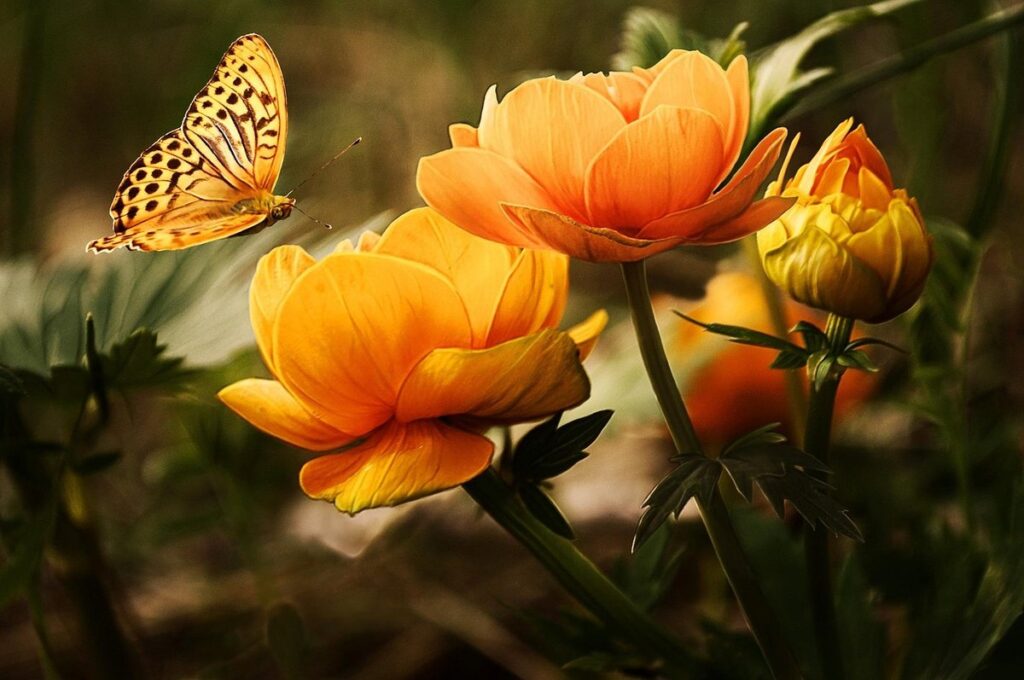
If you’ve ever been lucky enough to spot a Gulf Fritillary butterfly flitting around a sunny patch of flowers, chances are its impressive orange wings were the result of a caterpillar’s hard work. But have you ever stopped to think about these tiny creatures? Native to the tropical regions of Central and South America, Gulf fritillary caterpillars have made their way to other parts of the world, including the southern United States, where they’ve become an invasive species. In this article, we’ll delve into the fascinating world of the Gulf fritillary caterpillar, exploring its life cycle, host plants, unique defenses, and ecological impact. Along the way, we’ll uncover some surprising facts about these tiny but mighty creatures, from their reliance on passionflower vines to their ability to warn off predators with a toxic warning signal.
Habitat and Distribution
The Gulf Fritillary caterpillar is found in a variety of habitats, from tropical forests to backyards in warmer climates. We’ll explore its preferred environments and where it can be commonly spotted.
Native Range of the Gulf Fritillary Caterpillar
The Gulf fritillary caterpillar is typically found in tropical and subtropical regions of North America, where its host plant, the passionflower vine (Passiflora spp.), grows abundantly. These regions include southern Florida, the Gulf Coast states, Mexico, Central America, and the Caribbean Islands.
In these warm climates, the passionflower vine thrives in a variety of habitats, from coastal areas to inland forests. The caterpillars can be found on the leaves and stems of the host plant, where they feed on its leaves and grow rapidly.
If you’re interested in attracting gulf fritillary caterpillars to your garden, consider planting passionflower vines or other Passiflora species. These plants are relatively easy to care for and provide a rich source of food for the caterpillars as they grow.
In the wild, gulf fritillary caterpillars can be found in areas with full sun to partial shade and well-drained soil. By mimicking these conditions in your own garden, you can create an ideal environment for these beautiful creatures to thrive.
Introduced Populations in Other Areas
One of the most fascinating aspects of the Gulf fritillary caterpillar is its ability to thrive in new and unfamiliar environments. Through human activity, particularly trade and travel, these charismatic creatures have been introduced to various regions beyond their native habitat.
In Florida, for instance, Gulf fritillaries were first spotted in the 1930s by botanist and naturalist Paul D. Hurd Jr., who noted that they had likely hitched a ride on nursery stock or plants imported from other parts of the world. Since then, their range has expanded significantly, with sightings reported as far north as North Carolina and even into Central America.
As Gulf fritillaries continue to colonize new areas, it’s essential for gardeners, conservationists, and naturalists to be aware of the potential risks associated with non-native species introduction. This includes the possibility of outcompeting native insects for resources and altering ecosystems. To mitigate these effects, it’s crucial to exercise caution when introducing plants or animals that may harbor Gulf fritillaries, such as passionflower vines, which are a favorite food source. By being mindful of our actions, we can help ensure the continued health and diversity of local ecosystems.
Life Cycle of the Gulf Fritillary Caterpillar
Let’s dive into the life cycle of these fascinating creatures, as we explore how a Gulf Fritillary caterpillar transforms into its majestic adult form. This crucial stage is essential to understanding their remarkable metamorphosis.
Egg Stage Description
The egg stage of the gulf fritillary caterpillar is a crucial part of its life cycle. Female Gulf Fritillary butterflies typically lay their eggs on the underside of leaves, often near the leaf’s stem or midrib. This strategic placement allows the larvae to have easy access to food and protection from potential predators.
Gulf fritillary eggs are usually laid in clusters of 20-30, although some females may deposit as many as 100 eggs at a time. These oval-shaped eggs are approximately 1 mm long and 0.5 mm wide. They have a smooth, translucent appearance, often with a slight yellow or cream-colored tint.
It’s worth noting that gulf fritillary eggs can be easily missed due to their small size and coloration. However, if you’re an avid butterfly watcher or gardener, keeping an eye out for these tiny ovals can help you track the life cycle of this species. By understanding where and how Gulf Fritillary eggs are laid, you’ll gain a deeper appreciation for the intricacies of these beautiful butterflies’ lives.
Larval Stage Characteristics
At this stage of their life cycle, Gulf Fritillary caterpillars are small, voracious eaters that can be found on passionflower plants. They typically range from 1 to 2 inches (2.5-5 cm) in length and have a distinctive appearance. One of the most notable characteristics of these larvae is their coloration, which ranges from pale green to bright orange, often with white or yellow markings.
As they feed on the leaves of passionflower plants, Gulf Fritillary caterpillars exhibit a unique behavior – they tend to aggregate in large numbers, creating small colonies. This clustering behavior allows them to share nutrients and resources more efficiently, as well as providing protection from predators.
It’s essential for gardeners and butterfly enthusiasts to recognize these characteristics, especially when it comes to distinguishing Gulf Fritillary caterpillars from other species that might be present on passionflower plants. By understanding their larval stage characteristics, you can take steps to create a welcoming environment for these beautiful butterflies in your own garden or backyard habitat.
Host Plants and Diet
To raise healthy Gulf Fritillary caterpillars, it’s crucial to provide them with the right host plants and a balanced diet that meets their nutritional needs. Let’s explore these essential requirements together!
Preferred Host Plants for the Gulf Fritillary Caterpillar
When it comes to feeding your Gulf fritillary caterpillars, it’s essential to provide them with their preferred host plants. These plants are not only a vital source of nutrition but also play a crucial role in the caterpillar’s development and survival.
The primary host plant for the Gulf fritillary caterpillar is the passionflower (Passiflora spp.). There are several species within this genus that caterpillars can feed on, including Passiflora incarnata, Passiflora coccinea, and Passiflora ligularis. These plants are readily available in many parts of North America and offer a rich source of nutrients for the caterpillar.
When selecting a host plant, look for species with large, ovate leaves that are typically 2-4 inches long. Avoid smaller or younger leaves, as they may not provide enough nutrients for the caterpillar. Also, ensure that the plant is free from pests and diseases to prevent any potential harm to your caterpillars.
Some popular passionflower varieties for butterfly gardening include ‘Purple Haze’ and ‘Tropical Passion’. These plants are easy to grow and can thrive in a variety of conditions, making them an ideal choice for gardeners who want to support the life cycle of these beautiful butterflies.
Nutritional Requirements of the Larvae
To ensure the gulf fritillary caterpillar grows and develops properly, it’s essential to provide the right nutrients. As herbivores, these caterpillars primarily feed on nectar-rich flowers of passionflower (Passiflora spp.) and other plants within the Passifloraceae family. However, their diet also consists of plant leaves, which are rich in proteins, carbohydrates, and fiber.
The gulf fritillary caterpillar’s nutritional requirements can be broken down into the following key components:
* Protein: Caterpillars require a diet high in protein to build muscle tissue and support growth.
* Carbohydrates: These provide energy for various bodily functions, including movement and development.
* Fiber: A balanced intake of fiber helps maintain gut health and supports the breakdown of complex nutrients.
For instance, studies have shown that caterpillars reared on diets rich in nectar had significantly higher survival rates compared to those fed solely plant leaves. This highlights the importance of providing a diverse diet that includes both flowers and foliage.
When raising gulf fritillary caterpillars, it’s crucial to replicate their natural diet as closely as possible. Offer them a mix of fresh passionflower leaves and a nectar-rich food source like sugar water or fruit juice.
Defenses and Adaptations
Gulf fritillary caterpillars have developed some impressive ways to protect themselves from predators, let’s take a closer look at their unique defenses and adaptations. From spines to secretions, these features are crucial for survival.
Warning Coloration and Toxicity
One of the most striking features of the Gulf fritillary caterpillar is its vibrant orange and black coloration. But what’s behind this bright appearance? As it turns out, the Gulf fritillary caterpillar’s warning coloration serves as a vital defense mechanism to deter predators from attacking.
This remarkable trait is known as aposematism, where an animal advertises its toxicity or distastefulness through conspicuous markings or colors. In the case of the Gulf fritillary caterpillar, its bright orange hue signals to potential predators that it contains toxic compounds called cardenolides. These chemicals are also found in the adult butterfly’s body and play a crucial role in its defense against predators.
When threatened, the Gulf fritillary caterpillar will often release these toxins from its skin, making itself unpalatable to predators like birds, spiders, and even other insects. By displaying its warning coloration, the caterpillar effectively communicates its toxicity to potential threats, reducing the likelihood of predation.
Defensive Mechanisms Against Predators
When threatened by predators, gulf fritillary caterpillars employ several defensive mechanisms to protect themselves. One of their most effective defense strategies is autotomy – the ability to release a limb as a decoy. This clever tactic allows the caterpillar to distract its predator and make a quick escape. For example, if a hungry bird swoops down, the caterpillar will detach one of its legs, which will wriggle around like a separate entity, enticing the bird to pursue it.
In addition to autotomy, gulf fritillary caterpillars also rely on their spiny appearance and toxic secretions to deter predators. The caterpillar’s body is covered in sharp, hair-like projections that make it difficult for predators to grasp or swallow. Moreover, they secrete a foul-tasting fluid from their bodies as a defense mechanism – a pungent mixture of chemicals that deters most predators. By combining these two mechanisms, the gulf fritillary caterpillar has developed an impressive array of defenses against its natural enemies.
Impact on Ecosystems and Humans
As we delve deeper into the fascinating world of the gulf fritillary caterpillar, let’s examine how its presence affects the ecosystems it inhabits and the humans who coexist with it. This delicate balance has significant implications for both the environment and our daily lives.
Ecological Role in Natural Ecosystems
As we explore the life cycle of the Gulf fritillary caterpillar, it’s essential to understand its ecological role in natural ecosystems. In its native habitats, such as tropical and subtropical regions of North and South America, this caterpillar plays a vital part in food webs and nutrient cycling.
In these ecosystems, the Gulf fritillary caterpillar serves as a primary consumer, feeding on host plants like passionflower vines (Passiflora spp.). As it grows, it becomes a crucial link between producers and higher-level consumers. For instance, birds, bats, and other animals rely on the caterpillars as a food source, which in turn helps maintain population balances.
Moreover, the caterpillar’s activities contribute significantly to nutrient cycling. As they feed on plant tissues, they release nutrients back into the soil through their waste products. This process, known as “nutrient recycling,” is vital for maintaining soil fertility and promoting the growth of other plants. By understanding the Gulf fritillary caterpillar’s ecological role, we can appreciate its importance in sustaining healthy ecosystems.
Economic Importance for Humans
The gulf fritillary caterpillar may seem like a harmless insect, but it plays a significant role in human activities. The caterpillars’ host plants, particularly the passionflower vine, are economically important for humans. In some regions, passionflower vines are cultivated for their medicinal properties, including treatment of anxiety and insomnia. The plant’s extracts have been shown to have anxiolytic effects, making it a valuable crop for pharmaceutical companies.
In addition, passionflower vines are used in traditional medicine practices in various parts of the world. For example, in some African countries, the leaves are used to treat fever and rheumatism. The caterpillars’ host plant also has ornamental value, with some species being cultivated as decorative plants in gardens. This dual-purpose use makes passionflower vines an attractive crop for farmers looking to diversify their income streams.
Furthermore, the gulf fritillary caterpillar’s impact on the ecosystem indirectly benefits human activities such as forestry and agriculture. By serving as a food source for other animals, the caterpillars contribute to maintaining the balance of the ecosystem, which in turn supports the health of forests and agricultural lands.
Frequently Asked Questions
Can Gulf Fritillary caterpillars be found outside of their native range?
Yes, with the introduction of non-native host plants like passionflower vines, these caterpillars have established invasive populations in other areas, including parts of the southern United States. This expansion can lead to changes in local ecosystems and potentially harm native species.
Are there any specific precautions I should take when handling Gulf Fritillary caterpillars?
When interacting with these caterpillars, be aware that they may exhibit toxic warning signals as a defense mechanism. If you must handle them, wear protective gloves to avoid potential skin irritation or allergic reactions.
What host plants are suitable for the Gulf Fritillary caterpillar in warmer climates?
In addition to passionflower vines (Passiflora spp.), these caterpillars can also be found on other Passiflora species and some native North American plants like Maypop (Passiflora incarnata). Ensure that any non-native host plant you introduce is well-suited for your region’s climate.
How do Gulf Fritillary caterpillars impact local ecosystems in areas with invasive populations?
The introduction of these caterpillars can lead to a decline in native plant species, potentially disrupting the food chain and altering ecosystem dynamics. This change can have cascading effects on other species that depend on those native plants for survival.
Are there any natural predators or control methods for managing Gulf Fritillary caterpillar populations?
Natural predators like birds, spiders, and wasps help regulate these caterpillar populations. Additionally, manual removal of host plants or introducing biological control agents can be effective in managing invasive populations and reducing their ecological impact.