
If you’re an avid gardener or just starting to experiment with herbs, identifying different types of basil plants can be a challenge. With so many varieties to choose from, it’s essential to know what to look for when growing your own basil. From the shape and size of its leaves to the length of its stem and growth habits, understanding these characteristic features will help you grow and care for your basil plants successfully. In this article, we’ll take a closer look at the distinctive traits of basil plants, including leaf shape, stem length, and growth habits. By the end of it, you’ll be able to identify different types of basil with ease and give them the best chance to thrive in your garden or indoor space.
Morphology and Growth Habit
When you first glance at a basil plant, its distinctive appearance can give away its identity. In this next part, we’ll break down its morphology and growth habit in more detail.
Leaf Structure
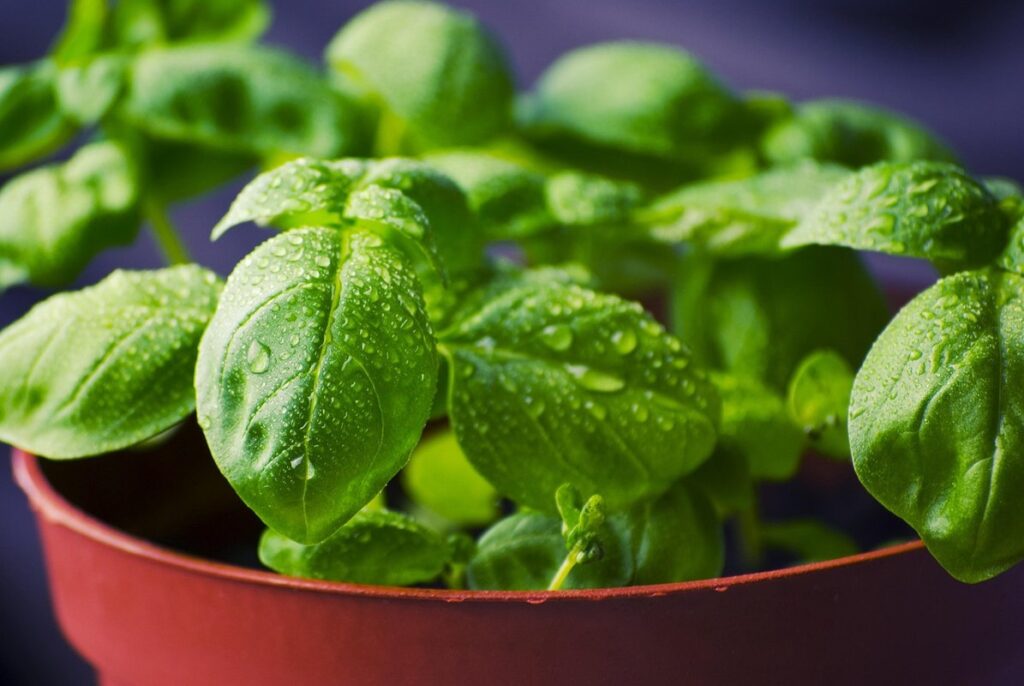
Basil leaves are a key identifying feature of the plant, and understanding their structure is essential for cultivation and appreciation. Characteristically, basil leaves have a pointed tip, a serrated edge, and a smooth surface with prominent veins. Their shape can vary from narrow and lance-shaped to broad and ovate, depending on the specific cultivar.
In terms of size, leaves can range from 2-12 inches in length, although most varieties fall between 4-6 inches. Leaf color is another distinguishing feature, ranging from bright green to pale yellow or even reddish-purple in some varieties like ‘Purple Basil’. Texture-wise, basil leaves are typically thin and tender, with a delicate aroma that’s released when bruised or chopped.
Different species of basil exhibit unique leaf morphologies, such as the compact growth habit and smaller leaves of Thai basil, or the large, heart-shaped leaves of sweet basil. Understanding these variations is useful for gardeners who want to grow specific types of basil for different applications in cooking and fragrance.
Stem and Branching Patterns
Basil plants typically exhibit a unique stem length and diameter that contributes to their distinctive appearance. Most basil varieties have stems that range from 12 to 36 inches (30-90 cm) in height, with some dwarf or compact varieties reaching as low as 6-8 inches (15-20 cm). In terms of diameter, basil stems are usually quite slender, measuring about 0.2-1 inch (5-25 mm) in thickness.
In addition to stem length and diameter, basil plants are also characterized by their branching patterns. Some popular varieties like ‘Genovese’ or ‘Napoletano’ tend to produce longer, more sprawling stems with a loose, open habit. These plants often require support or staking to keep them upright and promote even growth.
Other types of basil, such as Thai or Elephant Head, have shorter, bushier growth habits with a more compact branching pattern. This type of growth is ideal for container gardens or indoor spaces where vertical space may be limited.
When growing basil, understanding the typical stem length and branching patterns of your chosen variety can help you provide the best possible conditions for healthy development.
Leaf Color and Variations
Basil plants can display a range of leaf colors, from deep green to shades of purple, red, and even white. This variation adds visual interest to your garden or indoor herb garden.
Green Leaves: Characteristics and Types
Basil leaves are arguably one of the most recognizable aspects of this popular herb. They’re long and thin, with a slightly pointed tip at the end. The color, shape, and size can vary significantly depending on the specific variety. Green-leafed sweet basil is perhaps the most commonly found type, characterized by its bright green, smooth leaves that are typically 2-4 inches in length.
However, not all basil varieties share these characteristics. Thai basil, for example, has narrower leaves with a purple tint to them. Its fragrance and flavor profile are distinctly different from those of sweet basil. Purple basil boasts deep red or reddish-purple leaves, often adding a pop of color to the garden. Other variations include lemon basil, which features bright green leaves with a yellow or cream-colored undertone, and Genovese basil, known for its large, dark green leaves.
These differences in leaf color and shape not only influence the taste but also the overall appearance of the plant. When selecting a basil variety for your garden or cooking needs, it’s essential to consider these factors to ensure you choose the right one for your purposes.
Colored or Variegated Basil Leaves
If you’re looking to add some visual interest to your garden, consider growing colored or variegated basil leaves. These unique varieties boast vibrant red, purple, and gold hues that can add a pop of color to salads, pasta dishes, and more.
Some popular types include ‘Red Rubin’, which features deep crimson leaves with a slightly spicy flavor; ‘Purple Basil’ (Ocimum x citriodorum), which has delicate lavender-pink leaves and a sweeter taste; and ‘Gold Rush’, whose leaves shimmer in shades of golden yellow. When growing these varieties, keep in mind that they may require more attention to sun exposure: red and purple basil tend to prefer partial shade, while gold-colored varieties can thrive in full sun.
To incorporate colored basil into your cooking, be sure to harvest the leaves at the right time – when the color is most vibrant and intense. Simply snip off individual leaves or stems as needed, and use them fresh or dry for later use. With proper care and attention, these striking varieties can add a touch of drama to any dish and elevate your basil game.
Plant Size and Growth Stages
As we take a closer look at basil plants, let’s explore how they grow from tiny seedlings into robust and fragrant mature plants, reaching varying heights.
Mature Height and Spread
When it comes to mature height and spread, basil plants can vary significantly depending on their growth habits. Some compact varieties, like ‘Thai Basil’ or ‘Genovese’, tend to grow only 6-12 inches tall with a spread of around 8-10 inches. These bushy plants are perfect for small gardens or containers, making them ideal for indoor growing.
On the other hand, larger-growing types like ‘Sweet Basil’ can reach heights of up to 24 inches and spread out by about 18-20 inches. These full-bodied plants require more space to thrive and are often used in garden beds or large containers. To give you a better idea, consider the growth habits of popular varieties: ‘Purple Basil’ grows around 12-18 inches tall with a moderate spread, while ‘Lemon Basil’ reaches heights of up to 18 inches but tends to be more compact.
To manage your basil plant’s mature height and spread effectively, prune it regularly. Pinch off flower buds as they form to direct the plant’s energy towards leaf growth, which will help maintain its shape and control its size.
Developmental Stages from Seedling to Harvest
As a basil plant grows from seed to harvest, it goes through several distinct developmental stages. Let’s take a closer look at what you can expect during each phase.
Germination occurs when the seeds sprout and emerge from the soil, typically within 7-10 days after sowing. During this time, the seedlings develop their first set of leaves, known as cotyledons or seed leaves. These initial leaves are small and rounded, often a deep green color.
As the seedling establishes itself over the next few weeks, it begins to produce its true leaves – long, narrow, pointed structures that will continue to grow throughout the plant’s life cycle. During this stage, basil plants require adequate light, water, and nutrients to establish a strong root system and promote healthy growth.
Eventually, the basil plant enters a period of vegetative growth, where it focuses on producing more leaves rather than flowers. This is typically when you’ll want to prune your basil plant regularly to encourage bushy growth and prevent flowering. Regular harvesting will also help control the plant’s size and promote even growth.
Visual Characteristics for Identification
So, how do you identify a basil plant when it’s growing? Look out for its distinctive bright green leaves that are typically 1-2 inches long and have a pointed tip.
Leaf Arrangement on the Stem
When examining the basil plant’s visual characteristics for identification, paying attention to leaf arrangement on the stem is a valuable skill. Leaf placement and arrangement can aid in distinguishing between different species of basil. For instance, some basil varieties exhibit an alternate pattern where leaves are spaced evenly along the stem, while others display a spiral or whorled arrangement.
A closer look at the plant will reveal that sweet basil typically displays an opposite leaf arrangement, with pairs of leaves facing each other. This distinct characteristic makes it easier to identify as a sweet basil plant. On the other hand, Thai basil often exhibits an alternate pattern, but its distinctive red veins and purple stems distinguish it from other varieties.
To accurately identify basil species based on their leaf arrangement, observe the stem’s center. Does it have two leaves facing each other, or are they spaced apart in an alternate or spiral pattern? This detail can help narrow down the options when trying to determine the specific variety of basil you’re looking at.
Inflorescence Formation and Flowering Habits
As you examine the basil plant more closely, pay attention to its inflorescence formation and flowering habits. These characteristics can be a telling sign of a particular basil type. Some varieties are bred to produce showy flowers, while others remain vegetative, focusing on leaf growth rather than blooming.
Notice how sweet basil (Ocimum basilicum) produces small, white or purple flowers that grow in clusters at the top of the stem. This is a distinguishing feature between sweet and other types like Thai basil, which rarely blooms. On the other hand, some varieties like lemon basil are known to produce more abundant flowers due to their genetic makeup.
Look for these subtle differences when identifying basil plants, as they can greatly impact flavor profiles and growth habits. Some growers choose to remove flower buds to encourage leaf production and prevent the plant from going to seed. This technique is called “pinching” and can help maintain a bushy shape and promote more uniform harvesting.
Frequently Asked Questions
How do I identify basil plants with similar characteristics but different growth habits?
Identifying basil plants with similar leaf structure and shape can be challenging, especially when they exhibit different growth habits. To distinguish between them, observe the stem length and branching patterns. For example, some varieties like ‘Genovese’ and ‘Thai Basil’ have longer stems with a more sprawling habit, while others like ‘Sweet Basil’ have shorter stems with a more compact growth pattern.
Can I grow basil indoors if it’s a large variety or tends to grow tall?
Yes, you can still grow basil indoors even if it’s a large variety or has a tendency to grow tall. Use containers that are at least 6-8 inches deep and provide adequate support for the plant as it grows. This could be in the form of a trellis, stake, or cage.
How do I encourage leaf growth in my basil plants during hot summer months?
During hot summer months, basil plants can become stressed due to excessive heat and humidity. To promote healthy leaf growth, ensure your plants receive adequate water (but not too much) and provide partial shade during the hottest part of the day.
Can I propagate basil through cuttings or is seed starting the only option?
You can propagate basil through cuttings. In fact, this method allows you to create multiple plants from a single stem cutting. To do so, take 3-4 inch long stem cuttings and remove lower leaves. Dip the cut end in rooting hormone and plant it about an inch deep into moist potting mix.
How often should I harvest basil leaves to encourage continuous growth?
Yes, regular harvesting is essential for encouraging continuous growth in your basil plants. Pinch off individual leaves or stems as needed, but make sure to leave at least 1-2 inches of stem intact to promote new growth and prevent the plant from flowering prematurely.