
Have you ever wondered how bees manage to gather nectar from flowers with such precision? It’s a fascinating process that not only fuels their own survival but also contributes significantly to ecosystem health. When bees collect nectar, they’re doing much more than just feeding themselves – they’re playing a crucial role in pollination and ensuring the reproduction of countless plant species. But how do they locate these hidden treasures? What exactly is it about flowers that makes them attractive to bees? In this article, we’ll take a closer look at the nectar collection process, exploring the intricacies of bee behavior and the importance of this process for both individual bees and the ecosystem as a whole.
The Importance of Nectar to Bees and Ecosystems
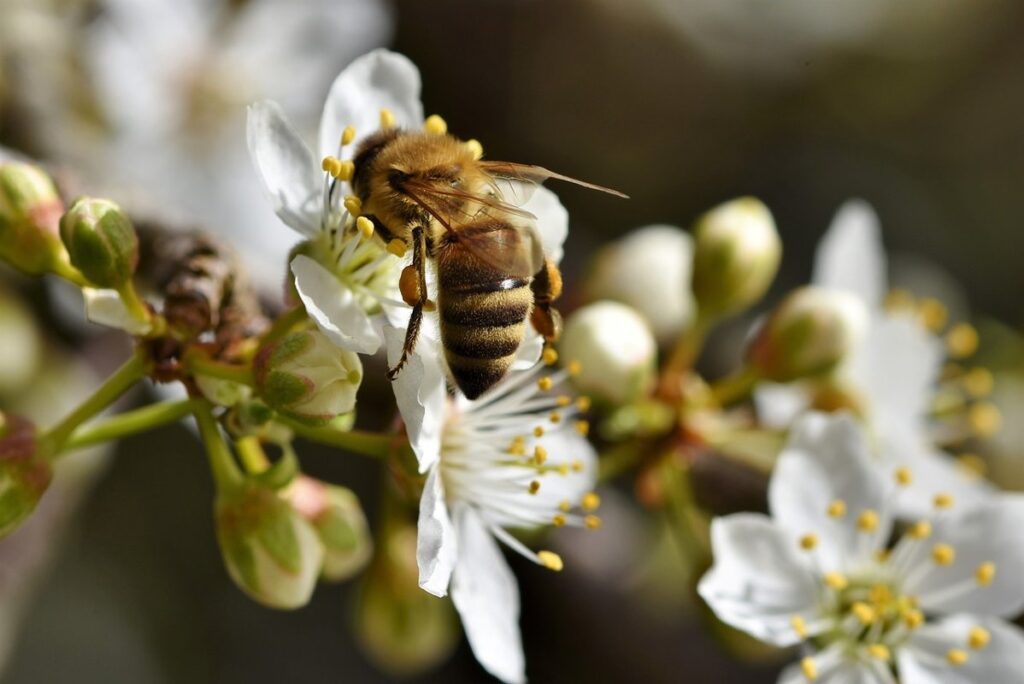
When bees collect nectar, they’re not just refueling for their colony – they’re also playing a crucial role in pollinating plants and supporting entire ecosystems. Let’s dive into the importance of this process.
Understanding the Role of Nectar in Bee Nutrition
Nectar is a primary source of energy for bees, and it plays a crucial role in their survival. As a bee navigates from flower to flower collecting nectar, it’s not just gathering a sweet liquid, but fuel for its body. This sugary substance is broken down into glucose and fructose during digestion, which are then used by the bee as energy. Without access to nectar-rich flowers, bees would quickly deplete their stored energy reserves, making it difficult to perform essential tasks like pollination.
Bees collect nectar in order to sustain themselves, and they do so with remarkable efficiency. For instance, a single honeybee collects about 1/12th of its body weight in nectar per trip. This may not seem like much, but considering the bee’s tiny size, it translates to an impressive amount of energy-rich liquid.
Bees need access to diverse sources of nectar-rich flowers throughout the growing season to ensure their survival and colony growth. As we learn more about the importance of nectar in bees’ lives, it becomes increasingly clear that preserving natural habitats and promoting bee-friendly flora are essential steps towards safeguarding these vital pollinators.
The Consequences of Nectar Loss on Ecosystems
When bees collect nectar from flowers, they play a vital role in pollination. However, if nectar is lost due to various factors such as climate change, pesticide use, or habitat destruction, the consequences can be severe. One of the most significant impacts is on pollination itself. Without enough nectar, bees may not have the energy reserves needed to fly and collect pollen from other flowers, reducing the effectiveness of pollination.
Plant reproduction also suffers when nectar is in short supply. Many plant species rely heavily on bees for pollination, and if nectar is scarce, they may struggle to produce seeds or fruit. This can lead to a decline in plant populations and potentially even extinctions. Furthermore, the loss of nectar can have a ripple effect throughout ecosystems. Bees are often considered a keystone species, meaning their loss can have significant impacts on other organisms that depend on them.
To mitigate these effects, it’s essential to protect bee habitats and ensure that flowers continue to provide an adequate source of nectar for bees to collect. By planting bee-friendly flowers in your garden or community, you can help support local pollinators and contribute to a healthier ecosystem.
How Bees Locate and Identify Nectar-Rich Flowers
Bees use a combination of visual cues, scent, and even UV light to locate nectar-rich flowers and zero in on the sweet stuff. Let’s take a closer look at their navigation skills.
Visual Cues: Color, Shape, and Size
When searching for nectar-rich flowers, bees rely heavily on visual cues to identify the most promising sources. Color is one of the primary visual cues bees use, and they have an exceptional ability to detect ultraviolet (UV) light that is invisible to humans. This allows them to spot flowers with UV-reflecting patterns, which often indicate a high nectar content. For example, many trumpet-shaped flowers like honeysuckle and fuchsia display UV-rich markings that guide bees to their sweet rewards.
In addition to color, shape also plays a crucial role in bees’ visual cues. Research has shown that bees are attracted to shapes with strong curvatures, such as the rounded petals of roses or the tubular shape of snapdragons. These shapes create visual contrast and help bees distinguish between flowers that hold nectar and those that don’t.
Finally, size also influences a bee’s decision when choosing which flowers to visit. Generally, larger flowers with more prominent blooms tend to attract more attention from bees, as they often signal the presence of high-nectar volumes.
Olfactory Cues: Scent and Smell
When it comes to finding nectar-rich flowers, bees rely heavily on their sense of smell. They use olfactory cues to navigate and locate the perfect blooms for collecting nectar. A bee’s nose is incredibly powerful, with some species having up to 170 different types of scent receptors. For comparison, humans have only five! This allows them to detect a wide range of scents, from the sweet aroma of blooming flowers to the pungent smell of decaying food.
As bees fly from flower to flower, they use their sense of smell to track down nectar sources. They can even detect the scent of certain flowers that are still hidden from view, guiding them towards the perfect spot for collection. This is especially important when it comes to finding rare or hard-to-spot blooms. By relying on their sense of smell, bees can efficiently locate and gather nectar from a wide variety of flowers.
The Role of Learning and Experience in Nectar Foraging
When it comes to nectar foraging, learning and experience play a crucial role in a bee’s success. Bees learn about nectar-rich flowers through a combination of innate abilities and environmental cues. They use visual and olfactory signals to identify flowers with high nectar content, but it takes time and practice to develop this expertise.
As bees visit different flowers, they gather information about the quality and quantity of nectar available. This knowledge is stored in their memory and used to inform future foraging decisions. Bees also learn from one another through communication and dance patterns, allowing them to share valuable insights with their colony.
In fact, studies have shown that experienced bees are more efficient at locating nectar-rich flowers than younger, less-experienced bees. This highlights the importance of experience in nectar foraging and suggests that older bees serve as valuable mentors within the colony. By learning from one another and adapting to changing environmental conditions, bees are able to optimize their nectar collection efforts and support the health and well-being of their colony.
The Process of Nectar Collection
When bees collect nectar, they use a complex process that involves inserting their long, tube-shaped tongues into flowers to gather the sweet liquid. Let’s take a closer look at this fascinating process!
How Bees Uncover Nectar within Flowers
When bees access nectar within flowers, they employ several specialized features that enable them to collect this vital resource. At the forefront of this process is their proboscis, a long, extendable tube-like structure that serves as their drinking straw. As they land on a flower, the bee’s proboscis extends and uncoils, allowing it to reach deep into the flower’s center where nectar is stored.
As they insert their proboscis into the flower, bees use their sense of smell to locate the nectar-rich area. They also employ their antennae to feel for the nectar-filled tubules within the flower. Once they’ve located the nectar, they begin to suck it up through their proboscis and store it in their honey stomach.
Interestingly, not all flowers are created equal when it comes to nectar accessibility. Some flowers have evolved specific features that make it easier or harder for bees to access nectar. For instance, some flowers have long tubes that require bees to flex their proboscis in order to reach the nectar, while others have shorter tubes that allow for more direct access. By understanding these differences, gardeners and bee enthusiasts can take steps to create bee-friendly environments that support optimal nectar collection.
The Importance of Enzymes in Nectar Digestion
When bees collect nectar from flowers, they don’t just store it as is. They need to break down the complex sugars into simpler ones to make it easier for their bodies to use. This process is where enzymes come in – tiny biological molecules that act like catalysts to speed up chemical reactions.
Enzymes play a crucial role in breaking down the high-fructose corn syrup-like mixture found in nectar, called honeydew, into glucose and fructose. These simple sugars are then absorbed by the bee’s digestive system and used for energy. The enzyme responsible for this breakdown is invertase, which is produced in the bee’s salivary glands.
As bees collect nectar, they mix it with their own saliva that contains invertase. This mixture is stored in a honey stomach, where the enzyme continues to break down the sugars until the nectar is almost completely digested. When the bee returns to the hive, it regurgitates this now-simplified sugar solution and shares it with other bees, starting the process of honey production.
The presence of enzymes in nectar digestion allows bees to efficiently collect and store energy-rich food for their colony’s survival.
Bee Communication and Information Sharing
Bees communicate crucial information about nectar sources through complex dances, enabling their colonies to optimize foraging efforts and gather the most valuable resources. Let’s take a closer look at how they do it.
Dance Language: The Waggle Dance
When bees return to their hive with nectar, they share valuable information about the location and quality of these resources through a complex dance language. This is known as the waggle dance. To perform this crucial communication, foragers use body language and movement to convey vital details.
The waggle dance begins with the bee vibrating her body while performing the figure-eight pattern around the inside of the hive’s honeycomb cells. The duration and speed of this motion signal the distance and direction of the nectar-rich flowers relative to the sun. For instance, if a forager has discovered a particularly productive patch of lavender, she will dance in a more vigorous manner than one who has found fewer blossoms.
By interpreting these signals, other bees within the hive can understand where to fly next and when to expect fresh nectar. This information sharing enables the colony to optimize its foraging efforts and maintain an efficient food supply system.
Pheromones and Other Chemical Signals
When bees collect nectar, they don’t just rely on visual cues from flowers; they also use chemical signals to aid their foraging. Pheromones play a crucial role in this process, but there are other forms of chemical communication that help bees gather nectar more efficiently.
One such example is the scent marking left by individual bees on flowers. This scent allows other bees to recognize which flowers have been visited and which ones may still have nectar available. Research has shown that honeybees can remember the scent of a flower for up to 24 hours, making it easier for them to locate nectar-rich blooms.
Bees also use chemical signals to communicate with each other about food sources. For example, when a bee discovers a particularly rich source of nectar, it will perform a “waggle dance” that informs its fellow bees of the location and quality of the food. This complex communication system helps ensure that multiple bees can gather nectar from the same flower, reducing competition and increasing overall foraging efficiency.
Factors Affecting Nectar Collection Efficiency
As bees navigate their complex nectar collection process, various factors can impact their efficiency, making it crucial to understand what influences their ability to gather and transport nectar effectively.
Weather Conditions: Temperature, Humidity, and Rainfall
Bees’ ability to collect nectar is significantly impacted by weather conditions. Temperature plays a crucial role, as bees are most efficient at collecting nectar when temperatures range between 64°F and 90°F (18°C and 32°C). At these temperatures, the nectar flows freely within the flowers, making it easier for the bees to access.
However, extreme temperatures can hinder their collection process. High temperatures above 100°F (38°C) can cause the nectar to evaporate quickly, while low temperatures below 50°F (10°C) can slow down the nectar flow. Bees may also struggle to fly efficiently in humid environments, which can weigh them down and reduce their ability to collect nectar.
Rainfall is another critical factor affecting nectar collection. Light drizzles or misty conditions are generally not a hindrance, but heavy rainfall can make it difficult for bees to access the flowers. In such cases, they may have to wait until the rain subsides before resuming their nectar collection.
Flower Availability and Diversity
When it comes to nectar collection efficiency, flower diversity and abundance play a significant role. A mix of flowers with varying blooming periods and nectar flow rates allows bees to access nectar throughout the day. For instance, some flowers like sunflowers and zinnias bloom in the morning, while others like lavender and rosemary peak in the afternoon.
Having multiple flower types within a small area is crucial for optimal nectar collection. Research suggests that bees can visit up to 1,000 flowers per hour when they have access to diverse blooms (Gathmann & Tscharrke, 2002). This diversity allows them to adapt to changing environmental conditions and maximize their foraging efficiency.
To boost your garden’s nectar collection potential, focus on planting a variety of flowers that attract bees. Incorporate native species that bloom at different times to create a constant nectar flow throughout the season. Aim for a mix of annuals and perennials to ensure continuous blooming periods.
The Impact of Human Activities on Bee Nectar Collection
When bees collect nectar, human activities can disrupt their natural process, affecting not only bee colonies but also our own food supply and ecosystems at large. Let’s take a closer look.
Habitat Loss and Fragmentation
Habitat loss and fragmentation have devastating consequences on bee populations and their ability to collect nectar. When natural habitats are destroyed or broken up into smaller patches, it reduces the availability of food sources for bees. This not only affects the quantity of nectar they can collect but also impacts the quality of their diet.
As a result, bees may struggle to find sufficient resources to sustain themselves, let alone store enough nectar for winter. For example, studies have shown that in areas where habitat loss is severe, bee populations decline by up to 50%. This has significant implications for ecosystem health and pollination services.
When habitats are fragmented, it can also lead to “island effects,” where isolated patches of vegetation become vulnerable to pests, diseases, and other threats. To mitigate these impacts, consider planting bee-friendly flowers in your community garden or backyard, which can help create a network of habitats that support local bee populations. By doing so, you’ll be contributing to the preservation of nectar-rich ecosystems and supporting the vital work of bees.
Pesticide Use and Its Effects on Bees
Pesticide use is a significant threat to bee populations worldwide. Bees collect nectar from flowers that may have been treated with pesticides, which can contaminate the nectar and harm the bees. The most common pesticide used is neonicotinoids, which has been linked to colony collapse disorder in bees.
When bees visit pesticide-treated flowers, they ingest the toxins along with the nectar. This can lead to a range of problems, including impaired navigation skills, reduced fertility, and increased mortality rates. In severe cases, pesticide exposure can cause bees to abandon their hives or even die within hours.
The impact of pesticide use on bee populations is alarming. A study found that 25% of monitored bee colonies in the United States had neonicotinoid residues in their pollen. Another study discovered that bees exposed to neonicotinoids were less likely to return to their hives, with a 20% reduction in foraging success.
To minimize the risks associated with pesticide use, gardeners and farmers can take several steps. These include using integrated pest management (IPM) techniques, choosing bee-friendly plants that are naturally resistant to pests, and avoiding neonicotinoids altogether. By making these changes, we can reduce the amount of pesticides used in agriculture and help protect our precious pollinators.
Frequently Asked Questions
How can I create a bee-friendly habitat in my backyard to support the nectar collection process?
To establish a bee-friendly garden, plant a variety of flowers that are rich in nectar and pollen, such as sunflowers, lavender, and coneflowers. Ensure your plants are native to your region and choose species with different bloom times to provide a constant source of food throughout the growing season. Avoid using pesticides, which can harm bees, and maintain a diverse range of flowers to attract various pollinators.
What factors affect nectar collection efficiency in my local bee population?
Nectar collection efficiency is influenced by several factors, including weather conditions (temperature, humidity, rainfall), flower availability and diversity, and the presence of predators or diseases. Consider monitoring temperature fluctuations, which can impact the quality and quantity of nectar produced by flowers. Also, ensure that your garden provides a variety of flower species to support the local bee population’s foraging needs.
Can I replicate the waggle dance in my backyard to communicate with bees?
While you can’t exactly replicate the waggle dance in your yard, understanding its purpose and mechanics can help you better appreciate the complex communication systems used by bees. The waggle dance informs fellow bees about food sources, including the direction, distance, and quality of nectar-rich flowers. However, this intricate language is unique to bees and not easily mimicked or understood by humans.
How can I ensure my garden’s flowers are attractive to bees despite varying weather conditions?
Bees rely on visual cues like color, shape, and size when selecting flowers for nectar collection. Plant a mix of annuals and perennials with different bloom sizes and colors to cater to various bee species’ preferences. For example, blue and purple flowers tend to attract more bees than white or yellow ones. Ensure that your garden provides enough sunlight (at least 6 hours) and maintain soil moisture suitable for nectar production.
Can I use pheromones or other chemical signals to guide bees in my garden?
Pheromones are indeed an essential part of bee communication, particularly during mating and alarm calls. However, attempting to manipulate these complex chemical signals could disrupt natural behaviors and lead to unintended consequences. Instead, focus on creating a welcoming environment with plenty of nectar-rich flowers and minimal human disturbance.