
You might be surprised to learn that Cepaea nemoralis, also known as the garden snail or brown-lipped snail, has been captivating scientists and nature enthusiasts alike with its unique characteristics. Native to Europe and parts of Asia, this intriguing creature has made its way into various ecosystems, playing a vital role in decomposition and nutrient cycling.
As we delve into the world of Cepaea nemoralis, you’ll discover more about its habitat, distribution, and conservation status. We’ll also explore its fascinating behavior, physical characteristics, and cultural significance. From understanding its ecological importance to learning about its interactions with other species, this article will give you a comprehensive overview of why Cepaea nemoralis matters. Whether you’re an environmental scientist or simply someone curious about the natural world, join us on this journey into the fascinating realm of Cepaea nemoralis.
Introduction to Cepaea Nemoralis
Let’s dive into what makes Cepaea nemoralis such a fascinating species, starting from its origins and unique characteristics that set it apart from others in the snail family.
What is Cepaea Nemoralis?
Cepaea Nemoralis is a species of land snail that has been widely studied and admired for its unique characteristics. Scientifically known as Cepaea nemoralis, this snail’s name can be broken down into two parts: “Cepaea,” which refers to the genus it belongs to, and “nemoralis,” meaning “of or pertaining to woods” in Latin. This refers to the snail’s habitat preference for woodland environments.
In various languages, Cepaea nemoralis is known by different names. In French, it is called “Escargot des bois,” which translates to “woodland snail.” In German, it is referred to as “Waldschnecke,” meaning “forest snail.” This species is not only a fascinating subject for naturalists but also an important component of its ecosystem, serving as both a predator and prey.
Cepaea nemoralis is native to Europe and parts of Asia. It has been widely studied in the context of evolutionary biology due to its variable shell patterns and colors. This snail’s ability to adapt to different environments has contributed significantly to our understanding of speciation and ecological adaptation.
Habitat and Distribution
Cepaea nemoralis is widely distributed across Europe and North Africa, with its native range spanning from Western France to Eastern Poland, and from Portugal to Ukraine. This snail can be found in various habitats, including deciduous forests, woodlands, and even urban areas. In the UK, for example, Cepaea nemoralis is one of the most common land snails and can be found in many parks and gardens.
It’s worth noting that this snail is absent from some regions with harsher climates, such as Iceland and parts of Scandinavia. However, it has been introduced to other areas through human activity, including the Channel Islands and the British Isles. In these non-native ranges, Cepaea nemoralis can often be found in areas with mild winters and adequate moisture.
If you’re interested in finding Cepaea nemoralis in its native range, look for deciduous forests or woodlands with a mix of tree species, such as oak, beech, and ash. These snails tend to thrive in areas with rich soil and adequate food sources, including leaf litter and plant material.
Physical Characteristics and Anatomy
Let’s take a closer look at the physical characteristics of Cepaea nemoralis, examining its shell shape, size, color patterns, and internal anatomy in more detail.
Shell Morphology
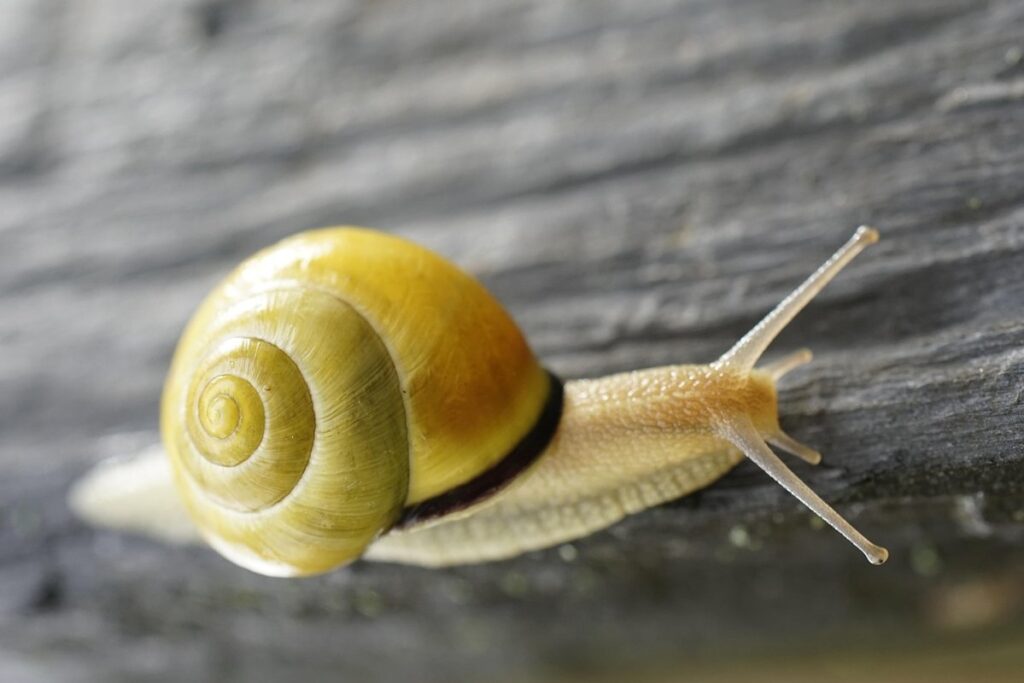
Cepaea nemoralis is known for its distinctive shell morphology, which plays a crucial role in identification and adaptation. The snail’s shell shape can vary from globose to elliptical, with some specimens exhibiting more rounded or pointed apices. Shell size is typically moderate, ranging between 15-25 millimeters in height.
Coloration of the shell is another key identifying feature. Cepaea nemoralis often exhibits a range of colors including brown, yellow, and orange, sometimes with darker or lighter blotches or bands. The most common color pattern features a banded arrangement of light and dark hues. This variation in color is thought to be an adaptation for camouflage, allowing the snail to blend in with its surroundings.
When attempting to identify Cepaea nemoralis, note the presence of small, rounded tubercles on the shell’s surface. These tubercles are often found in a regular or irregular pattern and can aid in distinguishing this species from others within the genus. By paying close attention to these distinctive features, enthusiasts can accurately identify Cepaea nemoralis in their collections or during field observations.
Foot and Mucus Production
The foot and mucus production play a vital role in the cepaea nemoralis snail’s ability to move and protect itself. The snail’s foot is soft, flat, and covered with tiny projections called papillae. These papillae help the snail grip onto surfaces, allowing it to climb up steep inclines.
As the snail moves, its foot secretes a thick layer of mucus that helps reduce friction and enables smooth movement. The mucus also protects the snail’s skin from abrasion and desiccation. In fact, the mucus can be so effective at retaining moisture that it’s not uncommon to see a trail of slime left behind by the snail as it moves.
When navigating slippery surfaces or traversing dry environments, cepaea nemoralis will often produce more mucus to compensate for the reduced traction. This unique adaptation allows the snail to thrive in a wide range of habitats.
Behavior, Diet, and Habitat Preferences
When it comes to understanding cepaea nemoralis, let’s dive into their unique behavior, diet preferences, and habitat requirements that set them apart from other snail species.
Foraging and Feeding Habits
When it comes to foraging and feeding habits, Cepaea nemoralis is a species that’s well adapted to its environment. As a land snail, its diet primarily consists of plant-based materials, including leaves, stems, flowers, and fruits. In fact, studies have shown that Cepaea nemoralis can survive on a wide range of plant types, from grasses to broad-leaved plants.
One notable adaptation for feeding is the snail’s radula, a tongue-like structure with tiny teeth that helps to scrape up food particles from surfaces. This unique feature allows Cepaea nemoralis to feed efficiently on tough plant materials, such as leafy greens and woody stems. When it comes to accessing its preferred foods, Cepaea nemoralis is often found in areas with high vegetation density, where it can easily graze on available plant matter.
In terms of diet composition, research suggests that Cepaea nemoralis tends to favor plants rich in calcium and other essential nutrients. This preference likely drives its habitat preferences, as the snail seeks out areas with abundant food sources. By understanding these feeding habits, we can better appreciate the complex relationships between Cepaea nemoralis and its environment.
Shelter and Territoriality
Cepaea nemoralis snails are creatures of habit and have a strong instinct to seek shelter. They will often retreat into their shells when threatened, which can provide them with protection from potential predators such as birds, hedgehogs, and other small animals. In the wild, you might observe snails hiding in vegetation, under rocks, or within burrows.
Territorial marking is another important aspect of Cepaea nemoralis behavior. These snails will often leave behind a trail of mucus on surfaces they come into contact with, which serves as a chemical signal to other snails. This helps them maintain their territory and avoid competing with others for food and resources. If you’re an enthusiast looking to provide a suitable environment for your pet Cepaea nemoralis, it’s essential to replicate this behavior by offering multiple hiding places and surfaces for them to mark.
In fact, providing a varied landscape with plenty of shelter options can go a long way in keeping your snails stress-free. A shallow dish or tray filled with damp soil or sand, as well as some larger rocks or logs, can create an ideal environment for these creatures.
Conservation Status and Threats
Let’s take a closer look at the conservation status of Cepaea nemoralis, as well as the threats it faces in its natural habitats.
Population Trends and Threats
Cepaea nemoralis is one of the most common species of snails found in Europe and North Africa. However, like many other non-marine gastropods, its population trends have been declining in recent years due to various factors. Habitat loss and fragmentation are significant threats to C. nemoralis populations. As natural habitats such as forests and grasslands continue to shrink, the remaining patches become isolated, making it difficult for snails to migrate and find suitable mates.
Climate change also plays a crucial role in the decline of C. nemoralis populations. Changes in temperature and precipitation patterns alter the availability of food resources, leading to reduced reproduction rates and increased mortality rates. Additionally, disease outbreaks can have a significant impact on snail populations, particularly when combined with other stressors such as environmental degradation.
To mitigate these threats, it’s essential to implement conservation efforts that address habitat loss and fragmentation. This can be achieved through measures such as the creation of corridors for wildlife movement, restoration of degraded habitats, and protection of remaining natural areas from human activities.
Conservation Efforts and Regulations
The conservation status of Cepaea nemoralis has raised concerns among experts and authorities. In response, various international and national efforts have been initiated to protect this species.
At the European level, the Bern Convention on the Conservation of European Wildlife and Natural Habitats (1982) lists Cepaea nemoralis as a protected species. This classification necessitates the implementation of protective measures by member states. For instance, France has designated certain areas as Special Protection Areas for Habitats (SPAs), which provide additional protection for Cepaea nemoralis populations.
In the UK, the Environment Agency and Natural England work together to monitor and manage habitats where Cepaea nemoralis is found. The conservation efforts also extend to research initiatives. Scientists are studying the species’ behavior, habitat requirements, and population dynamics to better understand its needs and develop effective conservation strategies.
Individuals can contribute to Cepaea nemoralis conservation by reporting sightings or participating in citizen science projects. This collective effort aids researchers in identifying areas where conservation actions are most needed and helps inform policy decisions at national and international levels. By working together, we can ensure the long-term survival of this unique species.
Interesting Facts and Uses
You might be surprised by how much you didn’t know about Cepaea nemoralis, a snail species that’s been studied extensively for its unique properties. Let’s dive into some interesting facts and uses!
Cultural Significance
Cepaea nemoralis has been a part of various cultures for centuries, often holding significant symbolic and traditional value. In some European societies, the shell’s distinctive brown coloration is associated with earthy tones and fertility, leading to its use in folk medicine and rituals tied to agriculture. For instance, the ancient Greeks and Romans believed that carrying a Cepaea nemoralis shell would bring good fortune and protect against evil spirits.
In Ireland, the snail itself has been referred to as “shell-stone” or “stone-snail,” reflecting the significance placed on its protective shell in traditional folklore. Some believe that these shells possess healing properties and can be used to ward off negative energies.
Interestingly, Cepaea nemoralis’s appearance has inspired various forms of art throughout history, from Celtic knotwork patterns to 19th-century watercolor paintings. These depictions often highlight the snail’s shell as a symbol of protection, resilience, and cyclical growth.
If you’re interested in incorporating Cepaea nemoralis into your cultural practices or artistic endeavors, consider collecting shells responsibly from areas where they are abundant. Be sure to follow local regulations regarding collection and any potential impact on habitats.
Ecological Importance
Cepaea nemoralis plays a vital role within ecosystems as both a predator and prey. As a herbivorous snail, it feeds on plants, algae, and lichens, helping to regulate vegetation growth and maintain ecosystem balance. This snail species is an essential link in the food web, serving as a primary consumer that connects producers (plants) to secondary consumers (insects, small mammals).
As a component of nutrient cycling processes, Cepaea nemoralis contributes to soil fertility by breaking down plant material through its feeding activities and waste production. This process releases essential nutrients back into the ecosystem, enriching the soil for other organisms.
In addition, as a predator itself, Cepaea nemoralis preys on smaller invertebrates like slugs, earthworms, and insects. This helps regulate pest populations and maintain a balance of species within ecosystems. By controlling pest populations, Cepaea nemoralis indirectly supports the growth and health of plants, ensuring the overall resilience of the ecosystem.
Through its role as both predator and prey, Cepaea nemoralis demonstrates the interconnectedness of species within ecosystems and highlights the significance of preserving biodiversity for ecosystem function and stability.
Frequently Asked Questions
Can Cepaea nemoralis be found outside of Europe and parts of Asia?
While Cepaea nemoralis is native to these regions, it has been introduced to other areas through human activity. Yes, it’s possible to find them in gardens and parks in North America, Australia, and New Zealand, but they’re not as widespread or established as in their natural range.
How does the brown-lipped snail contribute to ecosystem health?
As a key decomposer, Cepaea nemoralis plays a vital role in nutrient cycling. By consuming plant material and excreting nutrient-rich waste, they help maintain soil fertility and structure. This process benefits both plants and other animals that depend on these nutrients.
Can I keep Cepaea nemoralis as pets or for research purposes?
While it’s possible to keep them in captivity for educational or research purposes, their care requires specialized knowledge and equipment. They need a controlled environment with specific temperature, humidity, and food requirements. If you’re considering keeping them as pets, ensure you can provide the necessary conditions.
How do Cepaea nemoralis interact with other species in their ecosystem?
These snails are often preyed upon by birds, hedgehogs, and other small animals. They also compete with other herbivores for food resources. However, their interactions with plants are mostly beneficial, as they disperse seeds and contribute to nutrient cycling.
What’s the current conservation status of Cepaea nemoralis?
Due to habitat destruction, invasive species, and climate change, many populations are declining or threatened. Conservation efforts focus on protecting their habitats, reintroducing them into areas where they’re extinct, and raising awareness about their ecological importance.