
Mushroom growing is an exciting and rewarding hobby that can be done right in your own home. If you’re a plant enthusiast looking to take your indoor gardening skills to the next level, cultivating mushrooms in houseplants might just be the perfect fit for you. By choosing the right species and setting up a conducive environment, you can successfully grow delicious and nutritious mushrooms indoors.
This article will guide you through the process of creating your own mycological garden, covering essential topics such as selecting the best mushroom varieties, preparing your indoor space, and providing optimal care for your fungal friends to thrive. Whether you’re an experienced gardener or a curious beginner, we’ll show you how easy it is to cultivate mushrooms in houseplants and enjoy the benefits of this fascinating hobby.
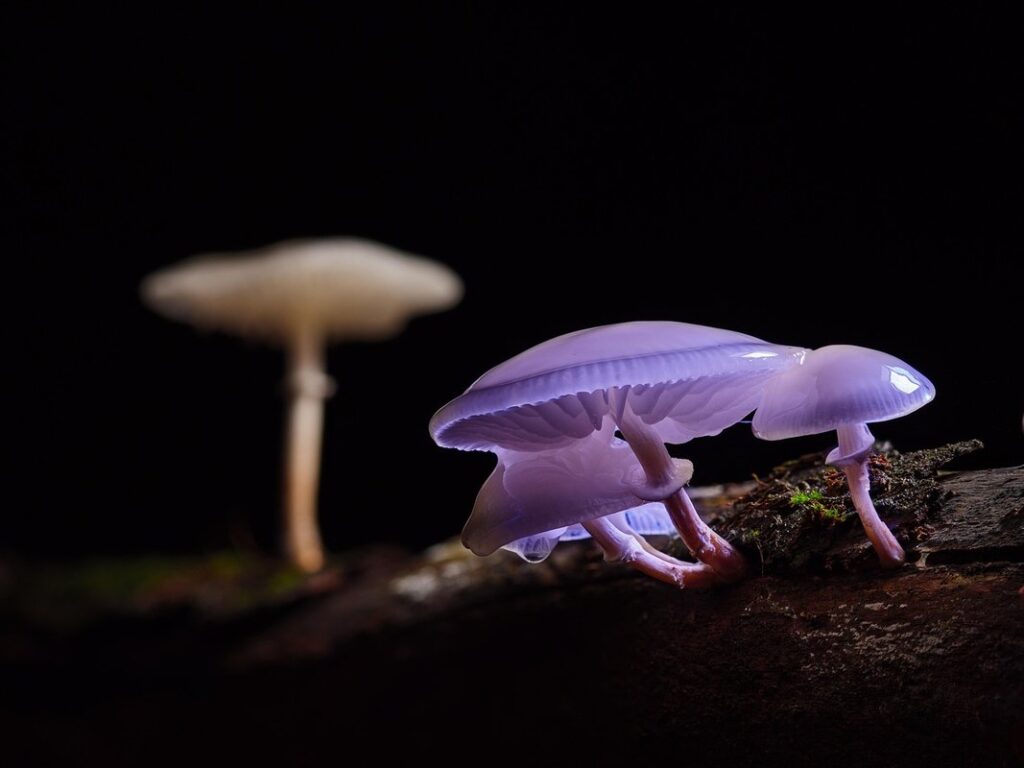
Benefits and Basics
Growing mushrooms indoors requires some knowledge of the benefits and basics, so let’s start by exploring what you need to get started at home. This includes understanding the right conditions for optimal growth.
What Are Mushrooms?
Mushrooms are fascinating organisms that have been around for millions of years. They belong to the kingdom Fungi and are distinct from plants and animals due to their unique characteristics. Mushrooms are actually the fruiting bodies of fungi, produced above ground as a result of underground mycelium growth.
From an agricultural standpoint, mushrooms can be classified into several categories: edible, medicinal, and decorative. For indoor growing, you’ll want to focus on edible varieties that thrive in controlled environments. Some popular species include oyster mushrooms (Pleurotus ostreatus), shiitake mushrooms (Lentinula edodes), and button mushrooms (Agaricus bisporus).
These types are relatively easy to grow indoors, requiring minimal maintenance and a humid environment. Oyster mushrooms, for instance, can be grown on a variety of substrates, from straw to wood chips, making them an excellent choice for home growers. By understanding the basics of mushroom classification and choosing suitable species, you’ll be well-equipped to start growing your own mushrooms indoors.
Mushroom Species Suitable for Indoor Growing
If you’re new to indoor mushroom growing, it’s essential to start with species that are relatively easy to cultivate and can thrive in a controlled environment. Among the many varieties of mushrooms suitable for indoor growth, oyster, shiitake, and button mushrooms stand out as popular choices.
Oyster mushrooms (Pleurotus ostreatus) are an excellent option for beginners due to their fast growth rate and adaptability to various substrates. They can be grown on sawdust, straw, or even wood chips, making them a versatile choice for indoor cultivation. Oyster mushrooms are also relatively low-maintenance and can tolerate some fluctuations in temperature and humidity.
Shiitake mushrooms (Lentinula edodes), native to East Asia, are another popular species for indoor growth. They prefer a slightly cooler environment with consistent humidity levels and can be grown on logs or wood blocks. Shiitake mushrooms have a more delicate flavor profile compared to other varieties and are prized for their rich, earthy taste.
Button mushrooms (Agaricus bisporus), while commonly found in supermarkets, also thrive indoors when provided with the right conditions. They require consistent temperature and humidity levels, as well as adequate light, to grow successfully.
Setting Up a Mushroom Growing Environment
To grow mushrooms at home, you’ll need to create a controlled environment that mimics their natural habitat. This section will guide you through setting up a mushroom-friendly space in your indoor garden.
Creating an Ideal Climate
To create an ideal climate for mushroom growth in houseplants, you’ll want to focus on three key factors: temperature, humidity, and light. Mushrooms thrive in a controlled environment with precise conditions.
Temperature-wise, most edible mushrooms prefer temperatures between 55°F to 60°F (13°C to 15°C), while some species like oyster mushrooms can tolerate warmer temperatures up to 65°F (18°C). Maintaining a consistent temperature is crucial, as fluctuations can affect growth. You can use a space heater or air conditioner to regulate the temperature.
Humidity levels should be maintained between 70% to 90%. This can be achieved by placing the mushroom-growing container on a tray filled with water and pebbles or using a humidifier. Some mushroom species are more sensitive to humidity than others, so research specific requirements for your variety.
Lighting is also essential but often overlooked. Mushrooms don’t require direct sunlight, which can dry out the environment. Instead, provide low-to-moderate indirect light. A north-facing window or LED grow lights can help create a suitable environment. Aim for 12-14 hours of light and 10-12 hours of darkness to simulate day-night cycles.
Keep in mind that these conditions may vary depending on the mushroom species you’re growing. Research specific requirements for your variety to ensure optimal growth.
Sterilization Techniques for Equipment and Space
Sterilization is an essential step in setting up a mushroom growing environment, as it helps prevent contamination and promotes healthy mycelium growth. When you’re working with sterile equipment and space, you minimize the risk of unwanted bacteria, fungi, and other microorganisms competing with your mycelium for resources.
To sterilize your equipment, wash them thoroughly in hot water, then submerge them in a solution of 3% bleach and water for at least 30 minutes. For metal tools, you can also autoclave them to ensure they’re completely free from any contaminants. Always dry your equipment thoroughly before use to prevent moisture buildup.
When it comes to sterilizing your space, you’ll want to focus on areas where contamination is most likely to occur – such as around the growing site and in any nearby storage areas. Use a combination of HEPA air purifiers and UV light sanitizers to keep your environment clean and free from airborne pathogens.
Regular sterilization will help prevent fungal diseases like fusarium and phytophthora, which can decimate your mycelium growth if left unchecked. By taking the time to properly sterilize your equipment and space, you’ll be well on your way to growing healthy, thriving mushrooms in your houseplant setup.
Preparing Houseplants for Mushroom Growth
To successfully grow mushrooms on your houseplants, you’ll need to prepare them by creating a nutrient-rich environment that fosters mycelium growth. This involves making some key adjustments to their care routine.
Choosing the Right Plant Species
When it comes to choosing the right plant species for mushroom growth, it’s essential to consider factors like climate, humidity, and nutrient levels. Ferns are an excellent choice, as they thrive in high-humidity environments and can tolerate low light conditions. Some popular fern species include the Boston fern and the maidenhair fern.
Mosses are another great option, as they require minimal care and can grow on a variety of surfaces. They prefer high humidity and indirect light, making them perfect for indoor spaces with limited natural light. When selecting moss species, look for varieties like sphagnum or peat moss, which are well-suited for indoor cultivation.
Indoor trees like the Chinese Evergreen and the Parlor Palm can also be used as a host plant for mushroom growth. These plants prefer bright, indirect light and consistent moisture levels, making them ideal for rooms with moderate lighting conditions. When choosing an indoor tree species, consider factors like mature size, maintenance requirements, and potential for pest infestations.
Remember to research specific growing requirements for your chosen plant species, as this will help ensure a successful mushroom cultivation experience. With the right plant selection, you’ll be well on your way to creating an ideal environment for mushroom growth in your home.
Conditioning the Substrate
Before introducing mycelium to your houseplant, it’s essential to condition its substrate to create an environment conducive for colonization. Think of conditioning the substrate as preparing a welcoming space for the mycelium to grow and thrive.
A well-conditioned substrate is key to successful mushroom growth. This involves adjusting the pH level, moisture content, and nutrient availability to suit the specific needs of your chosen mushroom species. For example, oyster mushrooms prefer a slightly acidic environment with a pH range of 5.5-6.5, while shiitake mushrooms thrive in more alkaline conditions.
To condition your substrate, start by checking the pH level using a soil testing kit. Based on the results, you can add lime or sulfur to adjust the acidity. Next, ensure the substrate has optimal moisture levels. Mushrooms need consistent moisture to grow, but overwatering can lead to root rot and other issues. Aim for a mix of 50-60% water and 40-50% solid ingredients.
Once you’ve adjusted the pH and moisture content, consider adding nutrients like compost or worm castings to enrich the substrate. A balanced nutrient profile will promote healthy mycelium growth and fruiting.
Spore Inoculation and Colonization
Now that you’ve successfully propagated your mushroom spores, it’s time to introduce them to their new home: your houseplant. This is where the magic happens as they begin to colonize and grow.
Understanding Spores vs. Plug Spawn
When it comes to growing mushrooms in houseplants, you’ll often come across two popular methods: spore inoculation and plug spawn. While both techniques can produce excellent results, they differ significantly in terms of process, materials, and outcome.
Spore inoculation involves introducing mushroom spores directly into a substrate or medium. This method requires a high level of precision and control over environmental conditions to ensure proper germination and growth. For houseplant enthusiasts, spore inoculation offers the advantage of being relatively inexpensive compared to plug spawn.
On the other hand, plug spawn is made from compacted mycelium (vegetative part of a mushroom) that’s been cultivated on a wooden dowel or plug. This material is then inserted into a prepared substrate, allowing the mycelium to colonize and produce mushrooms. Plug spawn typically yields faster results due to its head start in growth.
When choosing between spore inoculation and plug spawn, consider your level of experience and the desired outcome. If you’re new to mushroom cultivation or want to try different species, plug spawn might be a more forgiving option. However, if you enjoy experimenting with various substrates and have experience with controlled environments, spore inoculation can offer greater flexibility.
Techniques for Effective Colonization
To successfully colonize your houseplant’s substrate with mycelium, you’ll want to follow these step-by-step instructions. First, ensure that the substrate is at a consistent temperature between 55-60°F (13-15°C) and humidity levels above 70%. This will help promote healthy growth.
Next, prepare your spore print or grain spawn by rehydrating it according to the specific instructions provided with the product. Once hydrated, gently tear the mycelium into small pieces and distribute them evenly throughout the substrate. You can use a sterile tool like a spoon or scalpel to avoid contaminating the area.
As you inoculate the substrate, make sure not to compact the mycelium too much – this can lead to reduced air exchange and potentially harm the growth of your mycelium. Instead, gently fold the mycelium into the substrate, working in small sections at a time. By following these techniques, you should start to see visible signs of colonization within 7-14 days. Keep an eye on temperature and humidity levels during this period to ensure optimal conditions for mycelium growth.
Caring for Mushroom-Infused Houseplants
Caring for your mushroom-infused houseplants requires attention to their unique needs, from watering and pruning to maintaining a humid environment. Let’s dive into some essential tips to keep them thriving.
Optimal Watering and Humidity Levels
Maintaining optimal watering and humidity levels is crucial for healthy mushroom growth on your houseplants. Watering requirements vary depending on factors such as temperature, potting mix moisture, and climate. Overwatering can lead to fungal diseases and kill the mycelium. To avoid this, check the soil moisture by inserting a finger into the soil up to the first knuckle.
If the top inch feels dry, it’s time to water. Water your houseplants with room-temperature or slightly warmer water (around 60°F to 70°F). Avoid getting water on the leaves or crown of the plant as this can cause fungal diseases. Water should be absorbed by the potting mix within an hour.
Maintaining optimal humidity is also essential for healthy mushroom growth. Mist your plants lightly once a week with a water spray bottle, especially during dry weather conditions. Keep your houseplant in a humid microclimate, such as a terrarium or greenhouse, to create a more stable environment. Monitor the temperature and adjust the watering schedule accordingly.
A well-balanced watering schedule combined with proper humidity levels will ensure healthy mushroom growth on your houseplants.
Monitoring and Harvesting Mushrooms
Recognizing when mushrooms are ready for harvest is crucial to avoid damaging the plant. The ideal time to harvest depends on the type of mushroom and its growth stage. For example, oyster mushrooms are typically ready within 1-2 weeks after fruiting begins, while shiitake can take up to 3-4 months.
To determine if your mushroom is ready, gently inspect the cap for color and size. When fully mature, the cap should be at least 1/3 of its stem’s height. Some mushrooms may also develop a slightly soft or yielding texture when pressed lightly.
When harvesting, avoid pulling on the mushroom’s stem, as this can cause damage to the plant. Instead, use scissors or a sharp knife to carefully snip the stem close to the base of the cap. Harvest in the morning, when the plant is at its highest water content, to minimize stress on the plant. After harvesting, leave some mushrooms to continue growing for future harvests to maintain a healthy, productive mycelium.
Frequently Asked Questions
How do I troubleshoot common issues with mushroom growth, such as slow colonization or contamination?
Troubleshooting is a normal part of the mushroom-growing process. Start by checking your environment’s temperature, humidity, and light levels to ensure they’re within the optimal range for your chosen species. Also, inspect your equipment and space for signs of contamination, and sterilize them if necessary.
What are some beginner-friendly mushroom varieties that can thrive in indoor conditions with minimal maintenance?
For beginners, look into species like oyster mushrooms (Pleurotus ostreatus) or shiitake mushrooms (Lentinula edodes), which are relatively easy to grow and require less maintenance. These varieties tend to tolerate temperature fluctuations and humidity levels well, making them ideal for indoor growing.
Can I use a single houseplant as a self-sustaining ecosystem, with the mycelium colonizing the entire plant?
Yes, it’s possible to create a self-sustaining ecosystem in a single houseplant. However, this requires careful selection of both the mushroom species and the host plant, ensuring they have compatible growth habits and requirements.
How often should I mist or water my mushroom-infused houseplants, especially during dry spells or extreme temperatures?
Mist your plants with filtered water 1-2 times a week, depending on environmental conditions. Be cautious not to overwater, as this can lead to root rot and other issues. Monitor temperature fluctuations; during dry spells or high heat, increase misting frequency but avoid excessive watering.
Are there any essential safety precautions I should take when handling mushroom spores and mycelium?
Yes. When handling mushroom spores and mycelium, always wear protective gloves, goggles, and a mask to prevent exposure to potential allergens and biohazards. Ensure your workspace is well-ventilated and free from dust and debris to minimize the risk of contamination or infection.